Washtenaw ISD representatives tell Ann Arbor board millage renewal would preserve roughly $40M in special‑education support
March 10, 2026 | Ann Arbor Public Schools, School Boards, Michigan
This article was created by AI summarizing key points discussed. AI makes mistakes, so for full details and context, please refer to the video of the full meeting. Please report any errors so we can fix them. Report an error »
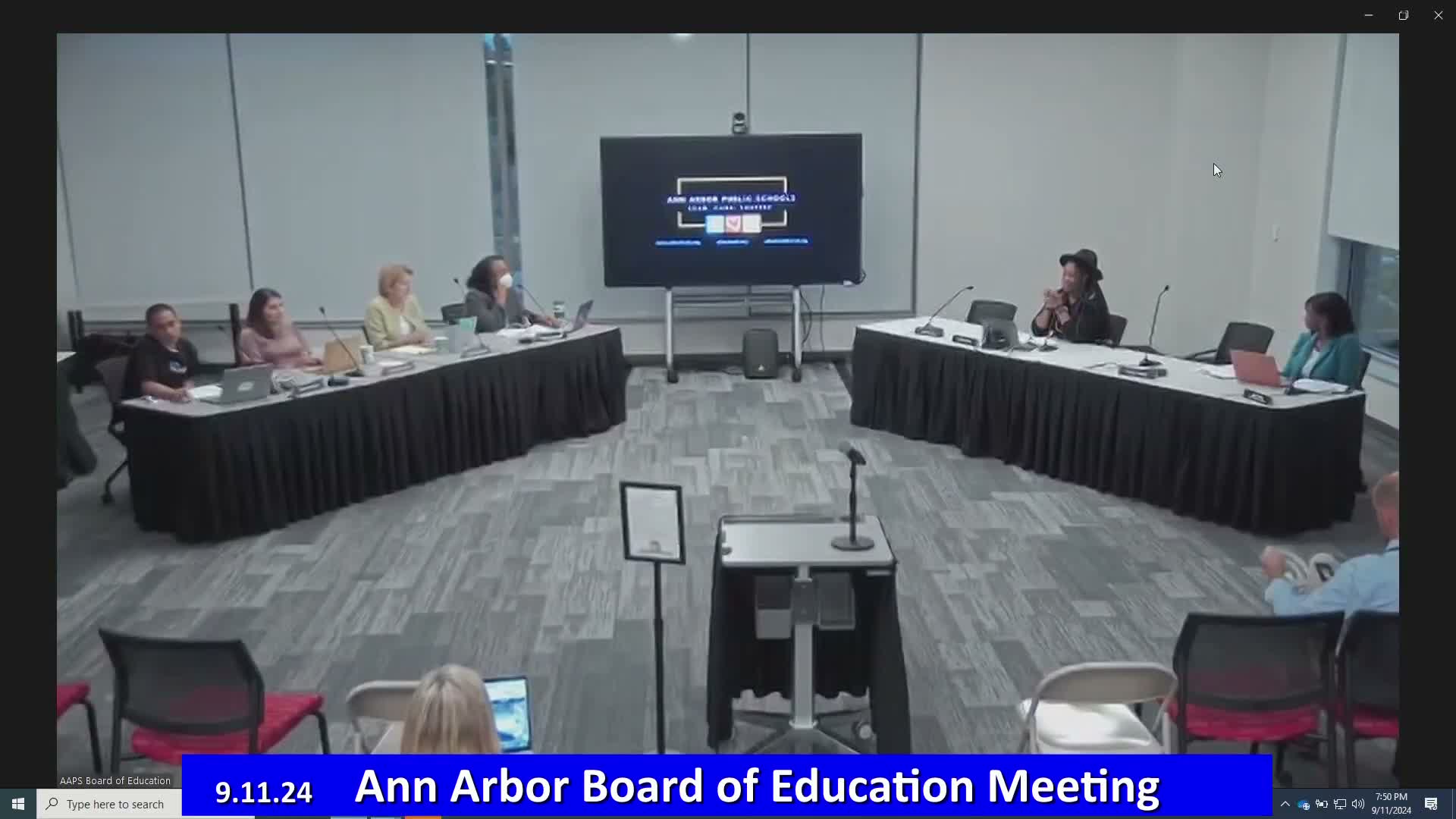
Washtenaw Intermediate School District leaders described a special‑education millage renewal slated for the Nov. 5 ballot and outlined what a renewal — not a new tax — would mean for local districts.
Assistant Superintendent Kinsata Lewis told trustees the proposal asks voters to renew a 2.3826‑mill levy for 12 years starting in 2026. Lewis said the renewal combines two expiring millages and would continue funding that covers unreimbursed special‑education costs across the county.
"For Ann Arbor specifically, this means that 1 in 8 students in Ann Arbor Public Schools is eligible for special education, approximately 2,300 students," Lewis said. She told the board that in 2022–23 Ann Arbor received about $40,000,000 from the millage overall and that the portion up for renewal represents roughly $26,000,000 of that total; if the renewal fails, the district would need to absorb those costs in the general fund.
Lewis summarized eligibility categories and services the millage supports — from birth through age 26 under Michigan practice — including special‑education teachers, paraeducators, school psychologists, social workers, speech and language therapy, ancillary staff, field trips and supplies.
Board members asked for clarification on the amount that would affect Ann Arbor and whether materials would be available to distribute. ISD staff said informational flyers and signs (they emphasized materials would not instruct how to vote) would be available in school buildings and at three upcoming information nights; staff said the campaign would focus on explaining what the millage does rather than advocating a vote.
The presenters emphasized that federal IDEA funding typically covers only about 13–14 percent of special‑education costs and that state reimbursement covers about 28.6 percent, leaving a substantial local share that this millage helps to fund.
Assistant Superintendent Kinsata Lewis told trustees the proposal asks voters to renew a 2.3826‑mill levy for 12 years starting in 2026. Lewis said the renewal combines two expiring millages and would continue funding that covers unreimbursed special‑education costs across the county.
"For Ann Arbor specifically, this means that 1 in 8 students in Ann Arbor Public Schools is eligible for special education, approximately 2,300 students," Lewis said. She told the board that in 2022–23 Ann Arbor received about $40,000,000 from the millage overall and that the portion up for renewal represents roughly $26,000,000 of that total; if the renewal fails, the district would need to absorb those costs in the general fund.
Lewis summarized eligibility categories and services the millage supports — from birth through age 26 under Michigan practice — including special‑education teachers, paraeducators, school psychologists, social workers, speech and language therapy, ancillary staff, field trips and supplies.
Board members asked for clarification on the amount that would affect Ann Arbor and whether materials would be available to distribute. ISD staff said informational flyers and signs (they emphasized materials would not instruct how to vote) would be available in school buildings and at three upcoming information nights; staff said the campaign would focus on explaining what the millage does rather than advocating a vote.
The presenters emphasized that federal IDEA funding typically covers only about 13–14 percent of special‑education costs and that state reimbursement covers about 28.6 percent, leaving a substantial local share that this millage helps to fund.
View the Full Meeting & All Its Details
This article offers just a summary. Unlock complete video, transcripts, and insights as a Founder Member.
✓
Watch full, unedited meeting videos
✓
Search every word spoken in unlimited transcripts
✓
AI summaries & real-time alerts (all government levels)
✓
Permanent access to expanding government content
30-day money-back guarantee
