Board moves to raise drop-off fees, extend compost contract and advance residential solid-waste ordinance
March 05, 2026 | Waukesha City, Waukesha County, Wisconsin
This article was created by AI summarizing key points discussed. AI makes mistakes, so for full details and context, please refer to the video of the full meeting. Please report any errors so we can fix them. Report an error »
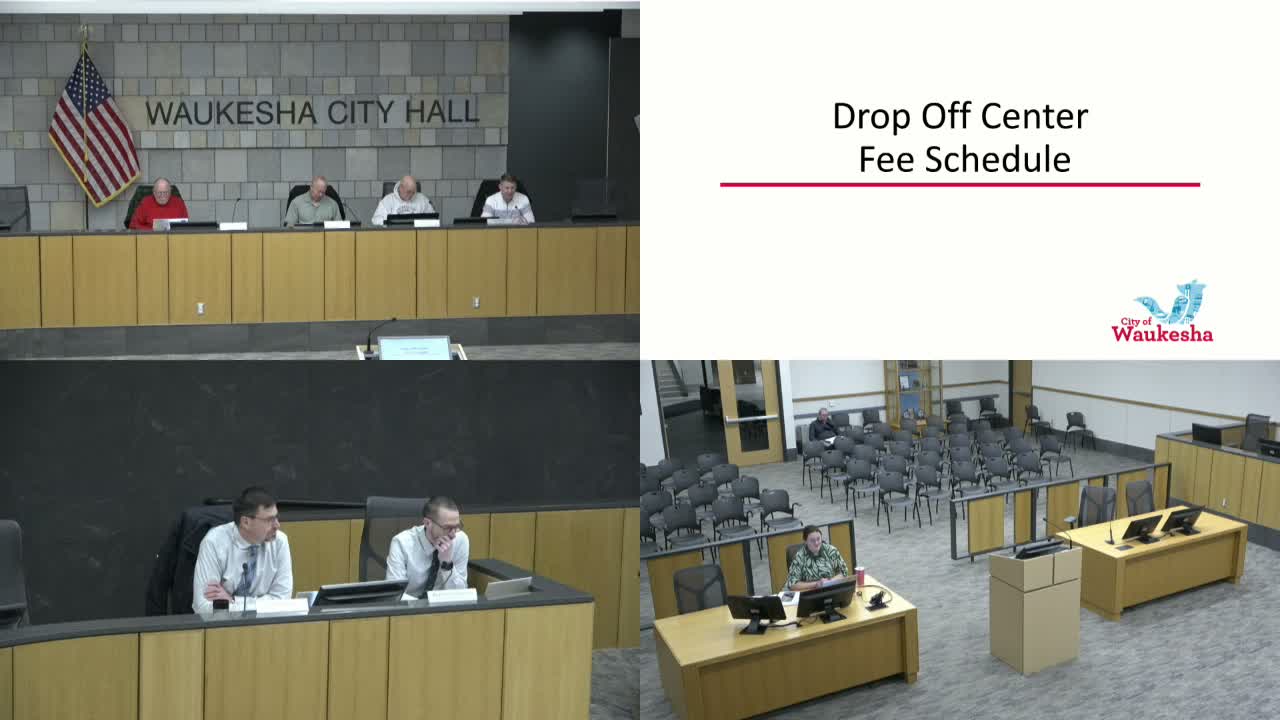
The Waukesha Board of Public Works voted to adopt staff recommendations that would reduce operating losses at the municipal drop‑off center, extend a composting contract for another year, and advance an update to the city’s residential solid‑waste ordinance.
Emma, a city drop‑off center staff member, presented fee proposals intended to narrow a 2025 year‑end deficit the board was told was about $80,000. The first, lower‑impact option would raise some fees modestly — for example, a sedan disposal fee from $8 to $10 — and begin accepting credit cards on April 1, 2026. That option was projected to reduce the deficit to roughly $53,000 while keeping the city’s rates competitive with neighboring municipalities.
Board members questioned several line items, including a larger jump for the largest U‑Haul category (proposed increase from $35 to $75) and whether higher fees would create a tipping point for illegal dumping. Emma said the municipality sees relatively few oversized U‑Haul loads (she estimated about 10 last year) and that the proposed price better matched comparable regional rates.
Several board members emphasized outreach and enforcement to reduce curbside bulky items — suggesting landlord outreach, clearer resident communication about bulky‑item pickup changes, and targeted promotion of the composting service. Emma said senior residents would continue to receive free disposal for brush and yard materials and that the city already sends letters to properties about bulky items (she cited 448 letters sent recently).
Board member Joe Piper moved to proceed with staff recommendations and to continue tracking bulky‑item and oversized loads; the motion was seconded and passed.
On the related contract, the board approved a one‑year extension of the city’s contract with Compost Crusaders for collection of food‑scrap composting activities. Emma said the drop‑off compost program averages about 20 participants per open day and that the current contract roughly costs the city $2,700 net per year; the board asked staff to promote participation and monitor cost per participant.
The board also reviewed an update to ordinance 13.055 concerning residential solid‑waste and recyclables collection. Staff said the revision adds a definition for “dwelling unit” and clarifies eligibility for certain parcels — notably allowing some properties owned by the housing authority to seek private dumpster service under specific criteria tied to public‑health or space considerations. The board voted to approve forwarding the ordinance change to council for subsequent readings, with a request to consult relevant committee members as needed.
Next steps: staff will implement fee changes as directed, begin accepting credit‑card payments for drop‑off center transactions April 1, 2026, promote the compost program to residents, and transmit the ordinance amendment to council for its readings.
Emma, a city drop‑off center staff member, presented fee proposals intended to narrow a 2025 year‑end deficit the board was told was about $80,000. The first, lower‑impact option would raise some fees modestly — for example, a sedan disposal fee from $8 to $10 — and begin accepting credit cards on April 1, 2026. That option was projected to reduce the deficit to roughly $53,000 while keeping the city’s rates competitive with neighboring municipalities.
Board members questioned several line items, including a larger jump for the largest U‑Haul category (proposed increase from $35 to $75) and whether higher fees would create a tipping point for illegal dumping. Emma said the municipality sees relatively few oversized U‑Haul loads (she estimated about 10 last year) and that the proposed price better matched comparable regional rates.
Several board members emphasized outreach and enforcement to reduce curbside bulky items — suggesting landlord outreach, clearer resident communication about bulky‑item pickup changes, and targeted promotion of the composting service. Emma said senior residents would continue to receive free disposal for brush and yard materials and that the city already sends letters to properties about bulky items (she cited 448 letters sent recently).
Board member Joe Piper moved to proceed with staff recommendations and to continue tracking bulky‑item and oversized loads; the motion was seconded and passed.
On the related contract, the board approved a one‑year extension of the city’s contract with Compost Crusaders for collection of food‑scrap composting activities. Emma said the drop‑off compost program averages about 20 participants per open day and that the current contract roughly costs the city $2,700 net per year; the board asked staff to promote participation and monitor cost per participant.
The board also reviewed an update to ordinance 13.055 concerning residential solid‑waste and recyclables collection. Staff said the revision adds a definition for “dwelling unit” and clarifies eligibility for certain parcels — notably allowing some properties owned by the housing authority to seek private dumpster service under specific criteria tied to public‑health or space considerations. The board voted to approve forwarding the ordinance change to council for subsequent readings, with a request to consult relevant committee members as needed.
Next steps: staff will implement fee changes as directed, begin accepting credit‑card payments for drop‑off center transactions April 1, 2026, promote the compost program to residents, and transmit the ordinance amendment to council for its readings.
Don't Miss a Word: See the Full Meeting!
Go beyond summaries. Unlock every video, transcript, and key insight with a Founder Membership.
✓
Get instant access to full meeting videos
✓
Search and clip any phrase from complete transcripts
✓
Receive AI-powered summaries & custom alerts
✓
Enjoy lifetime, unrestricted access to government data
30-day money-back guarantee
