Senate Health & Welfare begins review of bill to create DOC-run forensic facility for certain criminal defendants
March 10, 2026 | Health & Welfare, SENATE, Committees, Legislative , Vermont
This article was created by AI summarizing key points discussed. AI makes mistakes, so for full details and context, please refer to the video of the full meeting. Please report any errors so we can fix them. Report an error »
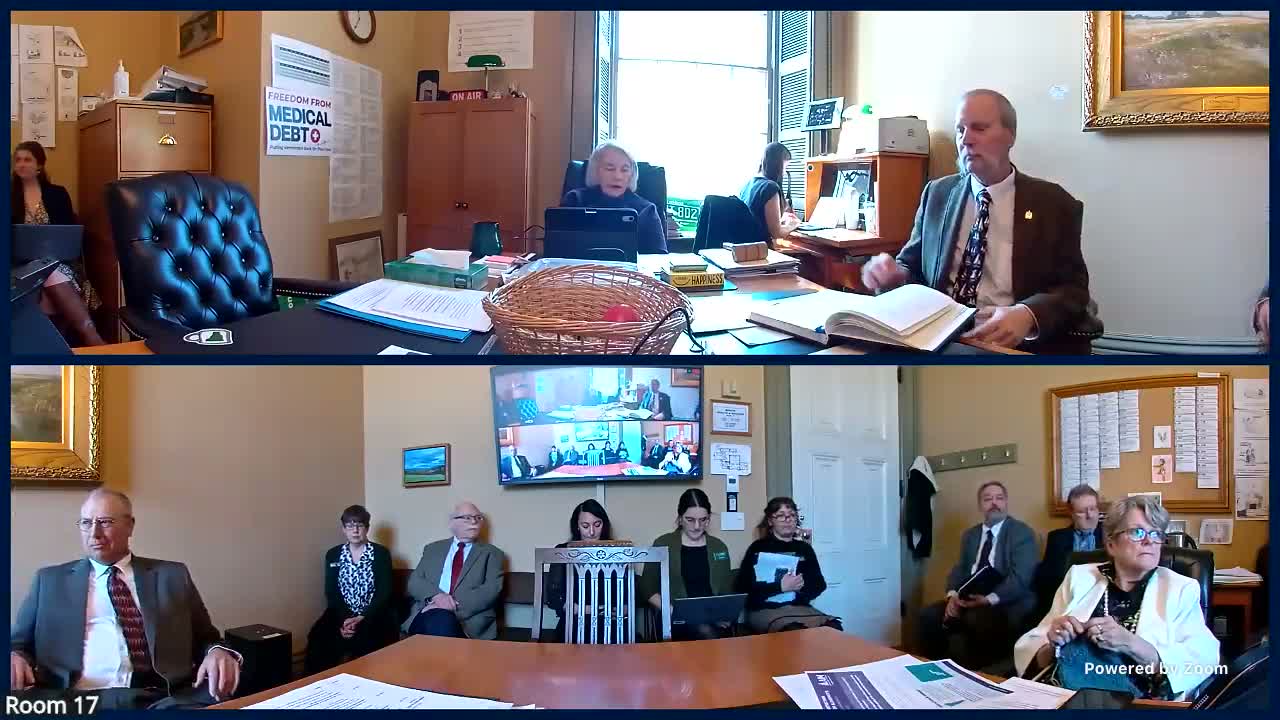
The Senate Health & Welfare committee opened a detailed review of S.193, a bill proposing that the Department of Corrections (DOC) establish and operate a locked forensic facility to provide secure evaluation, treatment and custody for a narrowly defined group of criminal-justice-involved people.
Committee staff explained that under current law people found to be a danger to themselves or others because of mental illness are generally committed to the Department of Mental Health (DMH) through civil or criminal (forensic) processes. S.193 would carve out a subset of forensic cases—largely defendants charged with offenses that carry a potential life sentence among roughly 15–16 qualifying offenses—and place those individuals in DOC custody at the proposed facility rather than in DMH custody.
Karen Barber, general counsel for the Department of Mental Health, told the committee the bill is not intended to create an alternative to DMH hospitalization. "What we're trying to fill is the gap," Barber said, describing defendants whose conditions (for example, substance use disorder, developmental disability, traumatic brain injury or dementia) do not meet DMH hospitalization criteria yet require secure clinical supervision. Barber emphasized DMH wants to be consulted and that the facility is intended for people who cannot be served by existing DMH inpatient options.
Staff described key operational provisions in the draft: a clinical services director would oversee services; individuals admitted for competency restoration would receive combination restoration services and be re-evaluated every six months; those found not guilty by reason of insanity (NGRI) for qualifying offenses would have an initial hearing within 40 days and could petition annually for review; records would remain generally confidential with limited exceptions; and Vermont Legal Aid would provide legal representation entitlement for facility-related petitions.
The bill contains standards addressing involuntary medication ordered for competency-restoration purposes, language staff said is drawn from United States Supreme Court precedent specific to competency-restoration medication orders. Committee members noted involuntary medication has long been controversial and asked for more detail on clinical qualifications (for the clinical services director) and the statutory standards before moving the bill further.
Committee members said they needed more technical input from DMH and other stakeholders (including corrections and clinical providers such as WellPath) and agreed to schedule follow-up sessions to resolve outstanding questions before any vote.
Committee staff explained that under current law people found to be a danger to themselves or others because of mental illness are generally committed to the Department of Mental Health (DMH) through civil or criminal (forensic) processes. S.193 would carve out a subset of forensic cases—largely defendants charged with offenses that carry a potential life sentence among roughly 15–16 qualifying offenses—and place those individuals in DOC custody at the proposed facility rather than in DMH custody.
Karen Barber, general counsel for the Department of Mental Health, told the committee the bill is not intended to create an alternative to DMH hospitalization. "What we're trying to fill is the gap," Barber said, describing defendants whose conditions (for example, substance use disorder, developmental disability, traumatic brain injury or dementia) do not meet DMH hospitalization criteria yet require secure clinical supervision. Barber emphasized DMH wants to be consulted and that the facility is intended for people who cannot be served by existing DMH inpatient options.
Staff described key operational provisions in the draft: a clinical services director would oversee services; individuals admitted for competency restoration would receive combination restoration services and be re-evaluated every six months; those found not guilty by reason of insanity (NGRI) for qualifying offenses would have an initial hearing within 40 days and could petition annually for review; records would remain generally confidential with limited exceptions; and Vermont Legal Aid would provide legal representation entitlement for facility-related petitions.
The bill contains standards addressing involuntary medication ordered for competency-restoration purposes, language staff said is drawn from United States Supreme Court precedent specific to competency-restoration medication orders. Committee members noted involuntary medication has long been controversial and asked for more detail on clinical qualifications (for the clinical services director) and the statutory standards before moving the bill further.
Committee members said they needed more technical input from DMH and other stakeholders (including corrections and clinical providers such as WellPath) and agreed to schedule follow-up sessions to resolve outstanding questions before any vote.
View the Full Meeting & All Its Details
This article offers just a summary. Unlock complete video, transcripts, and insights as a Founder Member.
✓
Watch full, unedited meeting videos
✓
Search every word spoken in unlimited transcripts
✓
AI summaries & real-time alerts (all government levels)
✓
Permanent access to expanding government content
30-day money-back guarantee
