Virginia Beach school board debates K–2 Chromebook use, equity and screen time limits
March 10, 2026 | VA BEACH CITY PBLC SCHS, School Districts, Virginia
This article was created by AI summarizing key points discussed. AI makes mistakes, so for full details and context, please refer to the video of the full meeting. Please report any errors so we can fix them. Report an error »
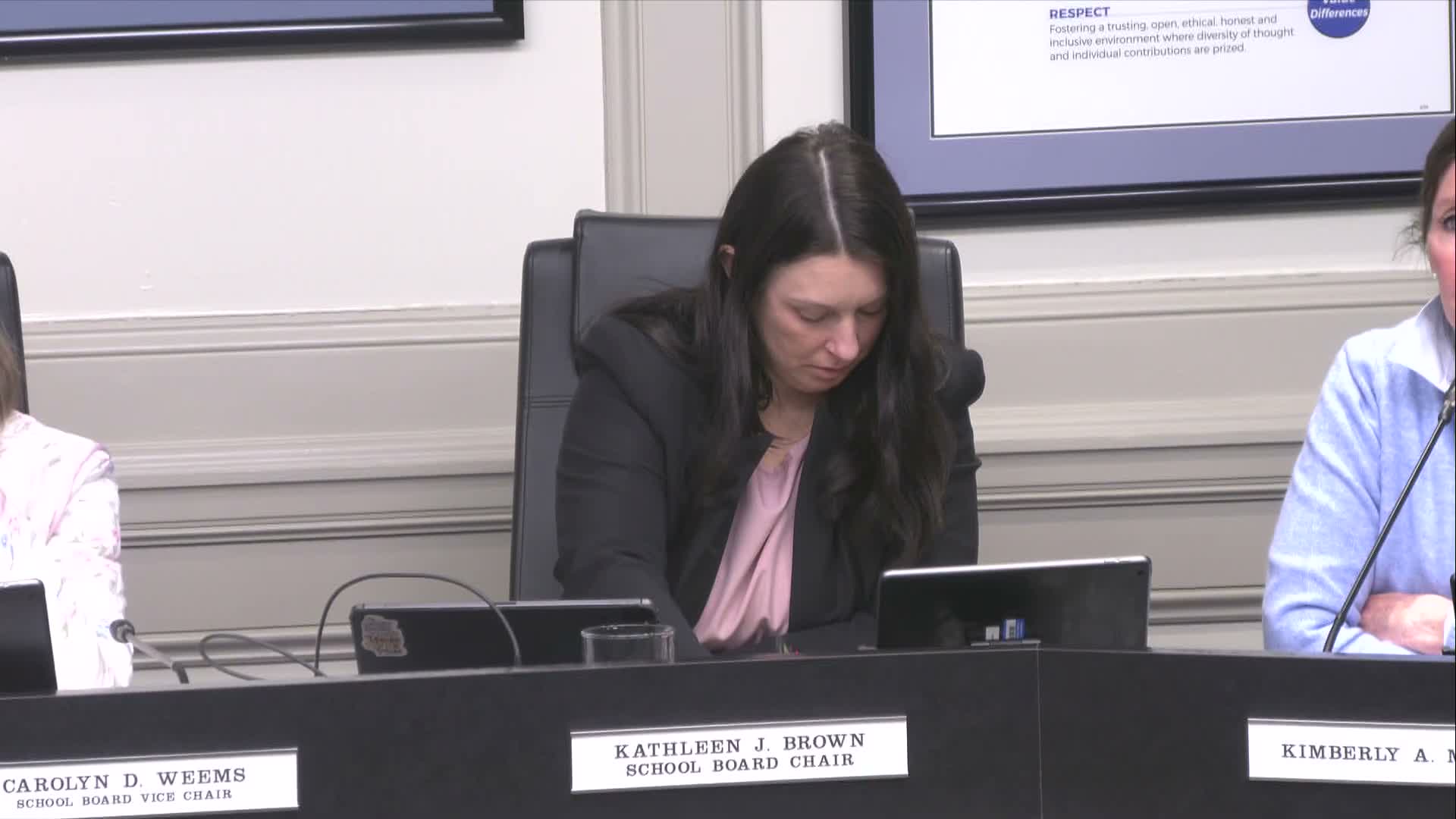
Ryan Goldberg, the division’s director of instructional technology, told the board that his team has reviewed usage data, teacher and parent surveys, and curricular alignment to guide K–2 device decisions. “Using that consistent approach kindergarten averages approximately 24 minutes per instructional day this year compared to approximately 20 minutes last year,” Goldberg said, adding that devices account for roughly 10% (kindergarten), 12% (first) and 14% (second) of core instructional time.
Goldberg and his team said they narrowed digital programs through a review process and emphasized that most device use is teacher‑directed and tied to instructional goals: adaptive literacy/math programs, small‑group differentiation and research tools. He noted that Chromebooks are purchased via a technology initiative grant and that shifting from 1:1 to shared sets would free some grant funds over a device life cycle but would require reallocation and have implementation trade‑offs.
Board members voiced sharply divided views. Miss Rogers said hands‑on learning must be prioritized and objected strongly to sending devices home: “Nobody should be sending it home,” she said, adding, “I will die on this sword that our children need hands on learning.” Other board members, including Miss Monique Melnick and Doctor Green, emphasized equity and remote‑learning continuity for families without home devices: Melnick said she worried that cart‑based or reduced models could leave some students unable to participate during inclement weather or asynchronous days.
Several members asked the administration for evidence underpinning claims that current practices are evidence‑based. The administration committed to sending board members links to the Virginia Department of Education evidence‑based practice listings and to provide further usage and school‑level data. Goldberg confirmed there are three schools that send Chromebooks home daily for K–2 (Kingston, North Landing and Providence) and three others that do so for grades 1–2 (Ocean Lakes, Salem, Shelton Park), and described that site‑based deployments are principal decisions.
No policy change or vote occurred at the workshop; board members asked for additional data (including mid‑year student performance and licensing/cost implications) and signaled interest in further deliberation and possible division‑wide policy on device time limits, home‑use rules and acceptable device models for early grades.
Goldberg and his team said they narrowed digital programs through a review process and emphasized that most device use is teacher‑directed and tied to instructional goals: adaptive literacy/math programs, small‑group differentiation and research tools. He noted that Chromebooks are purchased via a technology initiative grant and that shifting from 1:1 to shared sets would free some grant funds over a device life cycle but would require reallocation and have implementation trade‑offs.
Board members voiced sharply divided views. Miss Rogers said hands‑on learning must be prioritized and objected strongly to sending devices home: “Nobody should be sending it home,” she said, adding, “I will die on this sword that our children need hands on learning.” Other board members, including Miss Monique Melnick and Doctor Green, emphasized equity and remote‑learning continuity for families without home devices: Melnick said she worried that cart‑based or reduced models could leave some students unable to participate during inclement weather or asynchronous days.
Several members asked the administration for evidence underpinning claims that current practices are evidence‑based. The administration committed to sending board members links to the Virginia Department of Education evidence‑based practice listings and to provide further usage and school‑level data. Goldberg confirmed there are three schools that send Chromebooks home daily for K–2 (Kingston, North Landing and Providence) and three others that do so for grades 1–2 (Ocean Lakes, Salem, Shelton Park), and described that site‑based deployments are principal decisions.
No policy change or vote occurred at the workshop; board members asked for additional data (including mid‑year student performance and licensing/cost implications) and signaled interest in further deliberation and possible division‑wide policy on device time limits, home‑use rules and acceptable device models for early grades.
Don't Miss a Word: See the Full Meeting!
Go beyond summaries. Unlock every video, transcript, and key insight with a Founder Membership.
✓
Get instant access to full meeting videos
✓
Search and clip any phrase from complete transcripts
✓
Receive AI-powered summaries & custom alerts
✓
Enjoy lifetime, unrestricted access to government data
30-day money-back guarantee
