Muscatine schools expand paraeducator training; paras say program empowered them but want more role‑specific practice
March 09, 2026 | Muscatine Comm School District, School Districts, Iowa
This article was created by AI summarizing key points discussed. AI makes mistakes, so for full details and context, please refer to the video of the full meeting. Please report any errors so we can fix them. Report an error »
District staff told the Muscatine Community School District board on March 9 that the district provided two dedicated professional‑development days for paraeducators (Oct. 10 and Feb. 13) and engaged nearly 200 paras across buildings in role‑specific learning, behavior management and de‑escalation strategies.
“Not any practice is going to work with every student 100% of the time, so we talked about how to increase our probability of positive outcomes through these high‑leverage practices,” presenter Paige Williams said, describing the PD curriculum aligned to the district’s MTSS framework. Staff also offered online modules (Affirm and autism‑focused intervention modules) for ongoing learning.
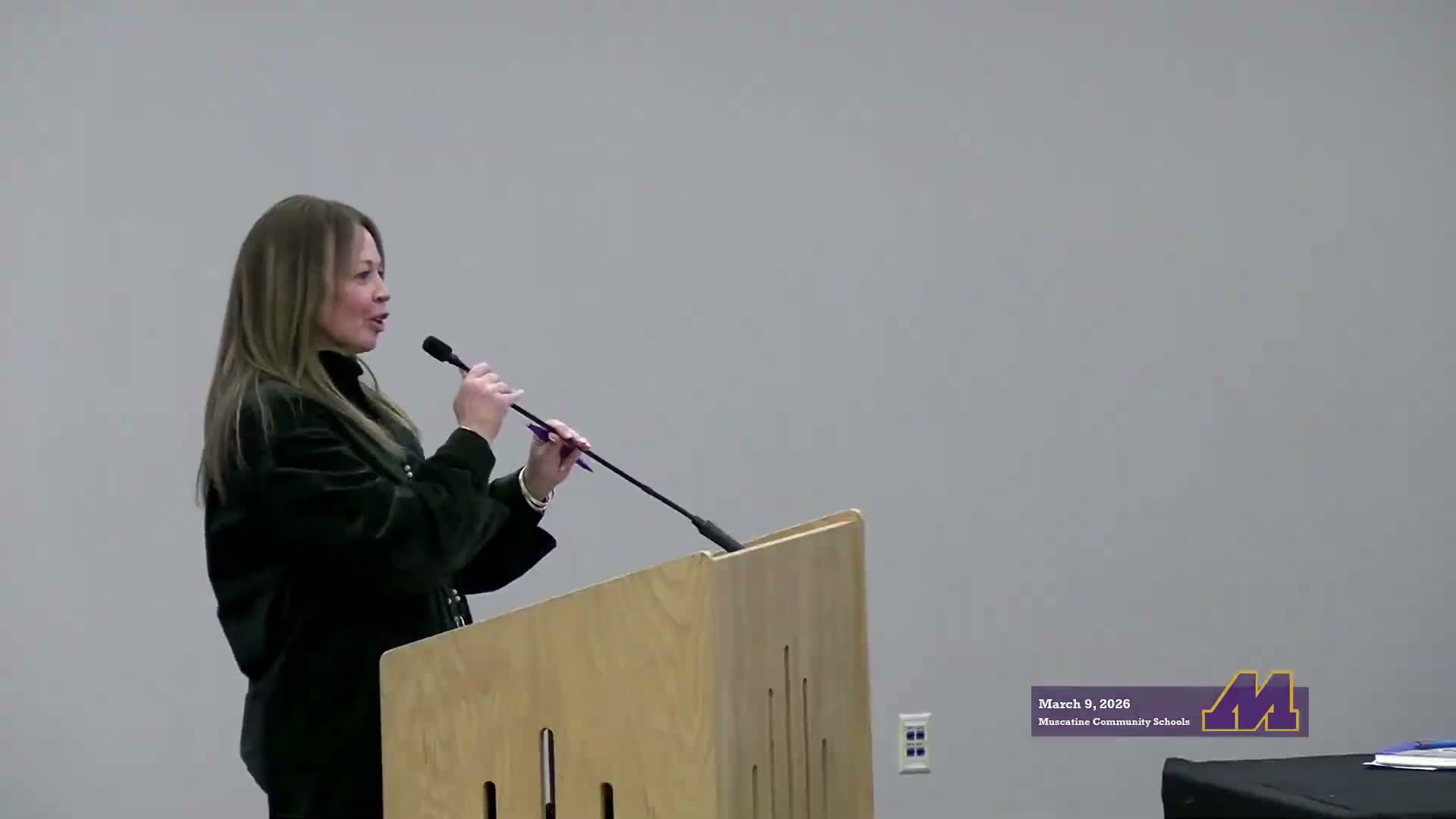
Paraeducators who spoke at the meeting gave mixed feedback on some elements. Christina Bryant, a safety liaison at Susan Clark Junior High, said the training “gave me a system to really evaluate” student behavior and made her feel empowered. “It lives on my desk since the day I got it,” she said.
Heather Mills, a special‑education para at Susan Clark, told the board some paras felt ignored during collaborative-teacher-time sessions, were unclear about their expected roles, and wanted more hands‑on scenarios tied to specific students’ goals: “Many paras still going into the end of the school year don't know what's what with their students,” Mills said, arguing that paras need clearer access to IEP/504 information and practical scenarios to practice interventions.
Presenters acknowledged the mixed feedback and described steps to respond: smaller building‑level sessions, differentiated PD by para role (EL support, safety, media, special education), an onboarding process for new paras, and coordination with MTSS coordinators and coaches to provide ongoing support. Presenters also said the district introduced staff‑recognition measures and participation incentives to increase engagement.
Board members asked about expanding similar training to substitute teachers and whether time constraints limit implementation. Presenters said substitutes receive a certification process and suggested targeted mentoring or embedded PD for long‑term substitutes.
Next steps: staff said they will use campus improvement plans to tailor future PD, leverage the new calendar for more collaboration time, and bring additional details to the board as plans are refined.
“Not any practice is going to work with every student 100% of the time, so we talked about how to increase our probability of positive outcomes through these high‑leverage practices,” presenter Paige Williams said, describing the PD curriculum aligned to the district’s MTSS framework. Staff also offered online modules (Affirm and autism‑focused intervention modules) for ongoing learning.
Paraeducators who spoke at the meeting gave mixed feedback on some elements. Christina Bryant, a safety liaison at Susan Clark Junior High, said the training “gave me a system to really evaluate” student behavior and made her feel empowered. “It lives on my desk since the day I got it,” she said.
Heather Mills, a special‑education para at Susan Clark, told the board some paras felt ignored during collaborative-teacher-time sessions, were unclear about their expected roles, and wanted more hands‑on scenarios tied to specific students’ goals: “Many paras still going into the end of the school year don't know what's what with their students,” Mills said, arguing that paras need clearer access to IEP/504 information and practical scenarios to practice interventions.
Presenters acknowledged the mixed feedback and described steps to respond: smaller building‑level sessions, differentiated PD by para role (EL support, safety, media, special education), an onboarding process for new paras, and coordination with MTSS coordinators and coaches to provide ongoing support. Presenters also said the district introduced staff‑recognition measures and participation incentives to increase engagement.
Board members asked about expanding similar training to substitute teachers and whether time constraints limit implementation. Presenters said substitutes receive a certification process and suggested targeted mentoring or embedded PD for long‑term substitutes.
Next steps: staff said they will use campus improvement plans to tailor future PD, leverage the new calendar for more collaboration time, and bring additional details to the board as plans are refined.
View the Full Meeting & All Its Details
This article offers just a summary. Unlock complete video, transcripts, and insights as a Founder Member.
✓
Watch full, unedited meeting videos
✓
Search every word spoken in unlimited transcripts
✓
AI summaries & real-time alerts (all government levels)
✓
Permanent access to expanding government content
30-day money-back guarantee
