Committee adopts amended bill spelling out officers' duty to render aid, adds immunity provision
March 09, 2026 | 2026 Legislature VA, Virginia
This article was created by AI summarizing key points discussed. AI makes mistakes, so for full details and context, please refer to the video of the full meeting. Please report any errors so we can fix them. Report an error »
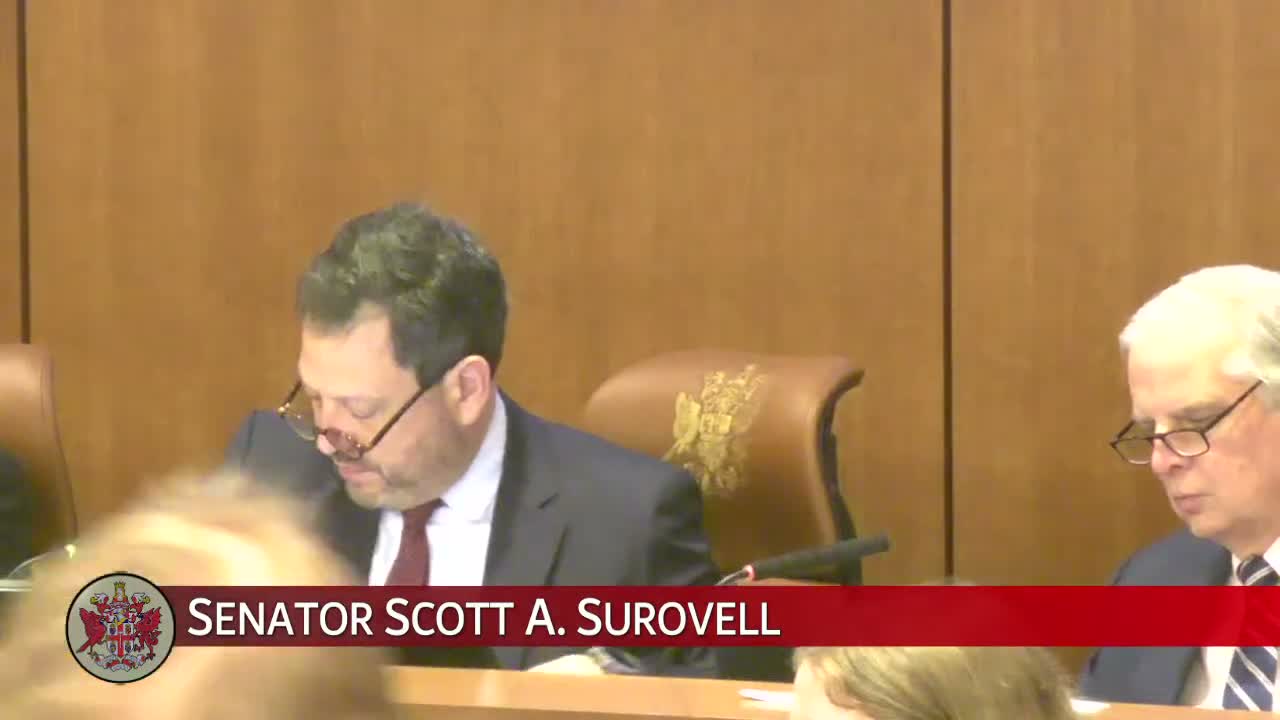
The Senate Courts of Justice Committee on March 6 reported House Bill 273 as amended, a measure that would establish a clear duty for law‑enforcement officers to render aid in cases of bodily injury or life‑threatening conditions and to provide limited civil immunity for officers who act to give such aid.
Delegate Helmer, the bill’s patron, told the committee the measure builds on 2020 reforms that created duties such as the duty to intervene and that HB273 specifically “articulates a duty to render aid in cases of bodily injury or life‑threatening conditions,” while protecting officers from civil liability when they provide aid in good faith. “It clarifies that the officer has a duty to render aid, and ensures that while acting in accordance with their duty, absent gross negligence or willful misconduct, that officer rendering aid is then immune,” Helmer said.
Committee members questioned why the provision was placed in the civil‑procedure title rather than with other law‑enforcement conduct provisions. Senator Peake pressed whether the statute would create a remedy affecting qualified immunity and whether placing provisions in a given code chapter changes immunity standards. Counsel and other members explained the bill’s immunity is narrower than federal qualified immunity: the immunity for rendering aid requires absence of gross negligence or willful misconduct and functions like a Good Samaritan protection in subsection b, while the duty provision itself is distinct from the civil‑immunity language.
A technical amendment from the bill’s work group was read into the record and accepted; that amendment clarifies subsection b to state that, “in the absence of gross negligence or willful misconduct, a law enforcement officer shall not be liable for any injury or wrongful death resulting from the rendering or withholding of such aid in accordance with the provisions of this section.” Helmer said the amendment addresses concerns raised by work group members and that he supported it.
After discussion the committee voted to report the bill as amended. Clerk recorded the roll as nine in favor and four opposed. The committee also agreed to move the code placement to chapter 7.1 to align with other law‑enforcement conduct provisions and to refer technical questions to counsel for conferencing if needed.
Delegate Helmer, the bill’s patron, told the committee the measure builds on 2020 reforms that created duties such as the duty to intervene and that HB273 specifically “articulates a duty to render aid in cases of bodily injury or life‑threatening conditions,” while protecting officers from civil liability when they provide aid in good faith. “It clarifies that the officer has a duty to render aid, and ensures that while acting in accordance with their duty, absent gross negligence or willful misconduct, that officer rendering aid is then immune,” Helmer said.
Committee members questioned why the provision was placed in the civil‑procedure title rather than with other law‑enforcement conduct provisions. Senator Peake pressed whether the statute would create a remedy affecting qualified immunity and whether placing provisions in a given code chapter changes immunity standards. Counsel and other members explained the bill’s immunity is narrower than federal qualified immunity: the immunity for rendering aid requires absence of gross negligence or willful misconduct and functions like a Good Samaritan protection in subsection b, while the duty provision itself is distinct from the civil‑immunity language.
A technical amendment from the bill’s work group was read into the record and accepted; that amendment clarifies subsection b to state that, “in the absence of gross negligence or willful misconduct, a law enforcement officer shall not be liable for any injury or wrongful death resulting from the rendering or withholding of such aid in accordance with the provisions of this section.” Helmer said the amendment addresses concerns raised by work group members and that he supported it.
After discussion the committee voted to report the bill as amended. Clerk recorded the roll as nine in favor and four opposed. The committee also agreed to move the code placement to chapter 7.1 to align with other law‑enforcement conduct provisions and to refer technical questions to counsel for conferencing if needed.
Don't Miss a Word: See the Full Meeting!
Go beyond summaries. Unlock every video, transcript, and key insight with a Founder Membership.
✓
Get instant access to full meeting videos
✓
Search and clip any phrase from complete transcripts
✓
Receive AI-powered summaries & custom alerts
✓
Enjoy lifetime, unrestricted access to government data
30-day money-back guarantee
