Local nonprofit seeks funding, office space to expand substance-use services in Athens
March 09, 2026 | Athens City, Limestone County, Alabama
This article was created by AI summarizing key points discussed. AI makes mistakes, so for full details and context, please refer to the video of the full meeting. Please report any errors so we can fix them. Report an error »
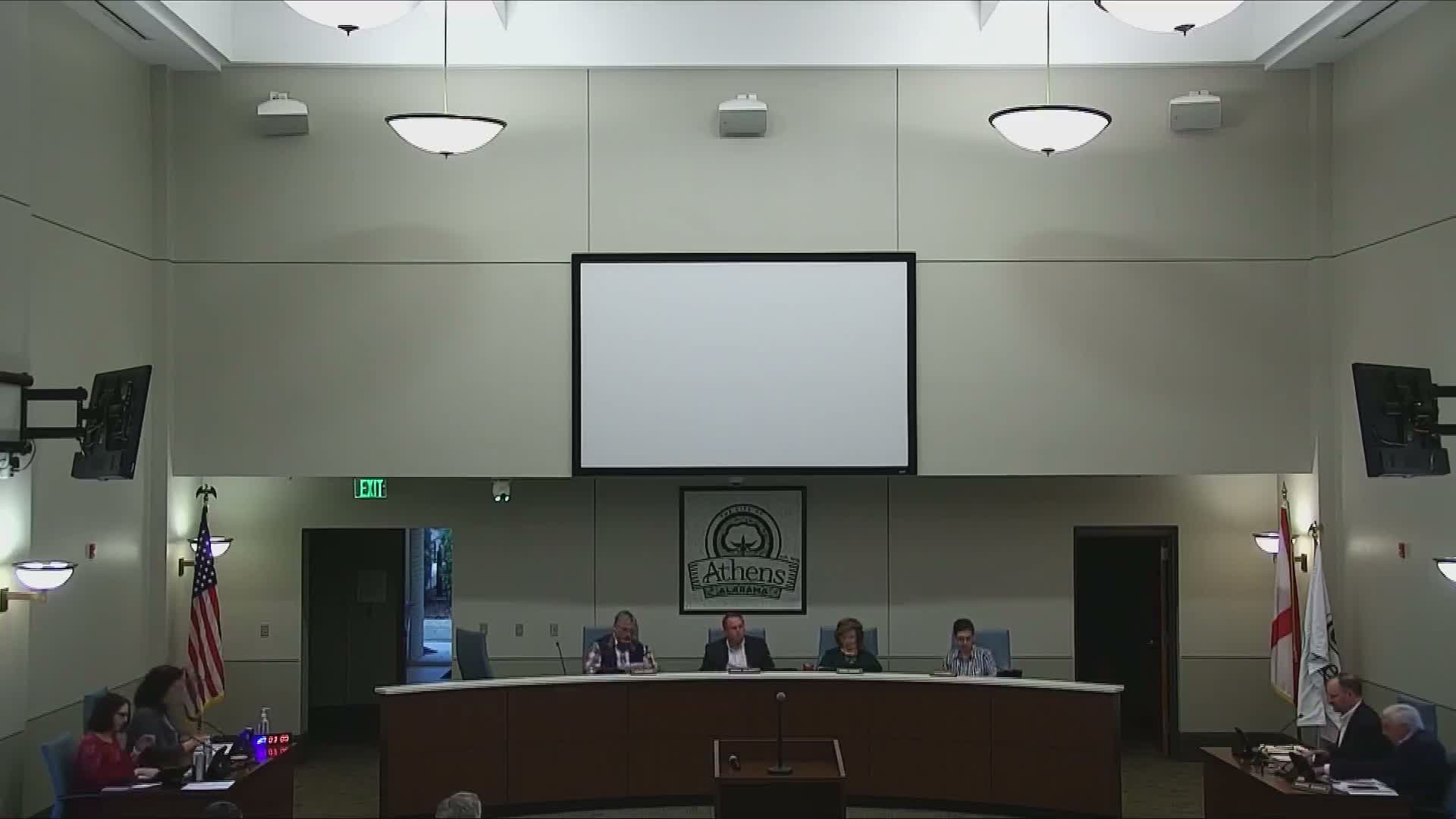
Catherine Lawson, representing the Partnership for a Drug Free Community, presented a request to the Athens City Council to expand substance-use assessment, case management and recovery-support services into Athens and Limestone County.
Lawson said the organization has provided assessments and referrals since 1988 and expanded into recovery resources in 2019. She told the council that the group completed 818 substance-use assessments in fiscal year 2025 and could confirm 299 individuals entered treatment (about 37%). She noted that many local residents must travel outside the county for state-funded treatment and described access barriers including transportation, lack of insurance and costs for assessments.
Lawson asked the council to consider providing office space so the nonprofit could station three full-time staff in the Athens area (an assessor/master’s-level clinician, a case manager and a peer support specialist). She also requested recurring operational support, including an annual transportation fund ($15,000) and a sober-living assistance fund ($20,000), and proposed a four-year budget of about $252,000 per year. She suggested opioid-settlement funds as one potential funding source.
Council members thanked Lawson, expressed condolences for the executive director’s family bereavement and said they would discuss the request with county law enforcement and other stakeholders. No formal funding commitment or vote was recorded; members indicated the matter would require further discussion and review of available settlement funds.
Lawson described treatment pathways and said assessments guide referrals to outpatient, intensive outpatient, residential and medication-assisted treatment programs. She emphasized transportation and housing barriers for people seeking treatment and noted roughly 59% of the nonprofit’s clients were uninsured; of insured clients, about 55% had Medicare or Medicaid, which the nonprofit said covers detox but not extended residential care without assessments.
The council did not take action on the request at the meeting; members suggested further meetings with county officials and city staff to explore funding options and logistics.
Lawson said the organization has provided assessments and referrals since 1988 and expanded into recovery resources in 2019. She told the council that the group completed 818 substance-use assessments in fiscal year 2025 and could confirm 299 individuals entered treatment (about 37%). She noted that many local residents must travel outside the county for state-funded treatment and described access barriers including transportation, lack of insurance and costs for assessments.
Lawson asked the council to consider providing office space so the nonprofit could station three full-time staff in the Athens area (an assessor/master’s-level clinician, a case manager and a peer support specialist). She also requested recurring operational support, including an annual transportation fund ($15,000) and a sober-living assistance fund ($20,000), and proposed a four-year budget of about $252,000 per year. She suggested opioid-settlement funds as one potential funding source.
Council members thanked Lawson, expressed condolences for the executive director’s family bereavement and said they would discuss the request with county law enforcement and other stakeholders. No formal funding commitment or vote was recorded; members indicated the matter would require further discussion and review of available settlement funds.
Lawson described treatment pathways and said assessments guide referrals to outpatient, intensive outpatient, residential and medication-assisted treatment programs. She emphasized transportation and housing barriers for people seeking treatment and noted roughly 59% of the nonprofit’s clients were uninsured; of insured clients, about 55% had Medicare or Medicaid, which the nonprofit said covers detox but not extended residential care without assessments.
The council did not take action on the request at the meeting; members suggested further meetings with county officials and city staff to explore funding options and logistics.
View the Full Meeting & All Its Details
This article offers just a summary. Unlock complete video, transcripts, and insights as a Founder Member.
✓
Watch full, unedited meeting videos
✓
Search every word spoken in unlimited transcripts
✓
AI summaries & real-time alerts (all government levels)
✓
Permanent access to expanding government content
30-day money-back guarantee
