South Heartland health director briefs council on annual report, air monitors and outreach van
March 09, 2026 | Hastings City, Adams County, Nebraska
This article was created by AI summarizing key points discussed. AI makes mistakes, so for full details and context, please refer to the video of the full meeting. Please report any errors so we can fix them. Report an error »
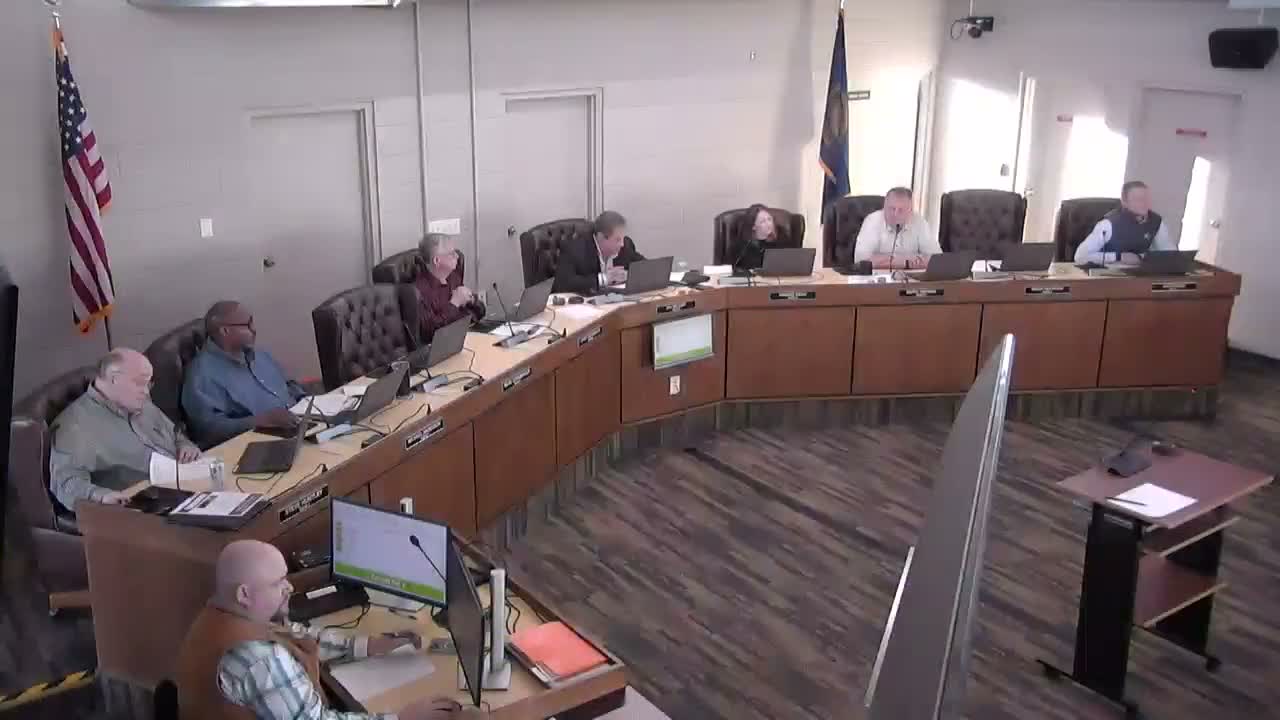
Michelle Beaver, director of the South Heartland District Health Department, provided a quarterly community update and distributed the department's annual report to council members and attendees.
Beaver said the department was formed under state legislation and that 2026 marks the 25th anniversary of the funding that helped establish local health departments. She highlighted an outreach van — which the department said was supported in part by City of Hastings ARPA funds and other local contributions — that is outfitted to provide screenings, test kits and health education at fairs, community events and clinics.
On environmental health, Beaver described an air-quality monitoring program with multiple monitors across the district, including one in Hastings, and said the department is sharing results on its website and through public dashboards. She said the department has a notification process for at-risk organizations that opt in, such as schools and long-term-care facilities, to receive alerts on poor air-quality days.
Beaver also provided staffing details: the department employs 24 people, mostly in Hastings, and expects to add up to 10 community health workers over the next five years under new rural health transformation funding. She said the department continues to monitor respiratory illnesses, including COVID-19, RSV and influenza, and is vigilant about measles because of out-of-state activity; she reported six measles cases in Nebraska to date this year with no secondary community spread in the state.
Council members asked questions about the van's uses and the air monitoring; Beaver described services such as nitrate water testing, radon test kits, colorectal screening kits, diabetes risk assessments and outreach partnerships with other organizations.
Beaver said the department was formed under state legislation and that 2026 marks the 25th anniversary of the funding that helped establish local health departments. She highlighted an outreach van — which the department said was supported in part by City of Hastings ARPA funds and other local contributions — that is outfitted to provide screenings, test kits and health education at fairs, community events and clinics.
On environmental health, Beaver described an air-quality monitoring program with multiple monitors across the district, including one in Hastings, and said the department is sharing results on its website and through public dashboards. She said the department has a notification process for at-risk organizations that opt in, such as schools and long-term-care facilities, to receive alerts on poor air-quality days.
Beaver also provided staffing details: the department employs 24 people, mostly in Hastings, and expects to add up to 10 community health workers over the next five years under new rural health transformation funding. She said the department continues to monitor respiratory illnesses, including COVID-19, RSV and influenza, and is vigilant about measles because of out-of-state activity; she reported six measles cases in Nebraska to date this year with no secondary community spread in the state.
Council members asked questions about the van's uses and the air monitoring; Beaver described services such as nitrate water testing, radon test kits, colorectal screening kits, diabetes risk assessments and outreach partnerships with other organizations.
Don't Miss a Word: See the Full Meeting!
Go beyond summaries. Unlock every video, transcript, and key insight with a Founder Membership.
✓
Get instant access to full meeting videos
✓
Search and clip any phrase from complete transcripts
✓
Receive AI-powered summaries & custom alerts
✓
Enjoy lifetime, unrestricted access to government data
30-day money-back guarantee
