Freeport committee advances package of stormwater, erosion and hazardous-materials code updates after public concerns about third-party access
March 09, 2026 | Freeport, Stephenson County, Illinois
This article was created by AI summarizing key points discussed. AI makes mistakes, so for full details and context, please refer to the video of the full meeting. Please report any errors so we can fix them. Report an error »
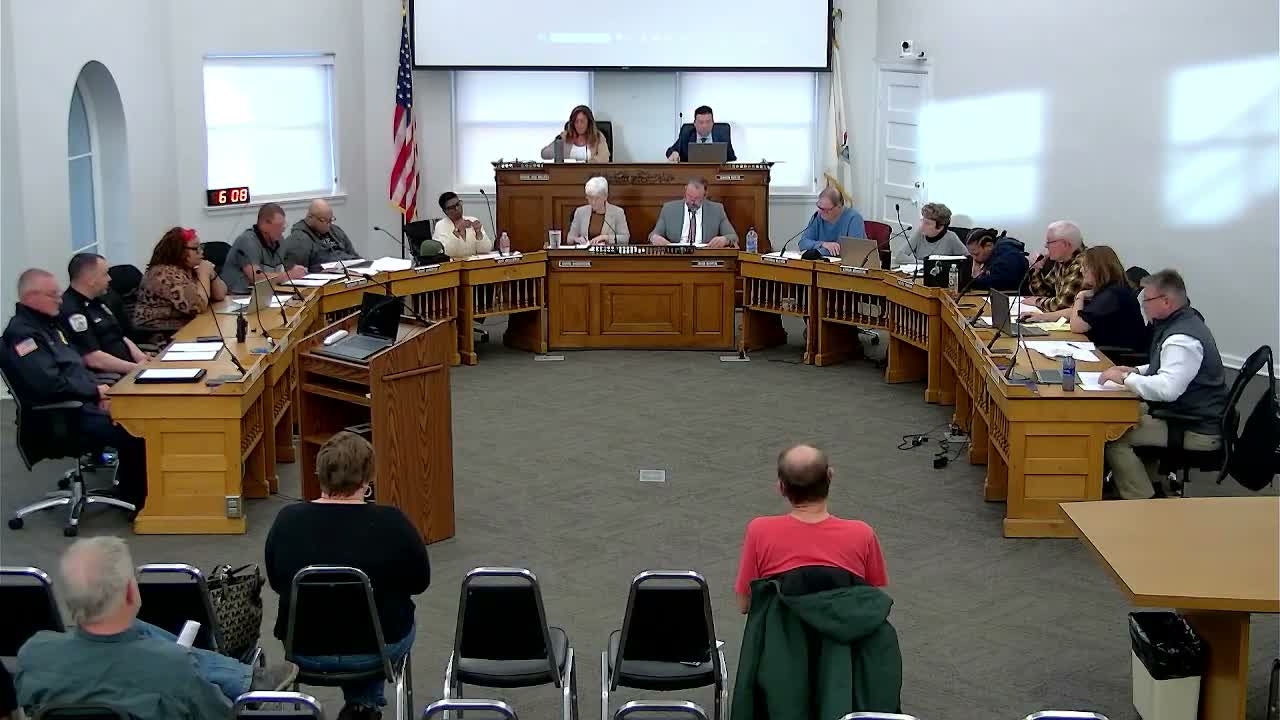
City of Freeport staff outlined a package of ordinance changes intended to bring local code into compliance with Illinois EPA MS4 requirements and to strengthen enforcement of erosion, stormwater and illicit-discharge rules.
Randy Kolbauer, the city's environmental compliance and safety officer, walked the committee through proposed amendments to Chapter 14-48 (erosion control). The changes create three permit classes based on disturbance size, tighten erosion- and sediment-control plan requirements, add clearer application and revision processes, and introduce stop-work authority and cost-recovery for noncompliant projects. Kolbauer said the revisions are intended to standardize permit expectations and improve on-site best-management practices.
Manager Boyer and Kolbauer also described proposed revisions to Chapter 6-60 that would expand administrative-hearing procedures, clarify definitions for hazardous-materials and illicit discharges, and add an access-to-premises provision for investigations of significant discharges. Boyer said the language is intended to let staff inspect and trace hazardous discharges that could threaten drinking water or wastewater operations and to provide a clear abatement and cost-allocation process.
During public comment, two emailed submissions—read for the record—urged stricter limits on who may enter private property under the proposed Chapter 6-60 access provision. Joshua T. Atkinson, a Freeport resident, wrote that granting the director of public works (or that person's designee) the authority to enter property without notice or on short notice could allow non-city contractors to enter private property and that the city currently outsources some public-works responsibilities to a firm called Fairgram. He asked the council to restrict entry to trained emergency responders or sworn officers and to ensure city accountability. Carol J. Krupke made similar points and asked that the city retain responsibility if nonemployees are given entry authority.
Staff responded that the access language is aimed primarily at rear-yard inspections for clear illicit discharges or hazardous spills and not at routine entry into residences. Kolbauer and the public-works manager described prior local incidents of hazardous dumping and said the ordinance would allow inspectors to document, require cleanup, and pursue abatement and fines when needed; they emphasized that the aim is protecting drinking water and receiving streams rather than general property searches.
Council members sought clarifications that staff will refine before final readings: how groundwater and specific pollutant categories are described in the purpose statement; the fee schedule for the new permit classes (staff said permit-fee language may need to be added and believed it would remain roughly $100 per permit but would confirm); the progression of enforcement (education first, then fines; case-by-case escalating penalties up to daily fines); and limits on who carries out inspections. Kolbauer and Boyer said MS4 testing of outfalls is performed on a schedule (quarterly) and that inspections on active construction sites must be done weekly or after rain events by the permit holder, with city staff performing randomized inspections and following up on complaints.
After discussion, the committee voted to move the erosion-control and Chapter 6-60 amendments forward to the full council for additional readings and edits. Staff were asked to return with clarified wording on groundwater, pollutant definitions, permit fees and the injunctive-relief/timeline language prior to final action.
Next steps: the ordinances will be revised to incorporate the requested clarifications and will return for formal readings at future council meetings.
Randy Kolbauer, the city's environmental compliance and safety officer, walked the committee through proposed amendments to Chapter 14-48 (erosion control). The changes create three permit classes based on disturbance size, tighten erosion- and sediment-control plan requirements, add clearer application and revision processes, and introduce stop-work authority and cost-recovery for noncompliant projects. Kolbauer said the revisions are intended to standardize permit expectations and improve on-site best-management practices.
Manager Boyer and Kolbauer also described proposed revisions to Chapter 6-60 that would expand administrative-hearing procedures, clarify definitions for hazardous-materials and illicit discharges, and add an access-to-premises provision for investigations of significant discharges. Boyer said the language is intended to let staff inspect and trace hazardous discharges that could threaten drinking water or wastewater operations and to provide a clear abatement and cost-allocation process.
During public comment, two emailed submissions—read for the record—urged stricter limits on who may enter private property under the proposed Chapter 6-60 access provision. Joshua T. Atkinson, a Freeport resident, wrote that granting the director of public works (or that person's designee) the authority to enter property without notice or on short notice could allow non-city contractors to enter private property and that the city currently outsources some public-works responsibilities to a firm called Fairgram. He asked the council to restrict entry to trained emergency responders or sworn officers and to ensure city accountability. Carol J. Krupke made similar points and asked that the city retain responsibility if nonemployees are given entry authority.
Staff responded that the access language is aimed primarily at rear-yard inspections for clear illicit discharges or hazardous spills and not at routine entry into residences. Kolbauer and the public-works manager described prior local incidents of hazardous dumping and said the ordinance would allow inspectors to document, require cleanup, and pursue abatement and fines when needed; they emphasized that the aim is protecting drinking water and receiving streams rather than general property searches.
Council members sought clarifications that staff will refine before final readings: how groundwater and specific pollutant categories are described in the purpose statement; the fee schedule for the new permit classes (staff said permit-fee language may need to be added and believed it would remain roughly $100 per permit but would confirm); the progression of enforcement (education first, then fines; case-by-case escalating penalties up to daily fines); and limits on who carries out inspections. Kolbauer and Boyer said MS4 testing of outfalls is performed on a schedule (quarterly) and that inspections on active construction sites must be done weekly or after rain events by the permit holder, with city staff performing randomized inspections and following up on complaints.
After discussion, the committee voted to move the erosion-control and Chapter 6-60 amendments forward to the full council for additional readings and edits. Staff were asked to return with clarified wording on groundwater, pollutant definitions, permit fees and the injunctive-relief/timeline language prior to final action.
Next steps: the ordinances will be revised to incorporate the requested clarifications and will return for formal readings at future council meetings.
View the Full Meeting & All Its Details
This article offers just a summary. Unlock complete video, transcripts, and insights as a Founder Member.
✓
Watch full, unedited meeting videos
✓
Search every word spoken in unlimited transcripts
✓
AI summaries & real-time alerts (all government levels)
✓
Permanent access to expanding government content
30-day money-back guarantee
