Residents urge Pittsboro to end contract with Flock Safety cameras, citing privacy and safety risks
March 09, 2026 | Town of Pittsboro, Chatham County, North Carolina
This article was created by AI summarizing key points discussed. AI makes mistakes, so for full details and context, please refer to the video of the full meeting. Please report any errors so we can fix them. Report an error »
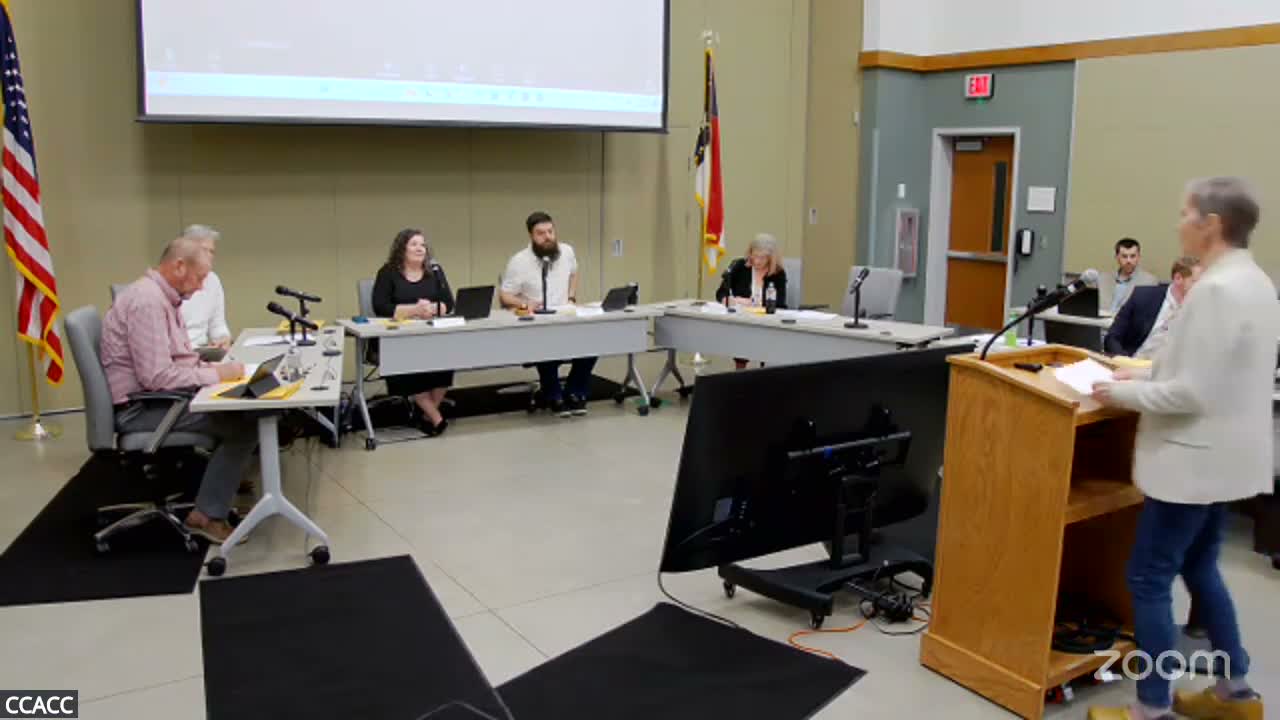
At the Town of Pittsboro Board of Commissioners meeting on March 9, more than a dozen residents urged the board to end the town’s contract with Flock Safety license‑plate‑reader cameras and to delete data collected under the program.
“Therefore, I ask you to break the contract with Flock,” Susie Crayde told the board, saying the cameras represent a Fourth Amendment violation and asking the commissioners to end town use of the system. Several other speakers made similar requests during the three‑minute public‑comment period.
Speakers described a mix of legal, technical and community concerns. Ryan Powell, a computer‑science graduate‑student, warned that AI‑driven alerts from the cameras have led to high‑risk traffic stops in other jurisdictions and that false matches could produce dangerous results for drivers and their families. Tyler Patterson highlighted how license‑plate databases can be used to map people’s daily movements and criticized the surveillance model and investor ties behind the company.
Other commenters raised vendor and security issues. Alan Cat said some of the nine installed cameras have accessible external ports and questioned whether the company has addressed known safety vulnerabilities. Bradley Pierce warned that updated vendor terms he reviewed shift disputes into mandatory arbitration under Georgia law and limit vendor liability, exposing taxpayers to legal risk. Tanya Garcia, a data‑systems professional, described how the platform captures vehicle images that enable searches by make, model or other attributes and urged the board to examine contracts, data‑storage arrangements and exit options before allowing the system to persist.
Religious and immigrant‑community concerns were raised as well. Shontay Smith, pastor of Mount Sinai AME Church, said the program does not build community and expressed opposition from congregants; David Patterson and others said immigrant neighbors fear surveillance and potential misuse.
Not every commenter requested immediate removal. Dave Patterson, who lives in a neighborhood with cameras installed, said he trusts local law enforcement but asked for greater transparency and collaboration between the town, residents and police to determine whether the systems are necessary.
Speakers asked the town to provide: a clear accounting of which agencies and vendors have access to the data; the legal agreements governing use and retention; confirmation whether any local crimes were solved solely because of the cameras; and options for terminating the contract and deleting archived data.
The board did not take action on the cameras during the meeting; the public‑comment period concluded before the agenda moved to hearings and votes. Commissioners and staff did not announce a timetable for staff to report back on contract terms or data‑access details.
Next steps: citizens asked for a staff report that would include contract terms, data storage and access rights, and an analysis of vendor liability and technical security; the record shows community pressure for either removal or an immediate, public contract review.
“Therefore, I ask you to break the contract with Flock,” Susie Crayde told the board, saying the cameras represent a Fourth Amendment violation and asking the commissioners to end town use of the system. Several other speakers made similar requests during the three‑minute public‑comment period.
Speakers described a mix of legal, technical and community concerns. Ryan Powell, a computer‑science graduate‑student, warned that AI‑driven alerts from the cameras have led to high‑risk traffic stops in other jurisdictions and that false matches could produce dangerous results for drivers and their families. Tyler Patterson highlighted how license‑plate databases can be used to map people’s daily movements and criticized the surveillance model and investor ties behind the company.
Other commenters raised vendor and security issues. Alan Cat said some of the nine installed cameras have accessible external ports and questioned whether the company has addressed known safety vulnerabilities. Bradley Pierce warned that updated vendor terms he reviewed shift disputes into mandatory arbitration under Georgia law and limit vendor liability, exposing taxpayers to legal risk. Tanya Garcia, a data‑systems professional, described how the platform captures vehicle images that enable searches by make, model or other attributes and urged the board to examine contracts, data‑storage arrangements and exit options before allowing the system to persist.
Religious and immigrant‑community concerns were raised as well. Shontay Smith, pastor of Mount Sinai AME Church, said the program does not build community and expressed opposition from congregants; David Patterson and others said immigrant neighbors fear surveillance and potential misuse.
Not every commenter requested immediate removal. Dave Patterson, who lives in a neighborhood with cameras installed, said he trusts local law enforcement but asked for greater transparency and collaboration between the town, residents and police to determine whether the systems are necessary.
Speakers asked the town to provide: a clear accounting of which agencies and vendors have access to the data; the legal agreements governing use and retention; confirmation whether any local crimes were solved solely because of the cameras; and options for terminating the contract and deleting archived data.
The board did not take action on the cameras during the meeting; the public‑comment period concluded before the agenda moved to hearings and votes. Commissioners and staff did not announce a timetable for staff to report back on contract terms or data‑access details.
Next steps: citizens asked for a staff report that would include contract terms, data storage and access rights, and an analysis of vendor liability and technical security; the record shows community pressure for either removal or an immediate, public contract review.
Don't Miss a Word: See the Full Meeting!
Go beyond summaries. Unlock every video, transcript, and key insight with a Founder Membership.
✓
Get instant access to full meeting videos
✓
Search and clip any phrase from complete transcripts
✓
Receive AI-powered summaries & custom alerts
✓
Enjoy lifetime, unrestricted access to government data
30-day money-back guarantee
