Students and technical education coordinator say industry credentials boost work‑based learning
March 09, 2026 | De Forest Area School District, School Districts, Wisconsin
This article was created by AI summarizing key points discussed. AI makes mistakes, so for full details and context, please refer to the video of the full meeting. Please report any errors so we can fix them. Report an error »
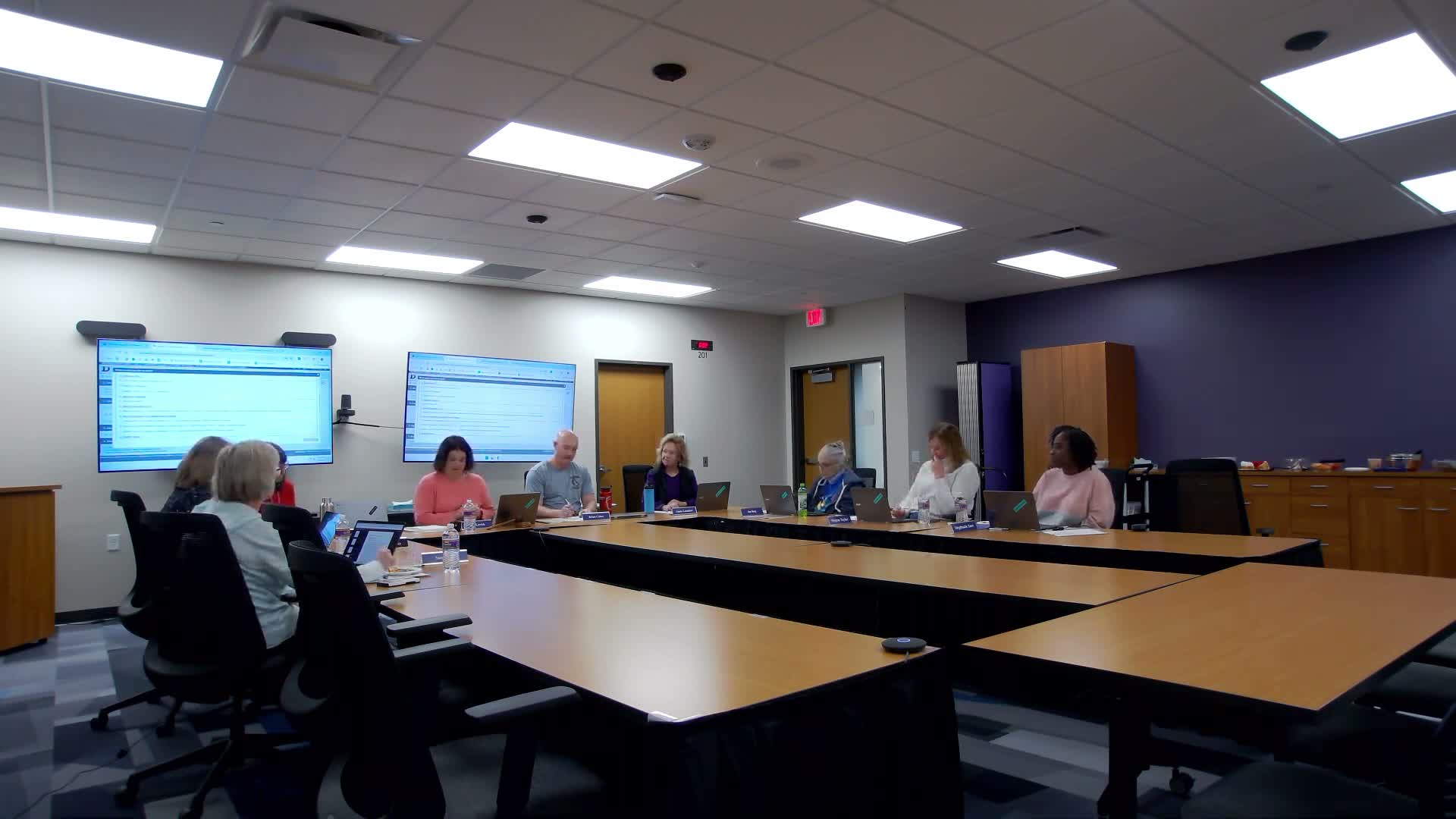
Austin Holper, the district’s technical education coordinator, told the De Forest Area School District Board that students are increasingly earning industry‑recognized credentials (IRCs) through in‑house CTE courses, youth apprenticeships and partnerships with Madison College and MATC. Holper said the district benefits from the Act 59 technical incentive grant, which provides funding for each graduating student who earns an IRC, and cited growth in credentials: 49 earned by the class of 2024, 92 by the class of 2025, and an estimate of about 125 for the class of 2026.
Three students who were brought to the meeting described how credentials helped them find work and gain experience. Caitlin Forsyth, a senior and ACCT credential holder, said she earned CPR and infant/toddler certifications and completed 24 volunteer hours to qualify for ACCT and 480 hours toward a lead license through an internship. "Taking ACCT helped me become an assistant teacher, which helped me get paid more," she said. Bryce Matka, a sophomore, described earning a Microsoft PowerPoint associate certification through classroom modules and timed, performance‑style tests. Elena Short, a senior, described completing CNA coursework through MATC, three 8‑hour clinical shifts at Waunakee Valley Senior Living and proctored tests that led to CNA certification; she is now a youth apprentice at Home Again Assisted Living.
Board members asked how students learn about credentialing options and how the district supports completion. Staff said some classes were recently reinstated after operating as non‑dual credit options and that youth apprenticeship and Madison College pathways allow students to earn credentials or college credit while in high school. Holper said the list of vetted credentials is reviewed with the Department of Workforce Development and the Department of Public Instruction and that new credentials (for example, Snap‑On precision measurement and Microsoft Office associate level) were added this year using incentive grant funding.
Board members and staff discussed outreach and program momentum. One board member praised the student presentations and staff for translating program growth into measurable outcomes; staff signaled intent to continue expanding credentials and documenting results for future reports.
The board did not take formal action specific to individual credentials during the presentation; the discussion was part of board education preceding the monitoring and indicator items.
The district listed examples of IRCs in the presentation, including Microsoft Office Specialist associate credentials, ACCT (assistant childcare teacher) credentials, certified nursing assistant (CNA), Snap‑On precision measurement (PMI), ASE (automotive service excellence), EMT/EMR, pharmacy technician and Firefighter 1 and 2. Staff said the technical incentive grant funds are used to sustain and expand CTE programming.
Next steps: board members asked staff to include more data in future reports showing how credentialing and ACP activities translate into the district’s readiness indicators and to return with concrete artifacts and tracking options.
Three students who were brought to the meeting described how credentials helped them find work and gain experience. Caitlin Forsyth, a senior and ACCT credential holder, said she earned CPR and infant/toddler certifications and completed 24 volunteer hours to qualify for ACCT and 480 hours toward a lead license through an internship. "Taking ACCT helped me become an assistant teacher, which helped me get paid more," she said. Bryce Matka, a sophomore, described earning a Microsoft PowerPoint associate certification through classroom modules and timed, performance‑style tests. Elena Short, a senior, described completing CNA coursework through MATC, three 8‑hour clinical shifts at Waunakee Valley Senior Living and proctored tests that led to CNA certification; she is now a youth apprentice at Home Again Assisted Living.
Board members asked how students learn about credentialing options and how the district supports completion. Staff said some classes were recently reinstated after operating as non‑dual credit options and that youth apprenticeship and Madison College pathways allow students to earn credentials or college credit while in high school. Holper said the list of vetted credentials is reviewed with the Department of Workforce Development and the Department of Public Instruction and that new credentials (for example, Snap‑On precision measurement and Microsoft Office associate level) were added this year using incentive grant funding.
Board members and staff discussed outreach and program momentum. One board member praised the student presentations and staff for translating program growth into measurable outcomes; staff signaled intent to continue expanding credentials and documenting results for future reports.
The board did not take formal action specific to individual credentials during the presentation; the discussion was part of board education preceding the monitoring and indicator items.
The district listed examples of IRCs in the presentation, including Microsoft Office Specialist associate credentials, ACCT (assistant childcare teacher) credentials, certified nursing assistant (CNA), Snap‑On precision measurement (PMI), ASE (automotive service excellence), EMT/EMR, pharmacy technician and Firefighter 1 and 2. Staff said the technical incentive grant funds are used to sustain and expand CTE programming.
Next steps: board members asked staff to include more data in future reports showing how credentialing and ACP activities translate into the district’s readiness indicators and to return with concrete artifacts and tracking options.
Don't Miss a Word: See the Full Meeting!
Go beyond summaries. Unlock every video, transcript, and key insight with a Founder Membership.
✓
Get instant access to full meeting videos
✓
Search and clip any phrase from complete transcripts
✓
Receive AI-powered summaries & custom alerts
✓
Enjoy lifetime, unrestricted access to government data
30-day money-back guarantee
