Grand Island council keeps hotel occupation tax at 2% after heated public comment
December 31, 2025 | Grand Island, Hall County, Nebraska
This article was created by AI summarizing key points discussed. AI makes mistakes, so for full details and context, please refer to the video of the full meeting. Please report any errors so we can fix them. Report an error »
The Grand Island City Council voted on Dec. 30 to keep the city's hotel occupation tax at 2% after an extended public hearing that drew hoteliers, tourism officials and event operators concerned about the impact of a proposed increase.
The administration had proposed raising the current 2% occupation tax to 5% (a net 3% increase) to fund about $11 million in deferred maintenance and upgrades at city facilities, including the Heartland Event Center. Patrick Brown, the city administrator, told the council the additional 3% would support a 20-year bond and produce roughly $800,000 a year toward projects such as chillers, lighting and sound systems. "For a $100 room, with a 3% increase going to 5%, it'd be a $3.38 increase to the visitor," Brown said during his presentation.
The proposal prompted sustained pushback from the hospitality industry and event operators. "Hotels are not a limitless funding mechanism," Brad Melama of Grand Island Tourism told the council. He urged the city to attach "strict guardrails, accountability, and a clear return on investment" to any new tax and warned that overly broad code language could let future councils spend revenue on items with little impact on hotel occupancies.
Carla Janice, a longtime local general manager, said higher taxes could make rooms less competitive and exacerbate off-season staffing and revenue problems. Leaders representing livestock shows and Foner Park warned that the events that generate much of the city's overnight demand could be put at risk if costs to visitors and organizers rise.
Council members debated legal limits, timing and alternatives such as food-and-beverage taxes, casino proceeds and a public/private funding consortium for livestock-show subsidies. City attorney Carrie Fisk clarified that the occupation tax is a statutory creation with specific permissible uses and that changes to code language do not change state statute limitations.
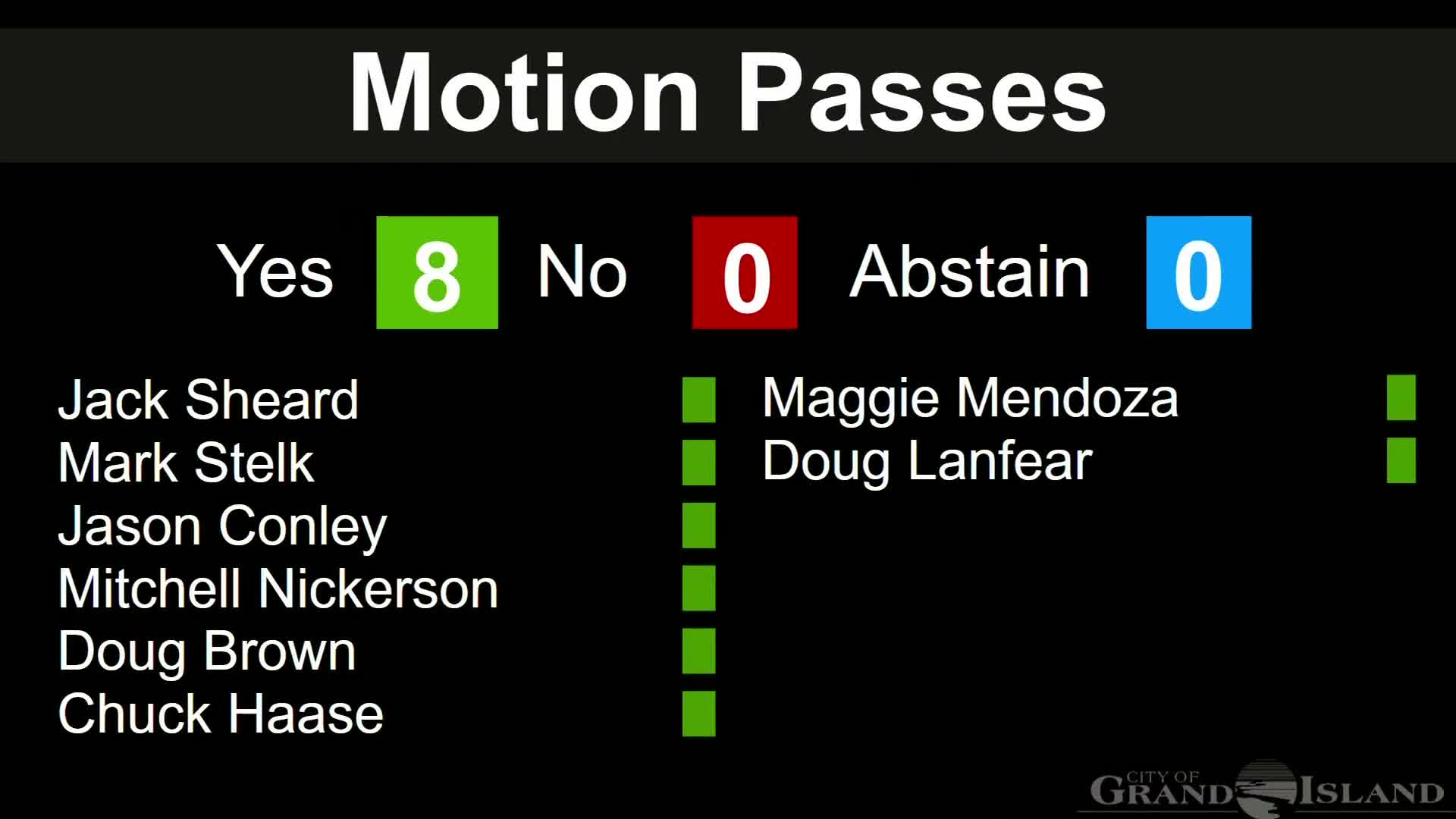
Faced with the choice, Council member Hossy moved to amend the proposed ordinance to restore the rate to 2% (instead of 5% as proposed). The motion passed; council adopted the amended ordinance and directed staff to convene stakeholders, pursue additional legal and financial analysis, and bring options back for future consideration at an upcoming meeting (council discussed a Jan. 13 meeting date for follow-up).
The council's action preserves the current revenue stream while leaving open further study of alternative or supplemental funding sources for the Heartland Event Center and for livestock-show support.
The council will consider additional information and potential follow-up ordinances in the coming weeks, and the administration said it will return with more detailed funding plans if council requests them.
The administration had proposed raising the current 2% occupation tax to 5% (a net 3% increase) to fund about $11 million in deferred maintenance and upgrades at city facilities, including the Heartland Event Center. Patrick Brown, the city administrator, told the council the additional 3% would support a 20-year bond and produce roughly $800,000 a year toward projects such as chillers, lighting and sound systems. "For a $100 room, with a 3% increase going to 5%, it'd be a $3.38 increase to the visitor," Brown said during his presentation.
The proposal prompted sustained pushback from the hospitality industry and event operators. "Hotels are not a limitless funding mechanism," Brad Melama of Grand Island Tourism told the council. He urged the city to attach "strict guardrails, accountability, and a clear return on investment" to any new tax and warned that overly broad code language could let future councils spend revenue on items with little impact on hotel occupancies.
Carla Janice, a longtime local general manager, said higher taxes could make rooms less competitive and exacerbate off-season staffing and revenue problems. Leaders representing livestock shows and Foner Park warned that the events that generate much of the city's overnight demand could be put at risk if costs to visitors and organizers rise.
Council members debated legal limits, timing and alternatives such as food-and-beverage taxes, casino proceeds and a public/private funding consortium for livestock-show subsidies. City attorney Carrie Fisk clarified that the occupation tax is a statutory creation with specific permissible uses and that changes to code language do not change state statute limitations.
Faced with the choice, Council member Hossy moved to amend the proposed ordinance to restore the rate to 2% (instead of 5% as proposed). The motion passed; council adopted the amended ordinance and directed staff to convene stakeholders, pursue additional legal and financial analysis, and bring options back for future consideration at an upcoming meeting (council discussed a Jan. 13 meeting date for follow-up).
The council's action preserves the current revenue stream while leaving open further study of alternative or supplemental funding sources for the Heartland Event Center and for livestock-show support.
The council will consider additional information and potential follow-up ordinances in the coming weeks, and the administration said it will return with more detailed funding plans if council requests them.
Don't Miss a Word: See the Full Meeting!
Go beyond summaries. Unlock every video, transcript, and key insight with a Founder Membership.
✓
Get instant access to full meeting videos
✓
Search and clip any phrase from complete transcripts
✓
Receive AI-powered summaries & custom alerts
✓
Enjoy lifetime, unrestricted access to government data
30-day money-back guarantee
