Retired engineer urges Parker to require engineer certification on plat submittals
March 05, 2026 | Parker, Collin County, Texas
This article was created by AI summarizing key points discussed. AI makes mistakes, so for full details and context, please refer to the video of the full meeting. Please report any errors so we can fix them. Report an error »
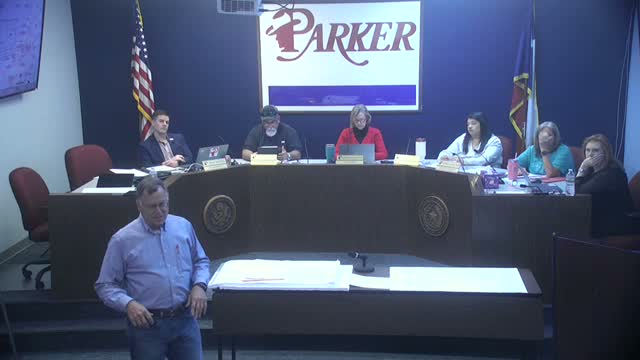
At a March 5 joint training workshop of the Parker City Council and Planning and Zoning Commission, retired professional engineer John Barkoff urged the city to require an explicit certification from the engineer of record that submitted plats and construction plans have been reviewed and meet the city’s requirements.
Barkoff, who led the training, told the assembled council members and commissioners that developers and their engineers often treat early submittals as incomplete "70%" drafts, which triggers repeated review cycles. "I would recommend that you require the engineer of record to provide a new transmitter of certification that he had reviewed this set of plans and submitted to me," Barkoff said, arguing that a formal certification would reduce repetitive reviews and improve plan quality.
The recommendation came amid broader instruction on the subdivision process, including differences between preliminary plats (the staff and planning body review) and final plats (the recordable meets‑and‑bounds document filed with the county once construction is complete). Barkoff highlighted erosion control, detention‑vs‑retention pond design and downstream discharge risks, noting design practices such as using multiple storm return periods (10, 25, 50, 100‑year) and a safety freeboard of about two feet.
A city staff member noted a related statutory constraint: "Action has to be taken. Otherwise, it's approved by function of law," reflecting state shot‑clock limits on local review. Commissioners said limited review time can make it difficult to perform detailed technical checks; one commissioner called staff presentations that summarize engineering letters "super helpful" when the official engineer's report arrives at short notice.
City staff told the group Barkoff's certification recommendation had been "tagged to add to our application checklist for future submittals." Barkoff and staff also discussed the city's leverage points: even if a preliminary plat is approved, lots cannot be released for construction until a final plat is recorded with the county and required construction‑plan approvals and inspections are completed.
The training included a discussion about homeowner association responsibilities for long‑term pond maintenance and the role of construction inspectors during site work. A participant noted that while HOAs often manage dredging and maintenance, older ponds may lack maintenance plans and merit further review.
No formal vote was recorded in the transcript on the certification proposal. Staff signaled an intent to include the certification in the submittal checklist; next steps include drafting precise certification language and integrating it into the application materials.
Barkoff, who led the training, told the assembled council members and commissioners that developers and their engineers often treat early submittals as incomplete "70%" drafts, which triggers repeated review cycles. "I would recommend that you require the engineer of record to provide a new transmitter of certification that he had reviewed this set of plans and submitted to me," Barkoff said, arguing that a formal certification would reduce repetitive reviews and improve plan quality.
The recommendation came amid broader instruction on the subdivision process, including differences between preliminary plats (the staff and planning body review) and final plats (the recordable meets‑and‑bounds document filed with the county once construction is complete). Barkoff highlighted erosion control, detention‑vs‑retention pond design and downstream discharge risks, noting design practices such as using multiple storm return periods (10, 25, 50, 100‑year) and a safety freeboard of about two feet.
A city staff member noted a related statutory constraint: "Action has to be taken. Otherwise, it's approved by function of law," reflecting state shot‑clock limits on local review. Commissioners said limited review time can make it difficult to perform detailed technical checks; one commissioner called staff presentations that summarize engineering letters "super helpful" when the official engineer's report arrives at short notice.
City staff told the group Barkoff's certification recommendation had been "tagged to add to our application checklist for future submittals." Barkoff and staff also discussed the city's leverage points: even if a preliminary plat is approved, lots cannot be released for construction until a final plat is recorded with the county and required construction‑plan approvals and inspections are completed.
The training included a discussion about homeowner association responsibilities for long‑term pond maintenance and the role of construction inspectors during site work. A participant noted that while HOAs often manage dredging and maintenance, older ponds may lack maintenance plans and merit further review.
No formal vote was recorded in the transcript on the certification proposal. Staff signaled an intent to include the certification in the submittal checklist; next steps include drafting precise certification language and integrating it into the application materials.
Don't Miss a Word: See the Full Meeting!
Go beyond summaries. Unlock every video, transcript, and key insight with a Founder Membership.
✓
Get instant access to full meeting videos
✓
Search and clip any phrase from complete transcripts
✓
Receive AI-powered summaries & custom alerts
✓
Enjoy lifetime, unrestricted access to government data
30-day money-back guarantee
