Austin Animal Services outlines 30/60/90 plan to expand foster program, reopen intake and boost staffing
March 09, 2026 | Austin, Travis County, Texas
This article was created by AI summarizing key points discussed. AI makes mistakes, so for full details and context, please refer to the video of the full meeting. Please report any errors so we can fix them. Report an error »
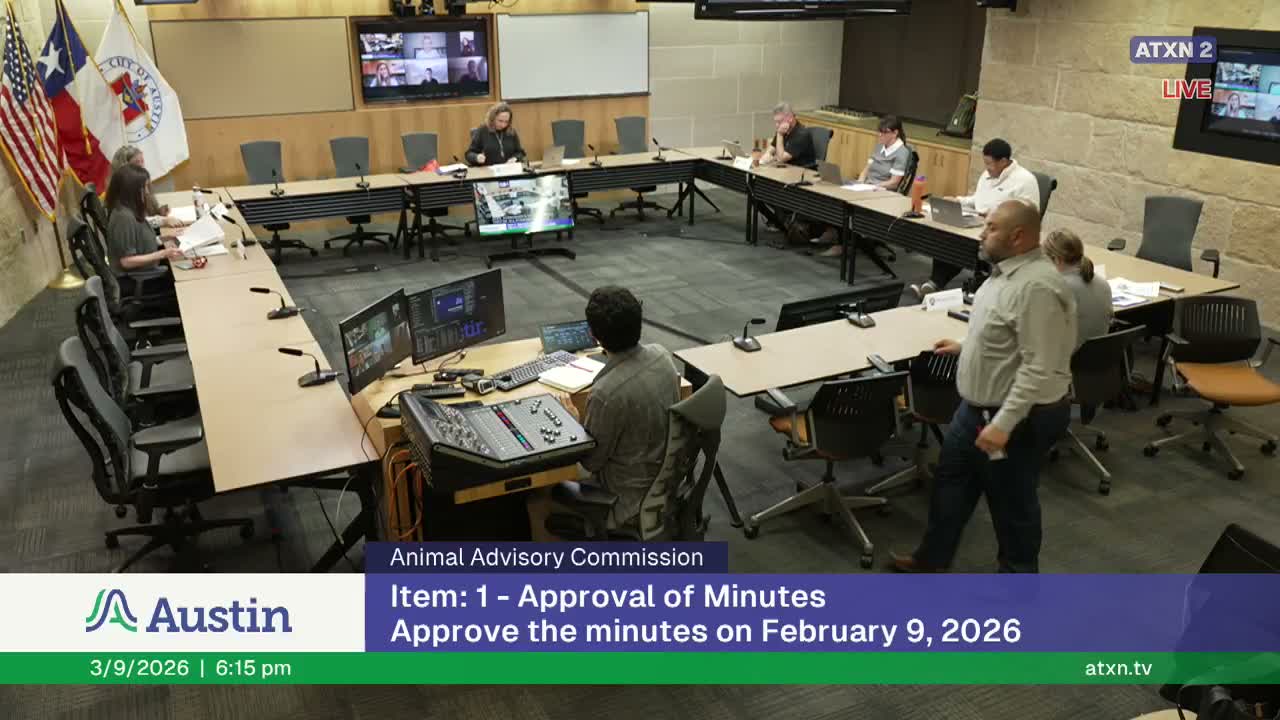
Director Dangler presented Austin Animal Services’ operational priorities and a 30/60/90 plan at the March 9 Bridal Advisory Commission meeting, emphasizing efforts to reopen intake by expanding foster capacity and improving transfer partnerships with local rescues.
Dangler described several near-term initiatives: a March 22 adoption promotion event to increase public traffic; monthly staff training closures (beginning March 11) focused on dog and staff safety following a recent dog attack; expansion of day-out and overnight foster trial programs; volunteer access to the Shelter Buddy database; and a foster-management tool under procurement consideration to identify three daily dogs for foster placement and communicate needs to foster families. She said improved foster capacity and transfer coordination with Austin Pets Alive have already eased movement of large-breed dogs out of the shelter.
Assistant Director Jason Garza presented February operational metrics: 823 impounds in February (788 domestic), 28 euthanasias, a live-release rate of 95.53%, 385 adoptions in the month, 308 foster families and 229 animals in foster as of March 4, 184 transfers to 20 rescue partners, 76 reclaimed animals, 917 vaccinations and 341 surgeries completed. Garza acknowledged a records issue: some outcomes were marked 'missing' in the database and staff will follow up to reconcile records.
Commissioners asked for numeric goals and outreach details. Dangler referenced national benchmarks — a 50% adoption rate as an attainable target and 60% as an aspirational target for a ‘healthy’ shelter — and set a foster target of at least 30% of animals, with the potential to increase that percentage. Commissioners requested more detailed outreach and post-event debriefs for the large spay/neuter clinics and confirmation on auto-extension of stray-hold days in Shelter Buddy; staff said some automations will need to be added and procurement steps followed for new software features.
The briefing framed the commission’s subsequent budget recommendations (positions, dog-walkers, enrichment, tech) as steps to support the shelter’s operational goals.
The commission asked staff to return with additional data, including TNR (trap-neuter-return) counts and follow-up on animals with 'missing' outcomes in the records.
Dangler described several near-term initiatives: a March 22 adoption promotion event to increase public traffic; monthly staff training closures (beginning March 11) focused on dog and staff safety following a recent dog attack; expansion of day-out and overnight foster trial programs; volunteer access to the Shelter Buddy database; and a foster-management tool under procurement consideration to identify three daily dogs for foster placement and communicate needs to foster families. She said improved foster capacity and transfer coordination with Austin Pets Alive have already eased movement of large-breed dogs out of the shelter.
Assistant Director Jason Garza presented February operational metrics: 823 impounds in February (788 domestic), 28 euthanasias, a live-release rate of 95.53%, 385 adoptions in the month, 308 foster families and 229 animals in foster as of March 4, 184 transfers to 20 rescue partners, 76 reclaimed animals, 917 vaccinations and 341 surgeries completed. Garza acknowledged a records issue: some outcomes were marked 'missing' in the database and staff will follow up to reconcile records.
Commissioners asked for numeric goals and outreach details. Dangler referenced national benchmarks — a 50% adoption rate as an attainable target and 60% as an aspirational target for a ‘healthy’ shelter — and set a foster target of at least 30% of animals, with the potential to increase that percentage. Commissioners requested more detailed outreach and post-event debriefs for the large spay/neuter clinics and confirmation on auto-extension of stray-hold days in Shelter Buddy; staff said some automations will need to be added and procurement steps followed for new software features.
The briefing framed the commission’s subsequent budget recommendations (positions, dog-walkers, enrichment, tech) as steps to support the shelter’s operational goals.
The commission asked staff to return with additional data, including TNR (trap-neuter-return) counts and follow-up on animals with 'missing' outcomes in the records.
Don't Miss a Word: See the Full Meeting!
Go beyond summaries. Unlock every video, transcript, and key insight with a Founder Membership.
✓
Get instant access to full meeting videos
✓
Search and clip any phrase from complete transcripts
✓
Receive AI-powered summaries & custom alerts
✓
Enjoy lifetime, unrestricted access to government data
30-day money-back guarantee
