Appeals court hears clash over whether photo alone suffices in child‑image and indecent‑assault counts
March 09, 2026 | Judicial - Appeals Court Oral Arguments, Judicial, Massachusetts
This article was created by AI summarizing key points discussed. AI makes mistakes, so for full details and context, please refer to the video of the full meeting. Please report any errors so we can fix them. Report an error »
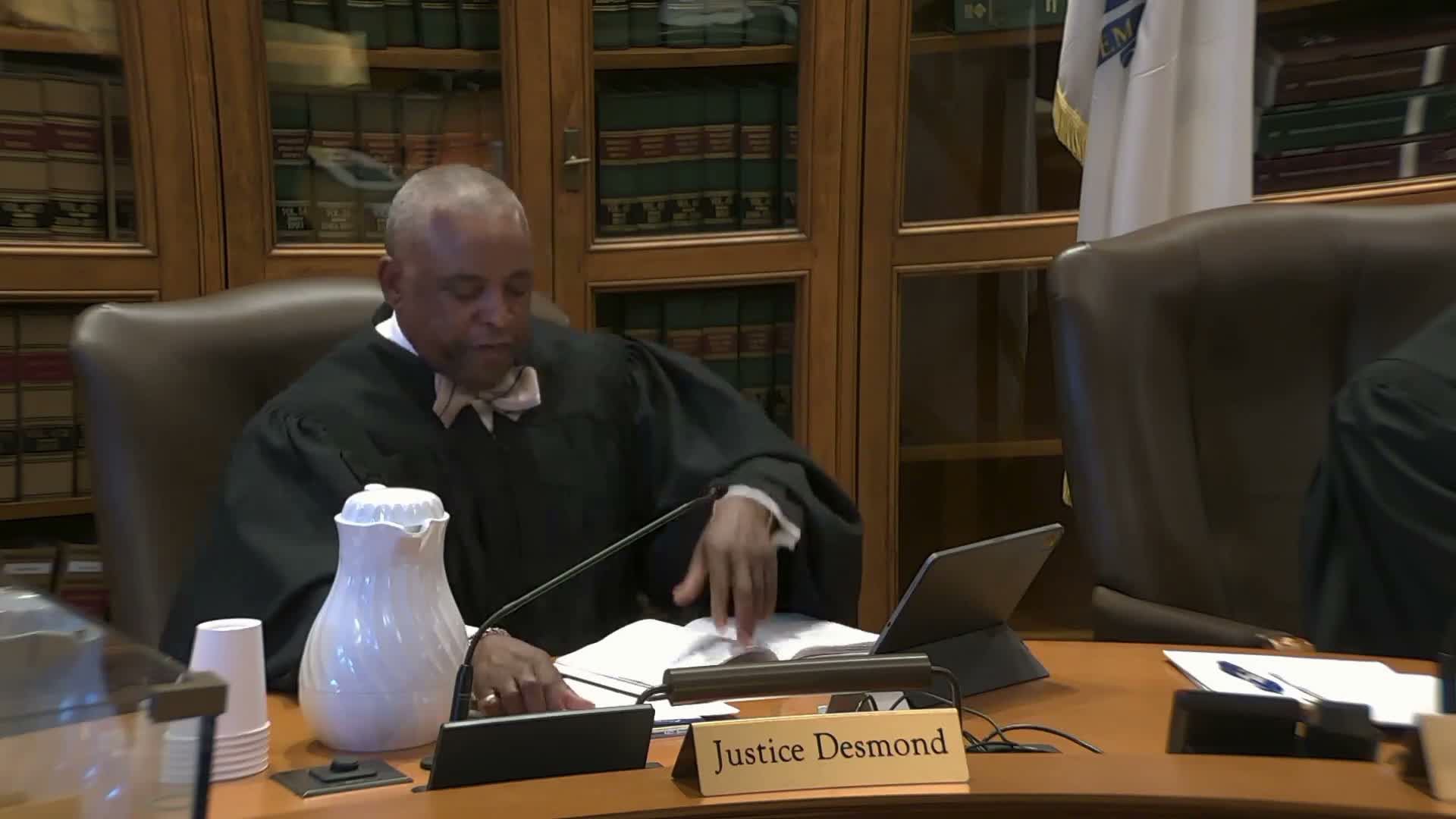
The Massachusetts Appeals Court heard competing arguments over whether a single photograph and surrounding evidence could sustain convictions in Commonwealth v. Scott Fontaine (Docket 25P0589). The presiding justice announced the panel had read the record and limited counsel to 15 minutes per side.
May it please the court, Steven Nato for the Commonwealth argued that even without evidence the trial judge struck, the remaining proof — including Exhibit 16, which the Commonwealth described as depicting the defendant pulling a child’s underwear aside to expose buttocks — was sufficient to support indecent assault and battery and possession of child sexual images. Nato told the court the image and testimony identifying clothing and bedding supported an inference the defendant created the image and that jurors could find the depiction indecent on its face.
Defense counsel Catherine Blythe replied that Massachusetts law requires an objective, four‑corners Lattimore/Sullivan analysis for possession of child sexual images and that the subjective intent of a possessor or creator is not part of that inquiry. Blythe told the court she disagreed with the Commonwealth’s invitation to consider the circumstances of creation; she argued the struck testimony and messages were not part of the facts of the case for a sufficiency review and that Judge Maguire’s exclusion and 404/403 balancing were appropriate.
The panel questioned whether evidence about creation and contemporaneous statements could properly be used to show lewdness or indecency, and whether cases the Commonwealth cited from federal courts permit a limited contextual inquiry when a defendant is alleged to be the creator. Counsel debated whether the jury could reasonably find an objective lewdness standard was met on the four corners of the photograph alone or whether context changed that analysis.
Blythe also argued the trial court properly excluded prior statements and inflammatory material as more prejudicial than probative; she said the excluded material was distinct from "erroneously admitted" evidence and therefore could not be part of a Lattimore sufficiency review. Nato countered that some of the excluded evidence bore on intent and predatory motive and that the trial judge’s 404(b)/403 balancing was incorrect as to indecency.
The court took the matter under submission after argument.
Why it matters: The panel is being asked to reconcile established four‑corners precedent with cases that allow limited context where a defendant created an image, and to decide when excluded but stricken evidence may be considered on sufficiency. The court’s resolution could affect how appellate courts review similar photographic evidence and the permissible scope of contextual proof in possession and indecency cases.
The motion stands submitted and the court moved to the next docket item.
May it please the court, Steven Nato for the Commonwealth argued that even without evidence the trial judge struck, the remaining proof — including Exhibit 16, which the Commonwealth described as depicting the defendant pulling a child’s underwear aside to expose buttocks — was sufficient to support indecent assault and battery and possession of child sexual images. Nato told the court the image and testimony identifying clothing and bedding supported an inference the defendant created the image and that jurors could find the depiction indecent on its face.
Defense counsel Catherine Blythe replied that Massachusetts law requires an objective, four‑corners Lattimore/Sullivan analysis for possession of child sexual images and that the subjective intent of a possessor or creator is not part of that inquiry. Blythe told the court she disagreed with the Commonwealth’s invitation to consider the circumstances of creation; she argued the struck testimony and messages were not part of the facts of the case for a sufficiency review and that Judge Maguire’s exclusion and 404/403 balancing were appropriate.
The panel questioned whether evidence about creation and contemporaneous statements could properly be used to show lewdness or indecency, and whether cases the Commonwealth cited from federal courts permit a limited contextual inquiry when a defendant is alleged to be the creator. Counsel debated whether the jury could reasonably find an objective lewdness standard was met on the four corners of the photograph alone or whether context changed that analysis.
Blythe also argued the trial court properly excluded prior statements and inflammatory material as more prejudicial than probative; she said the excluded material was distinct from "erroneously admitted" evidence and therefore could not be part of a Lattimore sufficiency review. Nato countered that some of the excluded evidence bore on intent and predatory motive and that the trial judge’s 404(b)/403 balancing was incorrect as to indecency.
The court took the matter under submission after argument.
Why it matters: The panel is being asked to reconcile established four‑corners precedent with cases that allow limited context where a defendant created an image, and to decide when excluded but stricken evidence may be considered on sufficiency. The court’s resolution could affect how appellate courts review similar photographic evidence and the permissible scope of contextual proof in possession and indecency cases.
The motion stands submitted and the court moved to the next docket item.
View the Full Meeting & All Its Details
This article offers just a summary. Unlock complete video, transcripts, and insights as a Founder Member.
✓
Watch full, unedited meeting videos
✓
Search every word spoken in unlimited transcripts
✓
AI summaries & real-time alerts (all government levels)
✓
Permanent access to expanding government content
30-day money-back guarantee
