Floor fight over 'SC FIRST' tuition‑mitigation program breaks into wider debate over Clemson and university accountability
March 09, 2026 | 2026 Legislative Meetings, South Carolina
This article was created by AI summarizing key points discussed. AI makes mistakes, so for full details and context, please refer to the video of the full meeting. Please report any errors so we can fix them. Report an error »
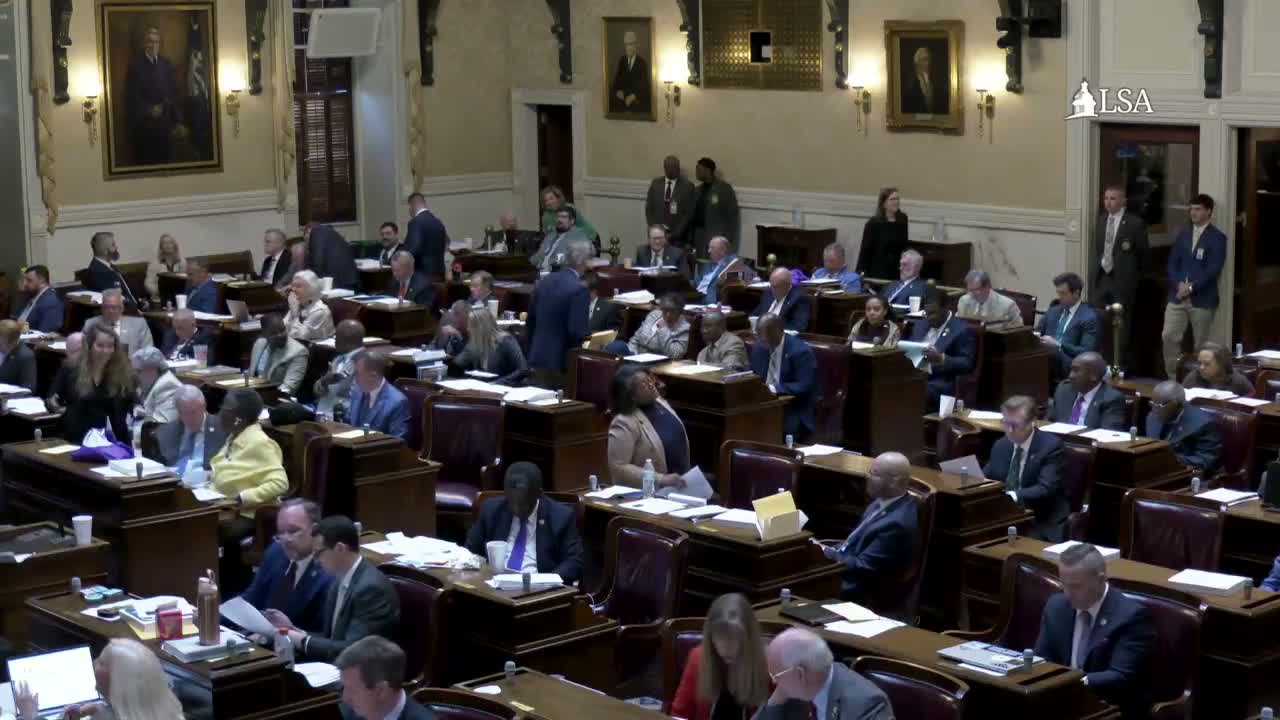
A contentious series of amendments to the budget touched off an extended exchange on the House floor over the SC FIRST tuition‑mitigation program and direct appropriations to several public universities.
Representative Pace (S19) explained a floor amendment that would reduce or remove tuition‑mitigation subsidies, arguing that government subsidies distort incentives and that redirecting those funds toward income‑tax relief would better serve taxpayers. "If you subsidize something, you get more of it," he told the chamber, saying he plans to pursue further reductions and to apply any savings to income‑tax relief measures.
Several members pushed back. Representative Ballantine (S14) and Representative King (S20) questioned whether removing mitigation dollars would raise in‑state tuition for students and whether the universities could or would cut budgets to avoid passing costs to students. Representative Cromer (S13) made an extended floor statement criticizing Clemson University's leadership and governance, and proposed several amendments aimed at reducing or redirecting university funding; members debated the merits, the transparency of university finances and the appropriateness of state subsidies.
Multiple amendments (including numbers 30, 36, 73 and 74) were moved to table and subsequently tabled. After debate the House approved Section 14, which contains several university allocations, by a vote recorded as 93–17.
Why it matters: Tuition mitigation and direct university allocations shape affordability for in‑state students and the fiscal posture of public institutions. The debate shows the House wrestling with long‑standing policy tradeoffs — reducing taxpayer subsidy to curtail institutional spending versus maintaining targeted support to keep in‑state tuition stable.
Claims and counterclaims: Pace asserted subsidies incentivize higher costs and argued savings should fund tax relief; opponents said mitigation helps keep college accessible and that universities would likely pass costs to students if funding disappeared. Lawmakers also raised issues about trustee structures, accountability and private vs. public funding mixes at particular institutions.
Ending: Several university amendments were tabled after floor exchanges. The budget text (Section 14) passed by recorded vote and the chamber moved on to other sections; members signaled plans to press for follow‑up analysis and potential future amendments.
Representative Pace (S19) explained a floor amendment that would reduce or remove tuition‑mitigation subsidies, arguing that government subsidies distort incentives and that redirecting those funds toward income‑tax relief would better serve taxpayers. "If you subsidize something, you get more of it," he told the chamber, saying he plans to pursue further reductions and to apply any savings to income‑tax relief measures.
Several members pushed back. Representative Ballantine (S14) and Representative King (S20) questioned whether removing mitigation dollars would raise in‑state tuition for students and whether the universities could or would cut budgets to avoid passing costs to students. Representative Cromer (S13) made an extended floor statement criticizing Clemson University's leadership and governance, and proposed several amendments aimed at reducing or redirecting university funding; members debated the merits, the transparency of university finances and the appropriateness of state subsidies.
Multiple amendments (including numbers 30, 36, 73 and 74) were moved to table and subsequently tabled. After debate the House approved Section 14, which contains several university allocations, by a vote recorded as 93–17.
Why it matters: Tuition mitigation and direct university allocations shape affordability for in‑state students and the fiscal posture of public institutions. The debate shows the House wrestling with long‑standing policy tradeoffs — reducing taxpayer subsidy to curtail institutional spending versus maintaining targeted support to keep in‑state tuition stable.
Claims and counterclaims: Pace asserted subsidies incentivize higher costs and argued savings should fund tax relief; opponents said mitigation helps keep college accessible and that universities would likely pass costs to students if funding disappeared. Lawmakers also raised issues about trustee structures, accountability and private vs. public funding mixes at particular institutions.
Ending: Several university amendments were tabled after floor exchanges. The budget text (Section 14) passed by recorded vote and the chamber moved on to other sections; members signaled plans to press for follow‑up analysis and potential future amendments.
View the Full Meeting & All Its Details
This article offers just a summary. Unlock complete video, transcripts, and insights as a Founder Member.
✓
Watch full, unedited meeting videos
✓
Search every word spoken in unlimited transcripts
✓
AI summaries & real-time alerts (all government levels)
✓
Permanent access to expanding government content
30-day money-back guarantee
