Appeals court hears argument that unproduced booking video undercuts Hamza Abdo's trial
March 09, 2026 | Judicial - Appeals Court Oral Arguments, Judicial, Massachusetts
This article was created by AI summarizing key points discussed. AI makes mistakes, so for full details and context, please refer to the video of the full meeting. Please report any errors so we can fix them. Report an error »
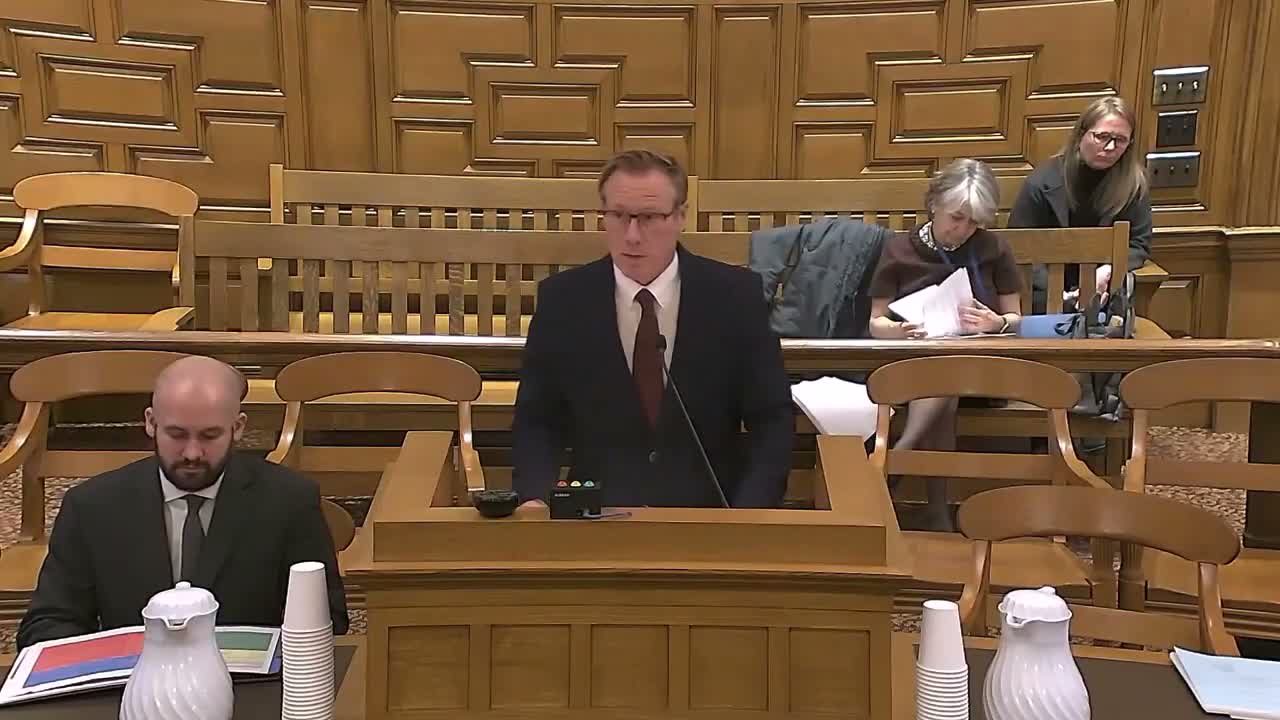
Justice Vicky Henry presiding, the appeals court heard oral argument March 9 in Commonwealth v. Hamza Abdo about whether trial counsel's failure to request a lost-or-destroyed-exculpatory-evidence instruction amounted to ineffective assistance.
Appellant Stephen Riley told the panel that an officer's testimony established cameras in the booking area and that the booking video "was not provided for Mr. Abdo," creating a reasonable inference a recording existed and was withheld. "Officer Campobasso testified twice that there were cameras in the booking area," Riley said, and defense counsel, he argued, made the relevant objections and argued the point to the jury but did not obtain the correct instruction.
The issue matters because, Riley said, objective recordings can contradict or undercut subjective officer recollections; he argued the booking video could have shown behavior inconsistent with trial testimony and that the failure to request the proper instruction prejudiced Abdo.
Commonwealth attorney Matthew Petalano responded that the trial record contains at most inferences and conjecture about whether any recording existed and that the kind of "concrete evidence" required for disposition on direct appeal is missing. Petalano told the panel that the prosecutor at trial had only represented "not to the best of my knowledge" when asked whether video existed and that the judge, not this court on direct appeal, was best placed to test those factual questions in a motion for new trial or other post-trial proceedings.
The panel also questioned preservation and related jury-selection issues. Petalano urged the court to uphold the jury voir-dire rulings as within the trial court's discretion; Riley said he would rest on the voir-dire issue only if the court had questions.
The court submitted the case for decision; no ruling was announced during oral argument.
Appellant Stephen Riley told the panel that an officer's testimony established cameras in the booking area and that the booking video "was not provided for Mr. Abdo," creating a reasonable inference a recording existed and was withheld. "Officer Campobasso testified twice that there were cameras in the booking area," Riley said, and defense counsel, he argued, made the relevant objections and argued the point to the jury but did not obtain the correct instruction.
The issue matters because, Riley said, objective recordings can contradict or undercut subjective officer recollections; he argued the booking video could have shown behavior inconsistent with trial testimony and that the failure to request the proper instruction prejudiced Abdo.
Commonwealth attorney Matthew Petalano responded that the trial record contains at most inferences and conjecture about whether any recording existed and that the kind of "concrete evidence" required for disposition on direct appeal is missing. Petalano told the panel that the prosecutor at trial had only represented "not to the best of my knowledge" when asked whether video existed and that the judge, not this court on direct appeal, was best placed to test those factual questions in a motion for new trial or other post-trial proceedings.
The panel also questioned preservation and related jury-selection issues. Petalano urged the court to uphold the jury voir-dire rulings as within the trial court's discretion; Riley said he would rest on the voir-dire issue only if the court had questions.
The court submitted the case for decision; no ruling was announced during oral argument.
View the Full Meeting & All Its Details
This article offers just a summary. Unlock complete video, transcripts, and insights as a Founder Member.
✓
Watch full, unedited meeting videos
✓
Search every word spoken in unlimited transcripts
✓
AI summaries & real-time alerts (all government levels)
✓
Permanent access to expanding government content
30-day money-back guarantee
