Appeals court weighs whether kidnapping charge requires intent to confine in Del Valle Rodriguez case
March 09, 2026 | Judicial - Appeals Court Oral Arguments, Judicial, Massachusetts
This article was created by AI summarizing key points discussed. AI makes mistakes, so for full details and context, please refer to the video of the full meeting. Please report any errors so we can fix them. Report an error »
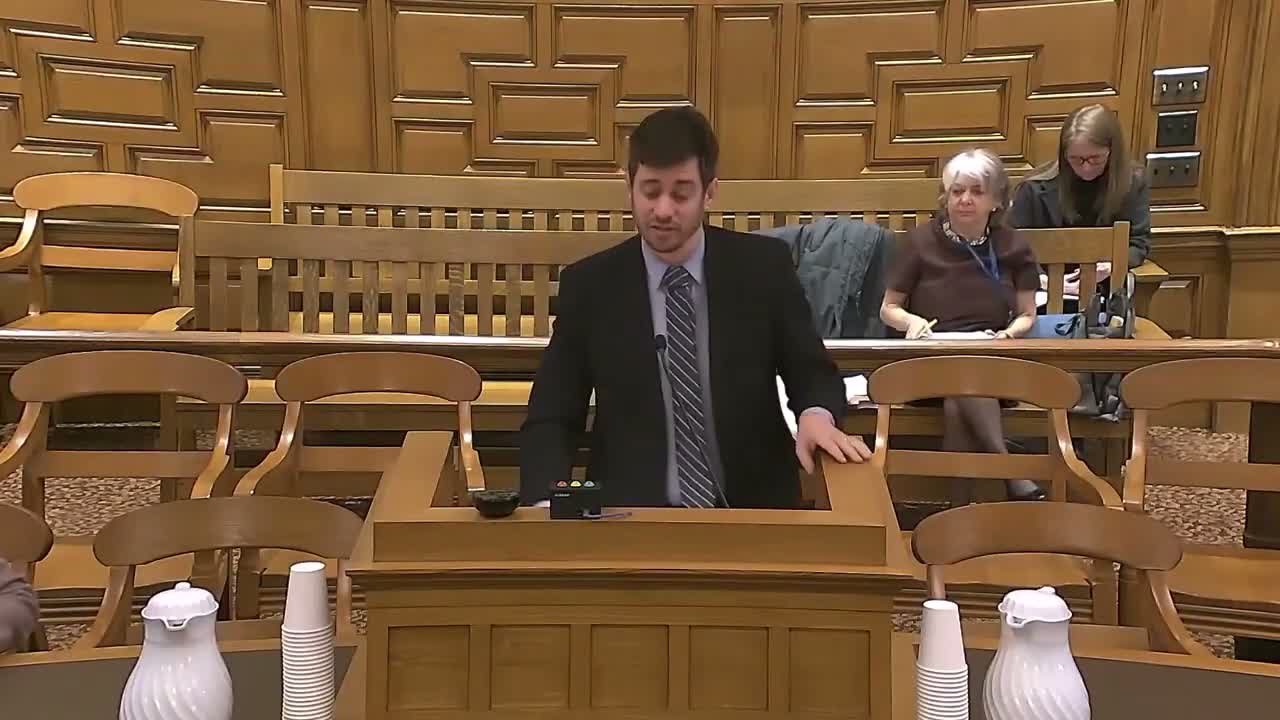
The appeals-court panel led by Justice Vicky Henry heard March 9 argument in Commonwealth v. Del Valle Rodriguez on whether the evidence supports three kidnapping convictions.
Philip Weber, representing Del Valle Rodriguez, told the court he was challenging all three kidnapping counts and argued the defendants' conduct did not show an intent to confine victims: the vehicles were stuck in mud, and he said the defendants' actions were aimed at attacking victims rather than restraining them. "Feeling fear and maybe wanting to try to escape...does not amount to kidnapping," Weber said, stressing the absence of an intent to limit movement.
The justices probed whether Massachusetts law requires specific intent to confine. A justice noted case law reading the statute's prongs differently; Weber argued the facts lack the confinement element.
Sarah Swan, for the Commonwealth, argued that only general intent is required and that confinement can be brief. Citing Commonwealth v. Len and other decisions, she told the panel that restraint of movement and the victim's fear or the threat of force can constitute confinement. "Merely the fact that the defendant had confined the victim was sufficient," Swan said, and she cited cases holding that brief restraint or presence of a threat may meet the statute.
The justices questioned the breadth of that reading, offering hypotheticals about panic rooms, crowded revelry and whether those situations would become kidnapping. Counsel and the panel discussed merger, duration of restraint, and whether the record below presents fact issues for trial or is suitable for appellate disposition.
The panel submitted the case for decision; no ruling was announced at argument.
Philip Weber, representing Del Valle Rodriguez, told the court he was challenging all three kidnapping counts and argued the defendants' conduct did not show an intent to confine victims: the vehicles were stuck in mud, and he said the defendants' actions were aimed at attacking victims rather than restraining them. "Feeling fear and maybe wanting to try to escape...does not amount to kidnapping," Weber said, stressing the absence of an intent to limit movement.
The justices probed whether Massachusetts law requires specific intent to confine. A justice noted case law reading the statute's prongs differently; Weber argued the facts lack the confinement element.
Sarah Swan, for the Commonwealth, argued that only general intent is required and that confinement can be brief. Citing Commonwealth v. Len and other decisions, she told the panel that restraint of movement and the victim's fear or the threat of force can constitute confinement. "Merely the fact that the defendant had confined the victim was sufficient," Swan said, and she cited cases holding that brief restraint or presence of a threat may meet the statute.
The justices questioned the breadth of that reading, offering hypotheticals about panic rooms, crowded revelry and whether those situations would become kidnapping. Counsel and the panel discussed merger, duration of restraint, and whether the record below presents fact issues for trial or is suitable for appellate disposition.
The panel submitted the case for decision; no ruling was announced at argument.
View the Full Meeting & All Its Details
This article offers just a summary. Unlock complete video, transcripts, and insights as a Founder Member.
✓
Watch full, unedited meeting videos
✓
Search every word spoken in unlimited transcripts
✓
AI summaries & real-time alerts (all government levels)
✓
Permanent access to expanding government content
30-day money-back guarantee
