Gilliam County compensation board approves 3.5% CPI increase for elected officials
March 09, 2026 | Gilliam County, Oregon
This article was created by AI summarizing key points discussed. AI makes mistakes, so for full details and context, please refer to the video of the full meeting. Please report any errors so we can fix them. Report an error »
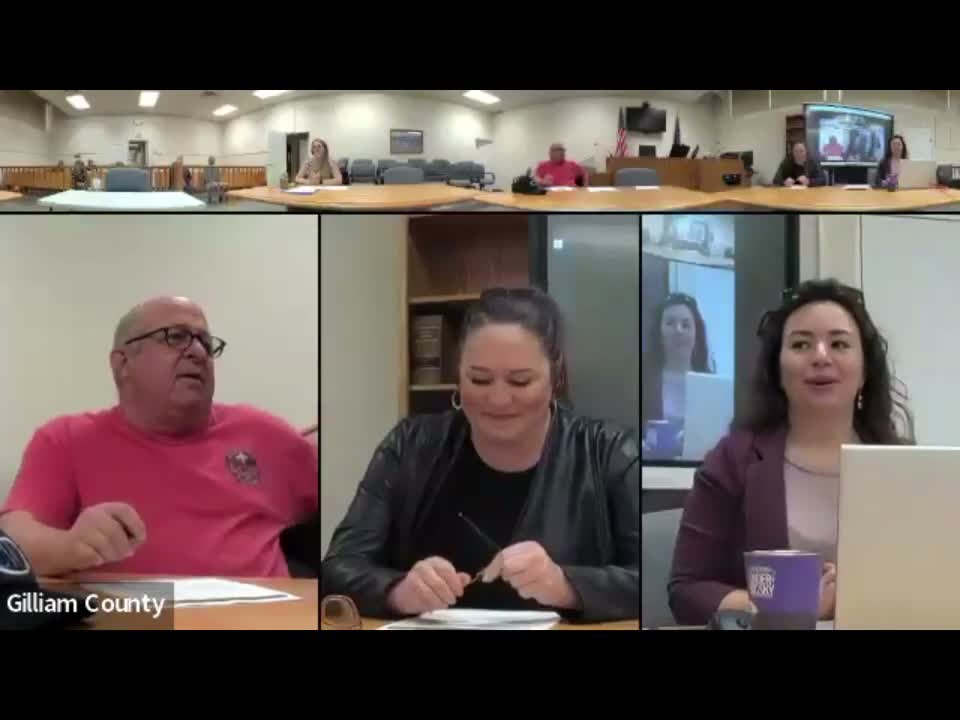
The Gilliam County Compensation Board voted to adopt a 3.5% cost-of-living adjustment for elected officials after a brief meeting that included a review of county revenue sources and salary comparables.
County staff told the board that property taxes are the primary revenue source for the general fund, saying, “They’re approximately $4,000,000 which support, the general fund.” The staff also said Strategic Investment Program (SIP) funds are largely passed through as grants and have not historically been relied on for county operations; waste-management host fees support economic development and only about 15.5% of a specified category currently supports road department operations. Staff cautioned that SIP-related revenue depends on projects breaking ground before tax receipts are realized.
The board reviewed comparables from neighboring counties and discussed how full-time equivalents (FTEs) are presented. Board members noted Sherman County lists commissioners at a similar salary level but reports those positions at about 0.6 FTE; Gilliam County has historically used a 0.3 FTE for commissioners. One board member asked whether commissioners should be considered full time; staff replied any change to FTE would come via a separate review and, if necessary, through the court.
The presenter called out December 2025 CPI at 2.5% and proposed a 3.5% increase for elected officials for the next fiscal year. A board member said the compensation board’s recommendation drives what staff proposes to the budget committee in April. The motion to approve the 3.5% CPI increase was moved by Erin and seconded by Tiffany; the board conducted a voice vote, members answered “aye,” and the chair declared the motion carried.
“This has been the most efficient compensation board meeting I’ve ever attended,” a board member said after the vote, praising the preparatory work that preceded the meeting. The board welcomed new member Tiffany, who was noted as replacing Eric Harrison for a two-year term. Staff said the recommendation will inform the budget committee’s April deliberations and that the board would be in contact again next January.
No formal dissents, abstentions, or roll-call tallies were recorded in the transcript; the motion was announced as carried by voice vote. The meeting concluded with brief closing remarks and adjournment.
County staff told the board that property taxes are the primary revenue source for the general fund, saying, “They’re approximately $4,000,000 which support, the general fund.” The staff also said Strategic Investment Program (SIP) funds are largely passed through as grants and have not historically been relied on for county operations; waste-management host fees support economic development and only about 15.5% of a specified category currently supports road department operations. Staff cautioned that SIP-related revenue depends on projects breaking ground before tax receipts are realized.
The board reviewed comparables from neighboring counties and discussed how full-time equivalents (FTEs) are presented. Board members noted Sherman County lists commissioners at a similar salary level but reports those positions at about 0.6 FTE; Gilliam County has historically used a 0.3 FTE for commissioners. One board member asked whether commissioners should be considered full time; staff replied any change to FTE would come via a separate review and, if necessary, through the court.
The presenter called out December 2025 CPI at 2.5% and proposed a 3.5% increase for elected officials for the next fiscal year. A board member said the compensation board’s recommendation drives what staff proposes to the budget committee in April. The motion to approve the 3.5% CPI increase was moved by Erin and seconded by Tiffany; the board conducted a voice vote, members answered “aye,” and the chair declared the motion carried.
“This has been the most efficient compensation board meeting I’ve ever attended,” a board member said after the vote, praising the preparatory work that preceded the meeting. The board welcomed new member Tiffany, who was noted as replacing Eric Harrison for a two-year term. Staff said the recommendation will inform the budget committee’s April deliberations and that the board would be in contact again next January.
No formal dissents, abstentions, or roll-call tallies were recorded in the transcript; the motion was announced as carried by voice vote. The meeting concluded with brief closing remarks and adjournment.
Don't Miss a Word: See the Full Meeting!
Go beyond summaries. Unlock every video, transcript, and key insight with a Founder Membership.
✓
Get instant access to full meeting videos
✓
Search and clip any phrase from complete transcripts
✓
Receive AI-powered summaries & custom alerts
✓
Enjoy lifetime, unrestricted access to government data
30-day money-back guarantee
