Sen. Gail Adcock urges Cary council to stop "triangulation," rebuild trust and speak with a single voice
February 21, 2026 | Cary Town, Wake County, North Carolina
This article was created by AI summarizing key points discussed. AI makes mistakes, so for full details and context, please refer to the video of the full meeting. Please report any errors so we can fix them. Report an error »
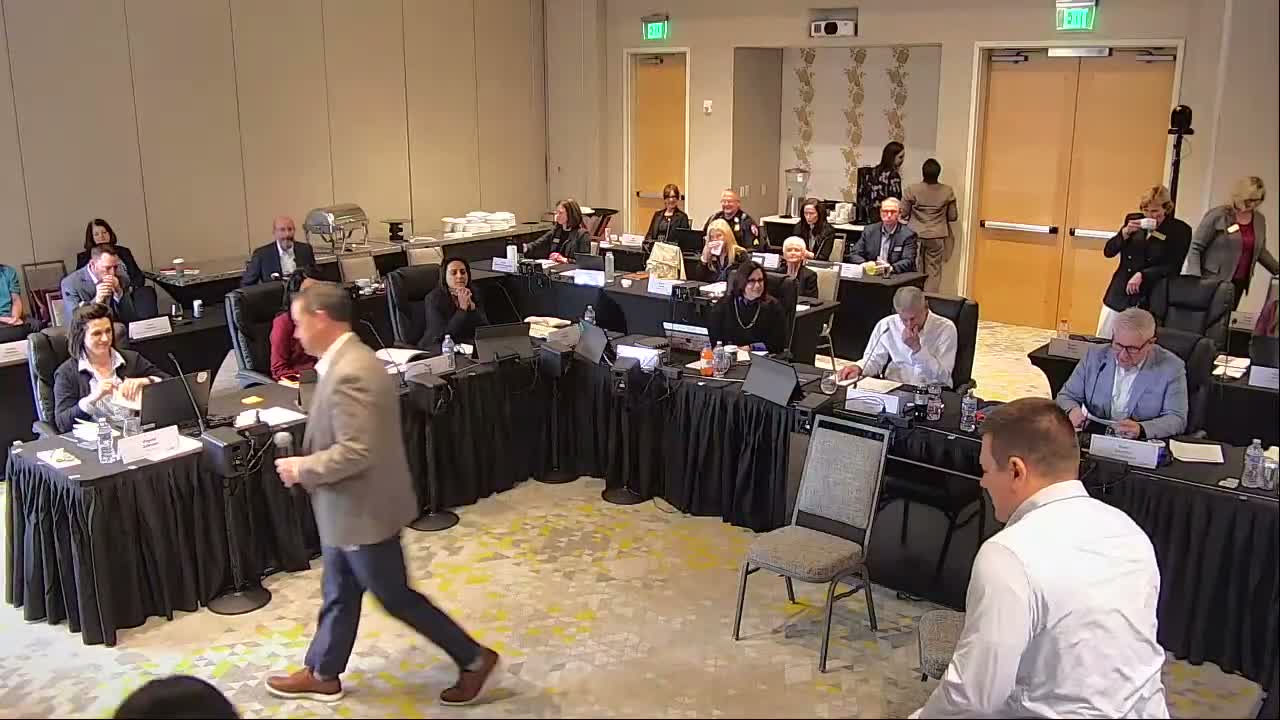
Sen. Gail Adcock, a North Carolina state senator and former Cary council member, told the Town of Carys council and staff at their retreat that repairing internal communication and rebuilding trust must be a priority as the town navigates heightened scrutiny.
Adcock recounted joining the Cary council after the 2007 election and encountering a culture she said included "blurry lines between council and staff" and informal blocs that made decisions without broader engagement. She described a practice she labeled a "count to 4" mentality, in which proponents would stop consulting others once they had four votes, and urged the council to "break that spell." "If you only ever go and you know... if you only talk to the same four people all the time, you build a wall," she said.
Why it matters: Adcock argued these patterns erode collegiality, marginalize some members and risk public trust. She emphasized practical fixes: direct, private conversations when a member is upset; more frequent one-on-one outreach; treating district representatives as first responders for constituent concerns; and agreeing that once a council vote is taken the council should present a unified position. "If a decision is made, that's the decision and the way we operate is once the decision is made, we all own it," she said.
Council members spent much of the keynote responding. Several described recent instances where projects moved forward without early outreach to a district representative, which left them feeling out of the loop. Council member Sarika said she had been surprised that a project affecting her district had proceeded because "we had our four votes" and she was not consulted; she urged a change to that practice. Newer members said they appreciated the history and told the retreat they wanted more proactive coordination and more cross-council conversations.
Adcock also warned against "triangulation" indirect complaints taken to third parties instead of the person involved. She encouraged members to ask: "Can I talk to you about this? I'm not sure what you meant. I'm going to tell you how it landed on me." She called such micro-actions "the series of micro decisions" that build trust.
On media and messaging, Adcock recommended that the council try to "speak as one" after votes to avoid seven competing public messages. "When the town has issued a statement, stick to it," she said, adding that "no comment is a complete sentence" when the town needs to coordinate a single response.
Next steps: Members agreed staff would compile the retreats takeaways on communication and outreach; several council members said they would prioritize individual outreach (coffees and calls) to peers and district representatives. No formal actions or votes were taken at the session.
(Reporting note: quotes are drawn verbatim from the retreat transcript; attributions use the names or functional roles spoken during the session.)
Adcock recounted joining the Cary council after the 2007 election and encountering a culture she said included "blurry lines between council and staff" and informal blocs that made decisions without broader engagement. She described a practice she labeled a "count to 4" mentality, in which proponents would stop consulting others once they had four votes, and urged the council to "break that spell." "If you only ever go and you know... if you only talk to the same four people all the time, you build a wall," she said.
Why it matters: Adcock argued these patterns erode collegiality, marginalize some members and risk public trust. She emphasized practical fixes: direct, private conversations when a member is upset; more frequent one-on-one outreach; treating district representatives as first responders for constituent concerns; and agreeing that once a council vote is taken the council should present a unified position. "If a decision is made, that's the decision and the way we operate is once the decision is made, we all own it," she said.
Council members spent much of the keynote responding. Several described recent instances where projects moved forward without early outreach to a district representative, which left them feeling out of the loop. Council member Sarika said she had been surprised that a project affecting her district had proceeded because "we had our four votes" and she was not consulted; she urged a change to that practice. Newer members said they appreciated the history and told the retreat they wanted more proactive coordination and more cross-council conversations.
Adcock also warned against "triangulation" indirect complaints taken to third parties instead of the person involved. She encouraged members to ask: "Can I talk to you about this? I'm not sure what you meant. I'm going to tell you how it landed on me." She called such micro-actions "the series of micro decisions" that build trust.
On media and messaging, Adcock recommended that the council try to "speak as one" after votes to avoid seven competing public messages. "When the town has issued a statement, stick to it," she said, adding that "no comment is a complete sentence" when the town needs to coordinate a single response.
Next steps: Members agreed staff would compile the retreats takeaways on communication and outreach; several council members said they would prioritize individual outreach (coffees and calls) to peers and district representatives. No formal actions or votes were taken at the session.
(Reporting note: quotes are drawn verbatim from the retreat transcript; attributions use the names or functional roles spoken during the session.)
View the Full Meeting & All Its Details
This article offers just a summary. Unlock complete video, transcripts, and insights as a Founder Member.
✓
Watch full, unedited meeting videos
✓
Search every word spoken in unlimited transcripts
✓
AI summaries & real-time alerts (all government levels)
✓
Permanent access to expanding government content
30-day money-back guarantee
