Senate resolution to let localities tax data centers separately fails to clear two-thirds
March 07, 2026 | SENATE, Committees, Legislative, Georgia
This article was created by AI summarizing key points discussed. AI makes mistakes, so for full details and context, please refer to the video of the full meeting. Please report any errors so we can fix them. Report an error »
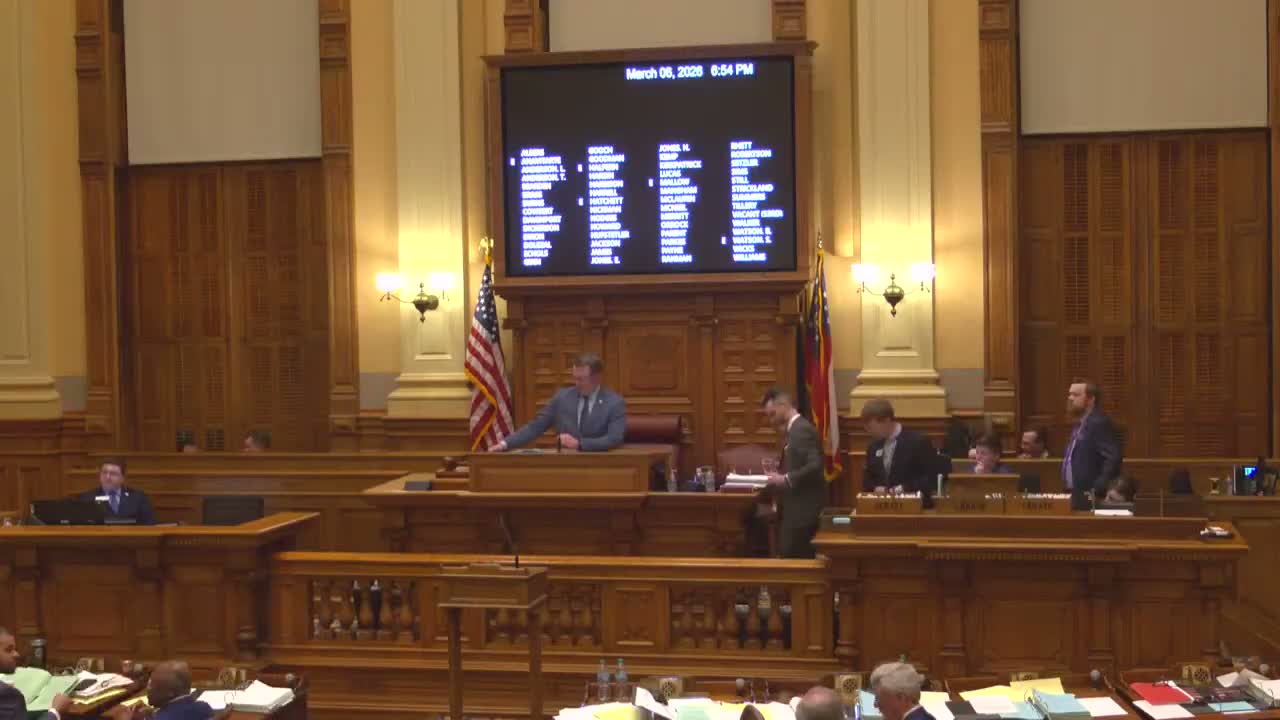
Senator Dolezal urged the Senate to let local voters decide whether municipalities and school districts may create a separate property-tax subclass for data centers, saying the change would let communities "lower property taxes for businesses and homeowners in communities where a data center comes." The sponsor said the amendment would allow local elected officials to set a separate millage or valuation for data-center parcels, with enabling legislation to spell out mechanics.
Opposing senators pressed practical questions about zoning, water and power use, and whether homeowners could end up paying more. The sponsor responded that "this would not prevent" local tax abatements and that the proposed constitutional language would require any separate rate "to reduce the burden of ad valorem taxation on other tangible property," adding that underlying legislation would be needed to implement details.
Floor debate included whether the measure would truly protect homeowners or instead incentivize communities to recruit data centers. One senator asked whether the proposal specified rates; the sponsor acknowledged it did not, saying those choices would rest with local taxing authorities. The sponsor also cited a study he said showed about "70%" of data centers would locate regardless of state tax credits.
The Senate adopted the committee substitute and agreed to the committee report, but the resolution failed to meet the two-thirds constitutional requirement for an amendment on the final adoption vote (yeas 29, nays 21). That outcome leaves the measure short of the threshold necessary to send an amendment to the ballot.
The Senate then moved on to other business; no enabling legislation was enacted as part of this floor action.
Opposing senators pressed practical questions about zoning, water and power use, and whether homeowners could end up paying more. The sponsor responded that "this would not prevent" local tax abatements and that the proposed constitutional language would require any separate rate "to reduce the burden of ad valorem taxation on other tangible property," adding that underlying legislation would be needed to implement details.
Floor debate included whether the measure would truly protect homeowners or instead incentivize communities to recruit data centers. One senator asked whether the proposal specified rates; the sponsor acknowledged it did not, saying those choices would rest with local taxing authorities. The sponsor also cited a study he said showed about "70%" of data centers would locate regardless of state tax credits.
The Senate adopted the committee substitute and agreed to the committee report, but the resolution failed to meet the two-thirds constitutional requirement for an amendment on the final adoption vote (yeas 29, nays 21). That outcome leaves the measure short of the threshold necessary to send an amendment to the ballot.
The Senate then moved on to other business; no enabling legislation was enacted as part of this floor action.
View the Full Meeting & All Its Details
This article offers just a summary. Unlock complete video, transcripts, and insights as a Founder Member.
✓
Watch full, unedited meeting videos
✓
Search every word spoken in unlimited transcripts
✓
AI summaries & real-time alerts (all government levels)
✓
Permanent access to expanding government content
30-day money-back guarantee
