Working group approves high-impact HOA recommendations after debate over multifamily protections, HIA payoffs and rental screening
January 25, 2025 | 2026 Legislature MN, Minnesota
This article was created by AI summarizing key points discussed. AI makes mistakes, so for full details and context, please refer to the video of the full meeting. Please report any errors so we can fix them. Report an error »
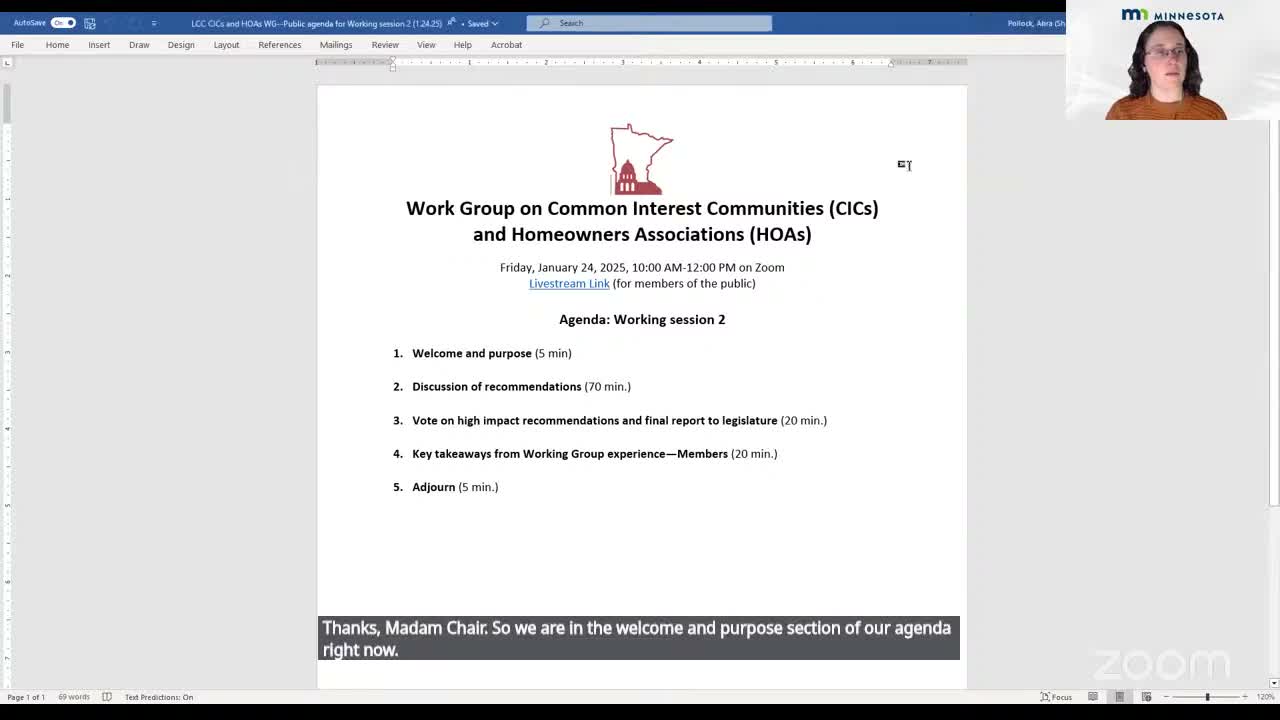
Chair Terry Bonner convened the final meeting of the working group on common-interest communities and homeowner associations and, after extended discussion on several topics, the group approved the package of high‑impact recommendations and authorized staff to finalize a report for the legislature.
The vote: Vice Chair Lucero moved to approve "all of the high-impact recommendations as amended" and the working group took a roll-call vote that resulted in 15 ayes, one abstention (Tal Anderson, the agency representative), and four members excused; the motion carried. The group then voted to approve the final report to the legislature by the same margin and authorized staff and designated members to make technical edits and submit the report. Staff said the report is due to the legislature on Feb. 1 and will be posted on the working-group website once submitted.
Why it mattered: Members spent much of the meeting refining language and trade-offs in recommendations that would shape statutory proposals. A central point of contention was whether protections aimed at single-family homeowners should also apply to owners in multifamily condominiums, cooperatives and other shared‑ownership structures. Member Amber Taylor said the single-family framing risks leaving out underrepresented owners and urged either extending the freedoms to multifamily units or elevating a "reasonableness" standard that would protect residents across building types. "The history of HOAs is . . . they were implemented for segregation purposes," Taylor said, arguing that rulemaking can have disparate impacts and needs explicit safeguards.
Several members, including Member Howard and Member Zavodsky, urged caution. Howard noted that ownership structures differ — "in a condo you don't even own your deck or balcony" — and associations frequently maintain limited common elements and assume liability; Howard warned that prohibiting reasonable association rules could frustrate insurance, safety and maintenance obligations. Zavodsky argued the HIA payoff recommendation (allowing a homeowner-improvement-assessment or similar district to be paid off before the end of its term) raised fiscal and market concerns: early payoff, he said, could prompt buyers or their agents to demand payoff at sale and could disrupt municipal bonding structures.
On HIA payoff, members traded examples and caveats. Zavodsky described a hypothetical $50,000 HIA spread over 20 years and warned that forcing early payoff could shift the burden to sellers and depress home equity; Member Green pushed back on the claim that "realtors require payoff," saying sales occur at market value but buyers may demand payoff in negotiation. Several members proposed limiting early payoff to cases that do not increase municipal costs or affect bond covenants.
Other notable items: Members debated notice timelines for fee increases and special assessments. Taylor argued 30 days is too short for large assessments and proposed a 45‑day compromise; others noted breakout-group consensus favored 60 days for regular increases with a shorter carve-out for emergencies. Member Kimball proposed adding the right to postpone a sheriff's sale to pre-foreclosure notices and to clarify that postponement is per-foreclosure action. The working group also discussed civil‑rights implications of HOA rental screening: Taylor and civil‑rights advocates urged banning blanket HOA rental-screening restrictions (including bans on Section 8 voucher holders), while other members sought narrowly defined, safety‑related criteria or model language (for example, drawing on the Minneapolis tenant‑screening protection approach) so that any limits were legally precise and not open to circumvention.
What comes next: Staff will incorporate the approved amendments into the final report and submit it to the legislature. The report — including a full appendix of every recommendation and the high‑impact items in the body — will be posted on the working‑group website. The chair thanked members for months of work before adjourning.
Representative quotes used in this story come from the working-group transcript and are attributed to speakers listed in the working-group roster.
The vote: Vice Chair Lucero moved to approve "all of the high-impact recommendations as amended" and the working group took a roll-call vote that resulted in 15 ayes, one abstention (Tal Anderson, the agency representative), and four members excused; the motion carried. The group then voted to approve the final report to the legislature by the same margin and authorized staff and designated members to make technical edits and submit the report. Staff said the report is due to the legislature on Feb. 1 and will be posted on the working-group website once submitted.
Why it mattered: Members spent much of the meeting refining language and trade-offs in recommendations that would shape statutory proposals. A central point of contention was whether protections aimed at single-family homeowners should also apply to owners in multifamily condominiums, cooperatives and other shared‑ownership structures. Member Amber Taylor said the single-family framing risks leaving out underrepresented owners and urged either extending the freedoms to multifamily units or elevating a "reasonableness" standard that would protect residents across building types. "The history of HOAs is . . . they were implemented for segregation purposes," Taylor said, arguing that rulemaking can have disparate impacts and needs explicit safeguards.
Several members, including Member Howard and Member Zavodsky, urged caution. Howard noted that ownership structures differ — "in a condo you don't even own your deck or balcony" — and associations frequently maintain limited common elements and assume liability; Howard warned that prohibiting reasonable association rules could frustrate insurance, safety and maintenance obligations. Zavodsky argued the HIA payoff recommendation (allowing a homeowner-improvement-assessment or similar district to be paid off before the end of its term) raised fiscal and market concerns: early payoff, he said, could prompt buyers or their agents to demand payoff at sale and could disrupt municipal bonding structures.
On HIA payoff, members traded examples and caveats. Zavodsky described a hypothetical $50,000 HIA spread over 20 years and warned that forcing early payoff could shift the burden to sellers and depress home equity; Member Green pushed back on the claim that "realtors require payoff," saying sales occur at market value but buyers may demand payoff in negotiation. Several members proposed limiting early payoff to cases that do not increase municipal costs or affect bond covenants.
Other notable items: Members debated notice timelines for fee increases and special assessments. Taylor argued 30 days is too short for large assessments and proposed a 45‑day compromise; others noted breakout-group consensus favored 60 days for regular increases with a shorter carve-out for emergencies. Member Kimball proposed adding the right to postpone a sheriff's sale to pre-foreclosure notices and to clarify that postponement is per-foreclosure action. The working group also discussed civil‑rights implications of HOA rental screening: Taylor and civil‑rights advocates urged banning blanket HOA rental-screening restrictions (including bans on Section 8 voucher holders), while other members sought narrowly defined, safety‑related criteria or model language (for example, drawing on the Minneapolis tenant‑screening protection approach) so that any limits were legally precise and not open to circumvention.
What comes next: Staff will incorporate the approved amendments into the final report and submit it to the legislature. The report — including a full appendix of every recommendation and the high‑impact items in the body — will be posted on the working‑group website. The chair thanked members for months of work before adjourning.
Representative quotes used in this story come from the working-group transcript and are attributed to speakers listed in the working-group roster.
Don't Miss a Word: See the Full Meeting!
Go beyond summaries. Unlock every video, transcript, and key insight with a Founder Membership.
✓
Get instant access to full meeting videos
✓
Search and clip any phrase from complete transcripts
✓
Receive AI-powered summaries & custom alerts
✓
Enjoy lifetime, unrestricted access to government data
30-day money-back guarantee
