Brandt/Metro Sports team says Westland site meets $41M budget and offers expandable convention campus
March 07, 2026 | Fargo , Cass County, North Dakota
This article was created by AI summarizing key points discussed. AI makes mistakes, so for full details and context, please refer to the video of the full meeting. Please report any errors so we can fix them. Report an error »
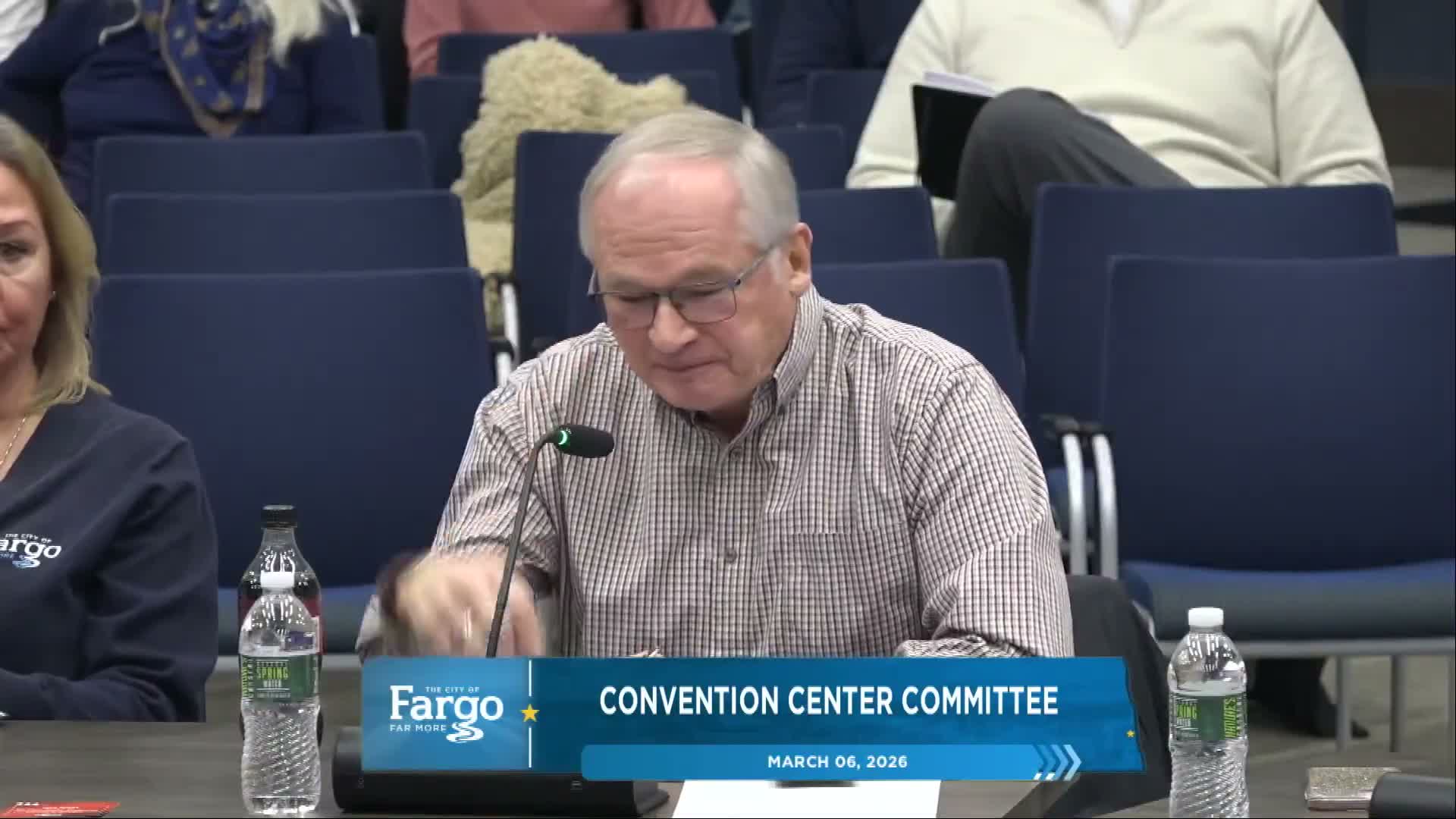
A team led by Brandt Holdings and Metro Sports Foundation told Fargo’s convention‑center selection committee on March 7 that a Westland site adjacent to Shields Arena meets the city’s $41 million budget target while offering direct interstate access and room to expand.
The presenters said the site benefits from existing parking, proximity to Sanford hospital and infrastructure the team says reduces the need for costly new utilities, allowing a convention facility to be built within the city’s budget. “We were able to hit the city's budget goal,” the presentation representative said, adding the site is owned and controlled by Brandt Holdings and that a Park District letter of support is in the RFP submission.
The proposal centers on a roughly 79,000–84,000 square‑foot new facility integrated with the Shields Arena and Farmers Union to create a contiguous campus. Architect Paul McKeever said the flex hall would have 25‑foot ceilings in the $41 million scheme and that the layout allows the campus to host multiple events simultaneously without guests crossing paths. “This is a project that was on the right…we bring this global expertise here to Fargo,” McKeever said during the design overview.
Operational plan and finances
The team proposed Metro Sports Foundation as the facility operator and outlined a conservative and optimistic pro forma: a $328,000 operating loss in year one under conservative assumptions and a smaller shortfall under optimistic projections, with the partnership aiming to reach breakeven by year three. John Crum of Shields Arena/Brandt said shared staffing and operational savings — for example, generator and utility efficiencies — will reduce the city’s burden. He also said the team budgeted a $216,000 annual management fee to cover oversight.
Catering, kitchen and hotel connection
On catering, presenters proposed beginning with third‑party caterers to control upfront costs and including a 3,000 sq ft prep kitchen in the base program, with space reserved to add a full in‑house kitchen later. The committee raised concerns that outsourcing food service reduces potential venue revenue; Susan Thompson, the city’s finance director (advising the committee), warned that food margins can be substantially higher when operated in‑house and asked for more detailed operating assumptions.
The presentation included a menu of optional add‑ons outside the $41 million base. The team said an enclosed hotel‑to‑concourse connection was an optional item estimated at about $1.4–$1.5 million; a covered (non‑enclosed) walkway would be part of the larger, alternative program rather than the base budget.
Conversion and operations
John Crum said converting ice floors in adjacent Farmers Union can be done in roughly two to four hours and described experience converting the arena quickly between events. The team emphasized service‑corridor design, dedicated loading docks and the ability to expand the building footprint northward or westward in future phases.
Committee response and next steps
Committee members pressed the team on land control (the Park District has provided a letter of support but final land‑use details are to be negotiated if the site is selected), catering economics, and staffing and management arrangements. The committee asked the team to provide a succinct, committee‑level summary of the pro forma and underlying event assumptions by email.
The committee paused for a break after the presentation and resumed later with a downtown proposal; no award or formal decision was taken at the meeting. The committee agreed to have outside reviewers (HVS and a Baker Tilly review of finalists’ financials) examine the proposals before scoring and to reconvene for further public meetings.
The presenters said the site benefits from existing parking, proximity to Sanford hospital and infrastructure the team says reduces the need for costly new utilities, allowing a convention facility to be built within the city’s budget. “We were able to hit the city's budget goal,” the presentation representative said, adding the site is owned and controlled by Brandt Holdings and that a Park District letter of support is in the RFP submission.
The proposal centers on a roughly 79,000–84,000 square‑foot new facility integrated with the Shields Arena and Farmers Union to create a contiguous campus. Architect Paul McKeever said the flex hall would have 25‑foot ceilings in the $41 million scheme and that the layout allows the campus to host multiple events simultaneously without guests crossing paths. “This is a project that was on the right…we bring this global expertise here to Fargo,” McKeever said during the design overview.
Operational plan and finances
The team proposed Metro Sports Foundation as the facility operator and outlined a conservative and optimistic pro forma: a $328,000 operating loss in year one under conservative assumptions and a smaller shortfall under optimistic projections, with the partnership aiming to reach breakeven by year three. John Crum of Shields Arena/Brandt said shared staffing and operational savings — for example, generator and utility efficiencies — will reduce the city’s burden. He also said the team budgeted a $216,000 annual management fee to cover oversight.
Catering, kitchen and hotel connection
On catering, presenters proposed beginning with third‑party caterers to control upfront costs and including a 3,000 sq ft prep kitchen in the base program, with space reserved to add a full in‑house kitchen later. The committee raised concerns that outsourcing food service reduces potential venue revenue; Susan Thompson, the city’s finance director (advising the committee), warned that food margins can be substantially higher when operated in‑house and asked for more detailed operating assumptions.
The presentation included a menu of optional add‑ons outside the $41 million base. The team said an enclosed hotel‑to‑concourse connection was an optional item estimated at about $1.4–$1.5 million; a covered (non‑enclosed) walkway would be part of the larger, alternative program rather than the base budget.
Conversion and operations
John Crum said converting ice floors in adjacent Farmers Union can be done in roughly two to four hours and described experience converting the arena quickly between events. The team emphasized service‑corridor design, dedicated loading docks and the ability to expand the building footprint northward or westward in future phases.
Committee response and next steps
Committee members pressed the team on land control (the Park District has provided a letter of support but final land‑use details are to be negotiated if the site is selected), catering economics, and staffing and management arrangements. The committee asked the team to provide a succinct, committee‑level summary of the pro forma and underlying event assumptions by email.
The committee paused for a break after the presentation and resumed later with a downtown proposal; no award or formal decision was taken at the meeting. The committee agreed to have outside reviewers (HVS and a Baker Tilly review of finalists’ financials) examine the proposals before scoring and to reconvene for further public meetings.
Don't Miss a Word: See the Full Meeting!
Go beyond summaries. Unlock every video, transcript, and key insight with a Founder Membership.
✓
Get instant access to full meeting videos
✓
Search and clip any phrase from complete transcripts
✓
Receive AI-powered summaries & custom alerts
✓
Enjoy lifetime, unrestricted access to government data
30-day money-back guarantee
