Residents and conservation groups press committee to allow local bans on second‑generation rodenticides; industry urges statewide regulation
March 04, 2026 | 2026 Legislature MA, Massachusetts
This article was created by AI summarizing key points discussed. AI makes mistakes, so for full details and context, please refer to the video of the full meeting. Please report any errors so we can fix them. Report an error »
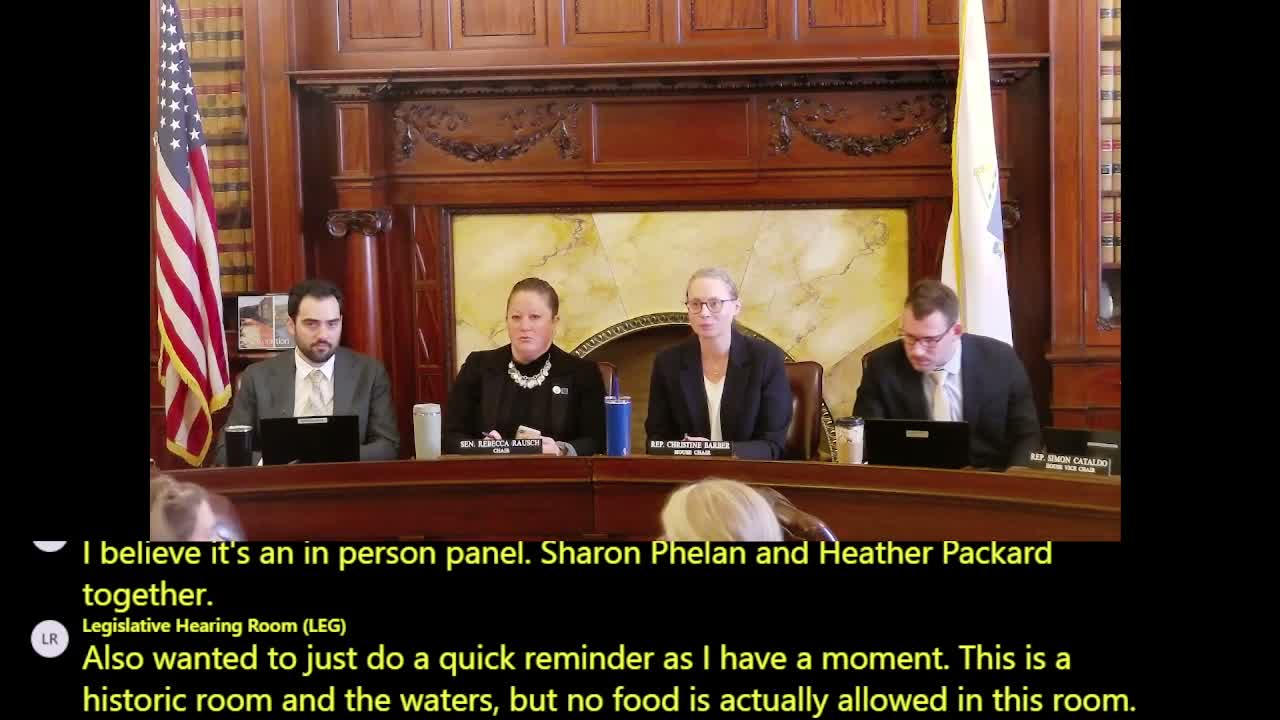
Advocates and municipal representatives urged the Joint Committee on Environment and Natural Resources to report favorably on a series of home-rule petitions that would authorize towns to restrict or ban second‑generation anticoagulant rodenticides (SGARs).
"Escars are also harmed they also harm non targeted animals including domestic pets," Heather Packard, Mass Audubon's community organizer, told the committee while demonstrating the bioaccumulation pathway she said leads predators and pets to ingest poisoned rodents. Packard said MDAR reports that over 500,000 pounds of anticoagulant rodenticides are used annually by pest control companies in Massachusetts, equating to roughly 28,000 18‑pound buckets.
Multiple town representatives and residents described town-meeting votes and local ballots authorizing municipal action: Anne Harrison said Manchester-by-the-Sea voted 147–17 to advance a citizen petition (filed as S 2896), and William Juba noted Billerica enacted a phase-out on municipal property. Witnesses described clinical cases handled by wildlife rescues and cited a 2021 state-confirmed bald eagle death attributed to eschar poisoning.
Industry representatives countered that pesticide and rodenticide regulation should remain at the state level under the Massachusetts Department of Agricultural Resources (MDAR). "We would like to keep this within the state because instead of having 351 different rules and regulations, we like to have something that is concurrent throughout the state," Molly Moran of the New England Pest Management Association said, arguing licensed applicators and statewide oversight are preferable to patchwork local rules.
Why it matters: Supporters say SGARs cause prolonged suffering in non‑target wildlife, are persistent in the environment and pose risks to pets and children; towns argue local bans are necessary because municipal votes have already expressed community preferences. The pest-control industry and some officials argue statewide regulation ensures consistency and relies on MDAR’s scientific review.
What’s next: The committee heard extensive testimony and will consider next steps; no formal votes were taken during this hearing.
"Escars are also harmed they also harm non targeted animals including domestic pets," Heather Packard, Mass Audubon's community organizer, told the committee while demonstrating the bioaccumulation pathway she said leads predators and pets to ingest poisoned rodents. Packard said MDAR reports that over 500,000 pounds of anticoagulant rodenticides are used annually by pest control companies in Massachusetts, equating to roughly 28,000 18‑pound buckets.
Multiple town representatives and residents described town-meeting votes and local ballots authorizing municipal action: Anne Harrison said Manchester-by-the-Sea voted 147–17 to advance a citizen petition (filed as S 2896), and William Juba noted Billerica enacted a phase-out on municipal property. Witnesses described clinical cases handled by wildlife rescues and cited a 2021 state-confirmed bald eagle death attributed to eschar poisoning.
Industry representatives countered that pesticide and rodenticide regulation should remain at the state level under the Massachusetts Department of Agricultural Resources (MDAR). "We would like to keep this within the state because instead of having 351 different rules and regulations, we like to have something that is concurrent throughout the state," Molly Moran of the New England Pest Management Association said, arguing licensed applicators and statewide oversight are preferable to patchwork local rules.
Why it matters: Supporters say SGARs cause prolonged suffering in non‑target wildlife, are persistent in the environment and pose risks to pets and children; towns argue local bans are necessary because municipal votes have already expressed community preferences. The pest-control industry and some officials argue statewide regulation ensures consistency and relies on MDAR’s scientific review.
What’s next: The committee heard extensive testimony and will consider next steps; no formal votes were taken during this hearing.
View the Full Meeting & All Its Details
This article offers just a summary. Unlock complete video, transcripts, and insights as a Founder Member.
✓
Watch full, unedited meeting videos
✓
Search every word spoken in unlimited transcripts
✓
AI summaries & real-time alerts (all government levels)
✓
Permanent access to expanding government content
30-day money-back guarantee
