Georgia House Rules Committee hears wide slate of bills on crossover day, no votes taken
March 07, 2026 | Rules, HOUSE OF REPRESENTATIVES, Committees, Legislative, Georgia
This article was created by AI summarizing key points discussed. AI makes mistakes, so for full details and context, please refer to the video of the full meeting. Please report any errors so we can fix them. Report an error »
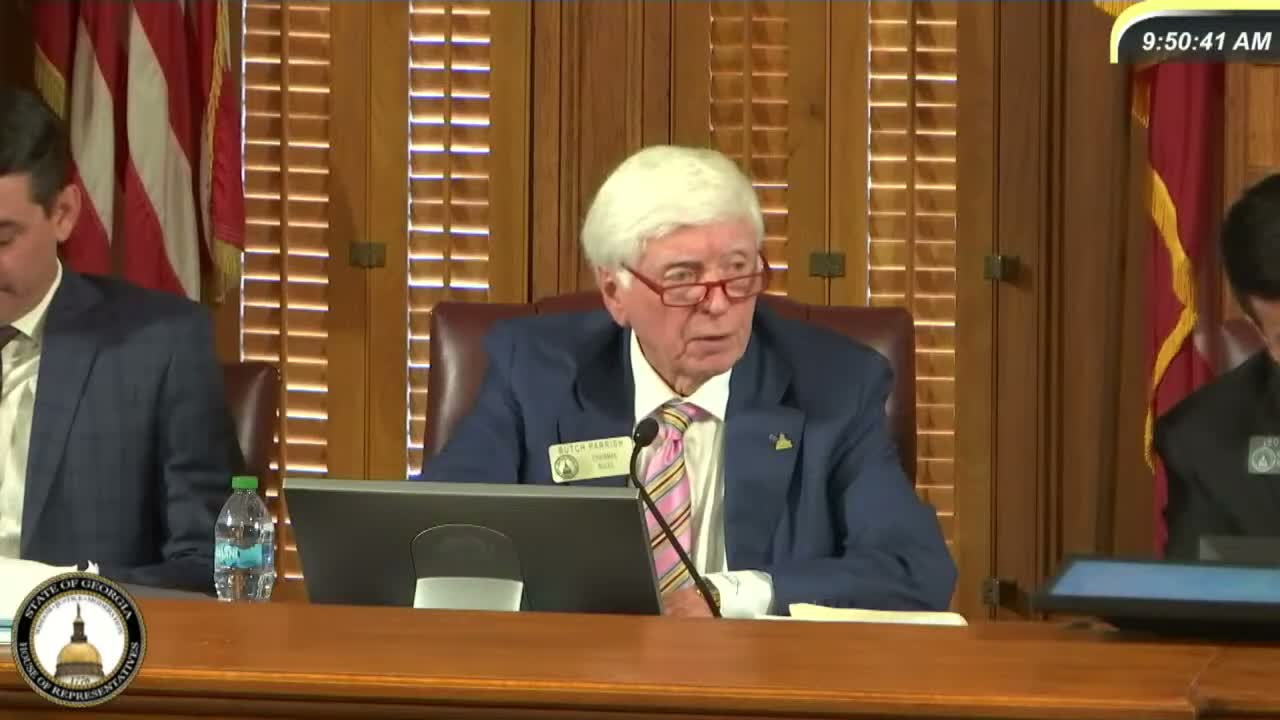
The Georgia House Rules Committee met for a crossover-day briefing and heard short presentations on dozens of bills; members asked procedural and policy questions but the committee took no formal votes.
Several bills with statewide impact were presented in rapid succession. Miss David introduced House Bill 285, which would change the automatic electronic purge that currently removes records of people involuntarily committed to mental-health facilities from the state criminal background check list used for firearm purchases. Miss David said the bill would substitute a clinical evaluation process "so that they will not harm themselves or others to be able to be able to purchase a gun." She urged the committee’s favorable consideration.
A presenter described House Bill 899 as a technical but consequential update to Georgia’s transfer-on-death deed law, saying the statute as enacted created conflicts with other code provisions and caused problems ranging from lost homestead exemptions to refinancing difficulties. The presenter said stakeholders including Atlanta Legal Aid, realtors and closing attorneys collaborated on the fixes and that changes remove a prior nine-month acceptance deadline.
Law enforcement welfare checks were the subject of House Bill 984, introduced to allow officers to ask a superior court judge for an order to check on a child, disabled adult or elderly person who is known to live at an address but is suddenly at an unknown address and welfare or safety concerns exist. Sponsor said the bill addresses situations where people move to avoid checks or investigations.
Education-related measures included House Bill 669 to allow school systems to use cooperative purchasing suppliers designated by the Georgia Department of Administrative Services for roofing improvements, and an insurer-sponsored bill (HB 1385) to modernize fee structures and authorize the insurance commissioner to order immediate evacuations for imminent life-safety hazards.
Representatives pressed sponsors for details at several points. Representative Evans asked whether Atlanta Legal Aid ultimately supported changes in HB 899; the presenter said Legal Aid’s prior concern about a deadline had been removed. On HB 1442, which would bar local governments from imposing a moratorium after a permit has been issued, members asked whether the bill would prevent jurisdictions from imposing reasonable time limits on permits; the sponsor cited one motivating case but could not provide detailed location or timing during the Rules meeting.
A contentious exchange focused on HB 467, which would amend the Monument Protection Act to create a clearer pathway for local governments to relocate or remove statuary while aiming to limit repeated litigation. Members and other legislators asked whether the bill would broaden who can sue and whether it actually reduces litigation. Supporters said it would add notice and a 90-day hearing process and permit relocation once a willing donor is found; critics warned it could expand standing and increase litigation.
On education finance, a bill creating a needs-based scholarship and other HOPE-related adjustments drew scrutiny after Speaker 26 said the shortfall lottery reserve calculation would change from 50% to 100% when reserves exceed $2 billion. Representative Evans requested the data underlying that change and cautioned that increasing reserves could reduce funds available to students.
Committee leaders said many of the measures were not yet on the blue sheet for the day but are in members’ binders; members asked that copies be provided and indicated they would follow up. The committee adjourned for lunch and planned to reconvene later in the day.
No motions or formal votes were recorded during the session; the meeting functioned as a fast-paced briefing to place crossover bills on members’ radars and to surface questions members want answered before committee action.
Several bills with statewide impact were presented in rapid succession. Miss David introduced House Bill 285, which would change the automatic electronic purge that currently removes records of people involuntarily committed to mental-health facilities from the state criminal background check list used for firearm purchases. Miss David said the bill would substitute a clinical evaluation process "so that they will not harm themselves or others to be able to be able to purchase a gun." She urged the committee’s favorable consideration.
A presenter described House Bill 899 as a technical but consequential update to Georgia’s transfer-on-death deed law, saying the statute as enacted created conflicts with other code provisions and caused problems ranging from lost homestead exemptions to refinancing difficulties. The presenter said stakeholders including Atlanta Legal Aid, realtors and closing attorneys collaborated on the fixes and that changes remove a prior nine-month acceptance deadline.
Law enforcement welfare checks were the subject of House Bill 984, introduced to allow officers to ask a superior court judge for an order to check on a child, disabled adult or elderly person who is known to live at an address but is suddenly at an unknown address and welfare or safety concerns exist. Sponsor said the bill addresses situations where people move to avoid checks or investigations.
Education-related measures included House Bill 669 to allow school systems to use cooperative purchasing suppliers designated by the Georgia Department of Administrative Services for roofing improvements, and an insurer-sponsored bill (HB 1385) to modernize fee structures and authorize the insurance commissioner to order immediate evacuations for imminent life-safety hazards.
Representatives pressed sponsors for details at several points. Representative Evans asked whether Atlanta Legal Aid ultimately supported changes in HB 899; the presenter said Legal Aid’s prior concern about a deadline had been removed. On HB 1442, which would bar local governments from imposing a moratorium after a permit has been issued, members asked whether the bill would prevent jurisdictions from imposing reasonable time limits on permits; the sponsor cited one motivating case but could not provide detailed location or timing during the Rules meeting.
A contentious exchange focused on HB 467, which would amend the Monument Protection Act to create a clearer pathway for local governments to relocate or remove statuary while aiming to limit repeated litigation. Members and other legislators asked whether the bill would broaden who can sue and whether it actually reduces litigation. Supporters said it would add notice and a 90-day hearing process and permit relocation once a willing donor is found; critics warned it could expand standing and increase litigation.
On education finance, a bill creating a needs-based scholarship and other HOPE-related adjustments drew scrutiny after Speaker 26 said the shortfall lottery reserve calculation would change from 50% to 100% when reserves exceed $2 billion. Representative Evans requested the data underlying that change and cautioned that increasing reserves could reduce funds available to students.
Committee leaders said many of the measures were not yet on the blue sheet for the day but are in members’ binders; members asked that copies be provided and indicated they would follow up. The committee adjourned for lunch and planned to reconvene later in the day.
No motions or formal votes were recorded during the session; the meeting functioned as a fast-paced briefing to place crossover bills on members’ radars and to surface questions members want answered before committee action.
View the Full Meeting & All Its Details
This article offers just a summary. Unlock complete video, transcripts, and insights as a Founder Member.
✓
Watch full, unedited meeting videos
✓
Search every word spoken in unlimited transcripts
✓
AI summaries & real-time alerts (all government levels)
✓
Permanent access to expanding government content
30-day money-back guarantee
