Draft inclement-weather protocol would give earlier notice and prioritize safety for bus drivers and custodial staff
March 07, 2026 | Greater Albany Public SD 8J, School Districts, Oregon
This article was created by AI summarizing key points discussed. AI makes mistakes, so for full details and context, please refer to the video of the full meeting. Please report any errors so we can fix them. Report an error »
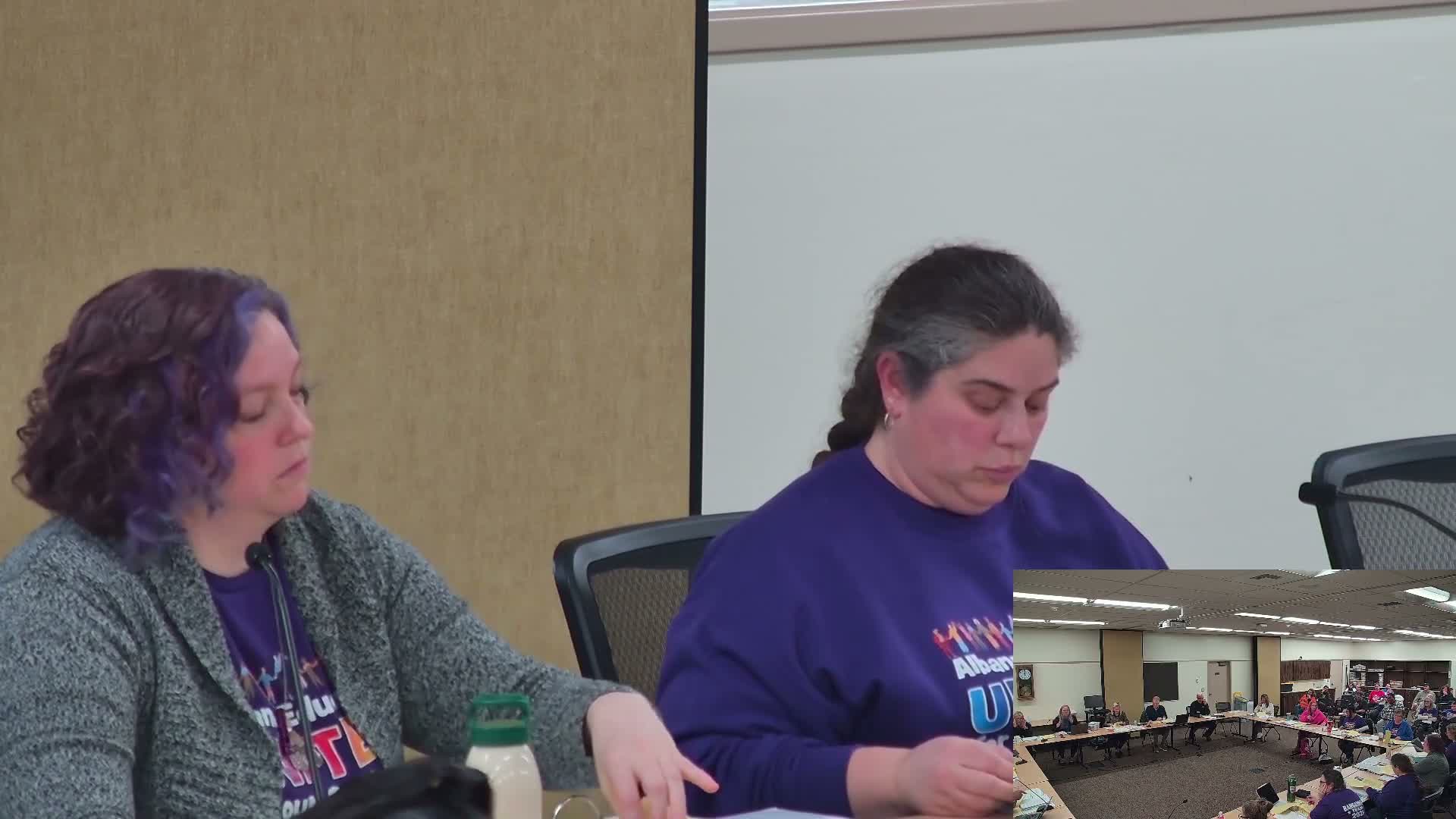
Article 6 revisions center on inclement-weather and emergency-response procedures designed to improve safety and reduce unnecessary travel. Gordon (speaker 6) and Dave (speaker 9) described specific notice timelines and staffing practices drafted to protect employees and students.
Dave summarized the safety-focused approach: "If we're gonna cancel school, if we do a delay and we're gonna cancel, you're gonna get the notice by 07:30," adding that bus drivers could receive a "weather watch" the night before and that custodial staff sometimes come in early to prepare buildings when it is safe to do so. The language lays out decision timelines tied to bus-operability and aims to limit driving on unsafe roads.
Negotiators also discussed whether the inclement-weather language should explicitly cover wildfire smoke or extreme heat. Dave said they would review whether those conditions are covered and noted the district has a separate heat-awareness plan that may govern heat-related closures. The parties praised recent collaborative work that reduced complaints and credited advance custodial planning for improving morning safety.
The parties agreed to review the precise scope (smoke, heat, other hazards) and return with clarified language.
Dave summarized the safety-focused approach: "If we're gonna cancel school, if we do a delay and we're gonna cancel, you're gonna get the notice by 07:30," adding that bus drivers could receive a "weather watch" the night before and that custodial staff sometimes come in early to prepare buildings when it is safe to do so. The language lays out decision timelines tied to bus-operability and aims to limit driving on unsafe roads.
Negotiators also discussed whether the inclement-weather language should explicitly cover wildfire smoke or extreme heat. Dave said they would review whether those conditions are covered and noted the district has a separate heat-awareness plan that may govern heat-related closures. The parties praised recent collaborative work that reduced complaints and credited advance custodial planning for improving morning safety.
The parties agreed to review the precise scope (smoke, heat, other hazards) and return with clarified language.
View the Full Meeting & All Its Details
This article offers just a summary. Unlock complete video, transcripts, and insights as a Founder Member.
✓
Watch full, unedited meeting videos
✓
Search every word spoken in unlimited transcripts
✓
AI summaries & real-time alerts (all government levels)
✓
Permanent access to expanding government content
30-day money-back guarantee
