Scott County reviews $14 million in investments, asks municipal advisor for 3-week long-range plan
March 07, 2026 | Scott County, Kentucky
This article was created by AI summarizing key points discussed. AI makes mistakes, so for full details and context, please refer to the video of the full meeting. Please report any errors so we can fix them. Report an error »
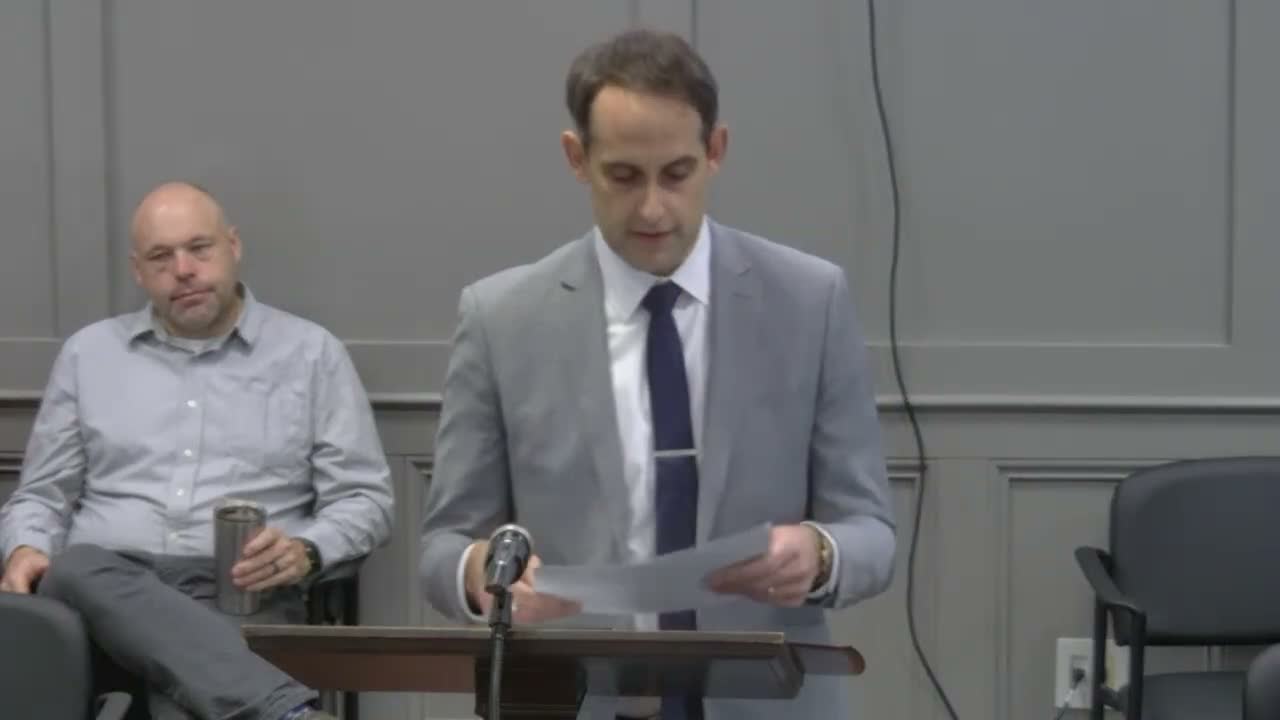
Scott County Fiscal Court on Tuesday heard a summary of the county's general fund investments and asked its municipal advisor to produce a draft long-range financial plan in roughly three weeks.
Michael George of Compass Municipal Advisors told the court that the county's Schwab custodied investment account is heavily weighted to U.S. Treasury securities and a Treasury-backed money market, with a reported market value of $14,000,008.49. He said the account is laddered with short durations to preserve liquidity and that the portfolio's blended yield is about 3.6 to 3.65 percent.
"The market value of the account is $14,000,008.49," Michael George said, and he explained the account structure includes securities maturing at staggered points so cash would be available if needed.
George summarized calendar-year 2025 results, saying the account started the year at about $16.1 million, earned roughly $545,000 in interest, paid about $10,000 in fees and recorded a net gain near $535,000 (about a 3.75 percent return). He also confirmed a $2,000,000 withdrawal that moved funds to Whitaker Bank for capital projects.
Judge Covington and other members asked questions about a particular Treasury note that appeared at market value to be below cost basis. George clarified that the position represented an unrealized (market) loss only if the county sold the security and that the account's total cost basis versus market value shows an overall gain.
Members also raised the question of paying down existing county bonds. George said the current bond balance is roughly $728 million at about a 3 percent fixed rate, with about seven years left on a 10-year origination. He cautioned that escrowing funds to prepay bonds could subject the county to IRS restrictions on reinvestment and might not be optimal if the county is earning higher yields than the borrowing cost.
"You could technically pay it off, but you would have to invest it at a lower interest rate," George said, describing the trade-offs of escrowing funds for prepayment.
As a next step, George asked for three weeks to build a detailed financial plan that will incorporate historical revenue and expense trends, departmental actuals (broken out by DLG code) and capital-project assumptions so the court can see options for funding projects by cash or debt and monitor projections as market conditions change.
The court did not take any formal action on the account during the work session; members asked for the written plan and indicated they expect to review the draft before considering policy changes or large reallocations.
Michael George of Compass Municipal Advisors told the court that the county's Schwab custodied investment account is heavily weighted to U.S. Treasury securities and a Treasury-backed money market, with a reported market value of $14,000,008.49. He said the account is laddered with short durations to preserve liquidity and that the portfolio's blended yield is about 3.6 to 3.65 percent.
"The market value of the account is $14,000,008.49," Michael George said, and he explained the account structure includes securities maturing at staggered points so cash would be available if needed.
George summarized calendar-year 2025 results, saying the account started the year at about $16.1 million, earned roughly $545,000 in interest, paid about $10,000 in fees and recorded a net gain near $535,000 (about a 3.75 percent return). He also confirmed a $2,000,000 withdrawal that moved funds to Whitaker Bank for capital projects.
Judge Covington and other members asked questions about a particular Treasury note that appeared at market value to be below cost basis. George clarified that the position represented an unrealized (market) loss only if the county sold the security and that the account's total cost basis versus market value shows an overall gain.
Members also raised the question of paying down existing county bonds. George said the current bond balance is roughly $728 million at about a 3 percent fixed rate, with about seven years left on a 10-year origination. He cautioned that escrowing funds to prepay bonds could subject the county to IRS restrictions on reinvestment and might not be optimal if the county is earning higher yields than the borrowing cost.
"You could technically pay it off, but you would have to invest it at a lower interest rate," George said, describing the trade-offs of escrowing funds for prepayment.
As a next step, George asked for three weeks to build a detailed financial plan that will incorporate historical revenue and expense trends, departmental actuals (broken out by DLG code) and capital-project assumptions so the court can see options for funding projects by cash or debt and monitor projections as market conditions change.
The court did not take any formal action on the account during the work session; members asked for the written plan and indicated they expect to review the draft before considering policy changes or large reallocations.
View the Full Meeting & All Its Details
This article offers just a summary. Unlock complete video, transcripts, and insights as a Founder Member.
✓
Watch full, unedited meeting videos
✓
Search every word spoken in unlimited transcripts
✓
AI summaries & real-time alerts (all government levels)
✓
Permanent access to expanding government content
30-day money-back guarantee
