Sheriff seeks reclassification, additional deputies for courthouse and Comcare security amid staffing shortfalls
March 07, 2026 | Sedgwick County, Kansas
This article was created by AI summarizing key points discussed. AI makes mistakes, so for full details and context, please refer to the video of the full meeting. Please report any errors so we can fix them. Report an error »
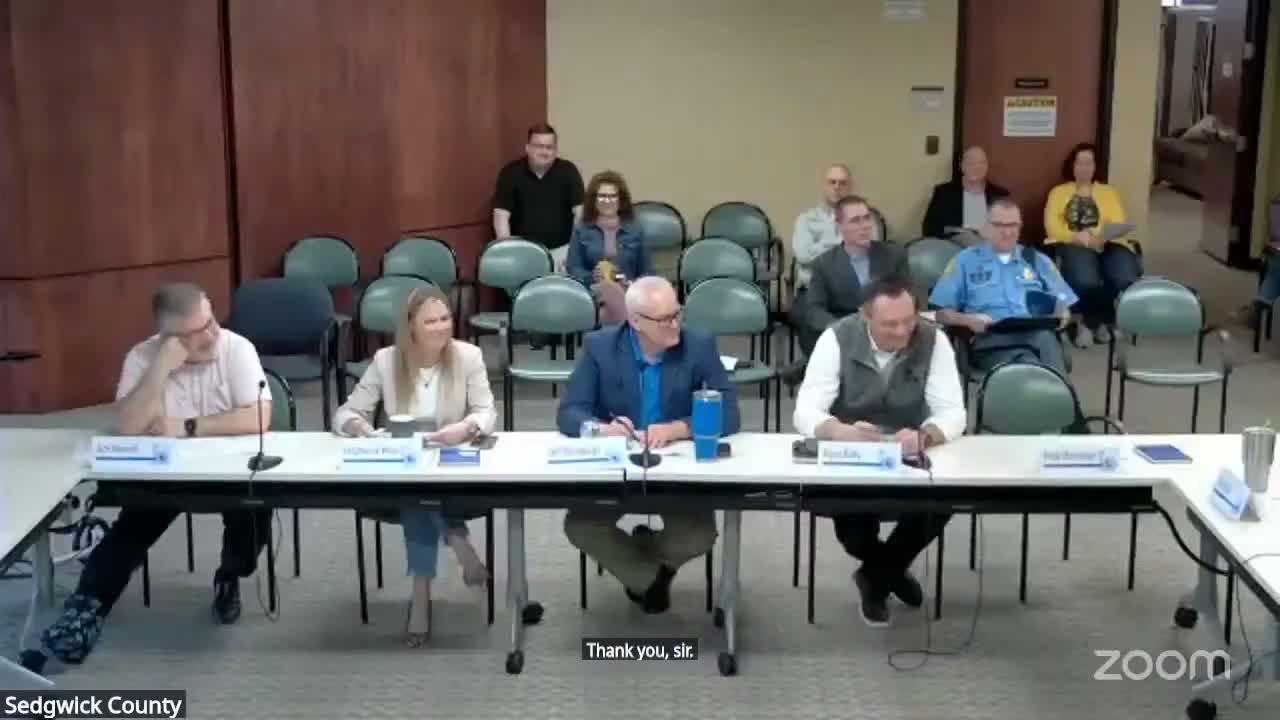
The Sedgwick County sheriff on March 11 urged the commission to approve personnel changes that would fold courthouse security into the sheriff’s office, increase starting pay for affected positions and create a staffing pattern intended to improve recruitment and on-site responses.
The sheriff said courthouse security historically required prior law-enforcement certification and that, following prior integration efforts, there were open positions and a rising vacancy rate. “We’re at 33% vacancy,” he told commissioners, adding that he expected additional departures that could push vacancy higher. The proposal would reclassify courthouse security deputies and sergeants to sheriff positions and reclassify service officers from grade 52 to grade 55; the sheriff said the change would allow hiring through the sheriff’s standard recruitment and academy pipeline.
The sheriff estimated a first-year budget impact of about $447,000 and an annualized impact of about $547,000; he said eliminating seven part-time courthouse security positions and replacing them with full-time service officers would reduce long-term costs by roughly $88,000 once attrition occurs.
On Comcare security, the sheriff said private contractors have proven insufficient and recommended posting sheriff’s deputies on-site around the clock. He proposed six deputies (two per shift) to staff Comcare, describing the assignment as creating a ninth beat to be covered by deputies rather than relying on outside contractors or distant patrol units. He estimated an annual cost for those six deputies of about $683,000 and said hiring would align with the sheriff’s August academy class so deputies could complete the required training cycle.
Answering a funding question, Lindsay said the distribution of costs will be added to the sheriff’s budget and reimbursed by Comcare via an interdepartmental charge: “we will then have what we call interdepartmental charge that we will charge against Comcare for reimbursement, and those funds have been approved,” she said. Commissioners pressed on whether the contract length, timing, and alternatives (including partnering with Wichita for housing programs) could reduce long-term commitments.
The sheriff provided a training timeline: recruits would enter a 24-week academy (graduating in December) followed by about eight weeks of field training, with transfers into judicial assignments and full implementation expected roughly by March of the following year.
The commission will consider the operationalization items, staffing adjustments and budget implications at the Wednesday meeting when the sheriff will present a fuller PowerPoint and details.
The sheriff said courthouse security historically required prior law-enforcement certification and that, following prior integration efforts, there were open positions and a rising vacancy rate. “We’re at 33% vacancy,” he told commissioners, adding that he expected additional departures that could push vacancy higher. The proposal would reclassify courthouse security deputies and sergeants to sheriff positions and reclassify service officers from grade 52 to grade 55; the sheriff said the change would allow hiring through the sheriff’s standard recruitment and academy pipeline.
The sheriff estimated a first-year budget impact of about $447,000 and an annualized impact of about $547,000; he said eliminating seven part-time courthouse security positions and replacing them with full-time service officers would reduce long-term costs by roughly $88,000 once attrition occurs.
On Comcare security, the sheriff said private contractors have proven insufficient and recommended posting sheriff’s deputies on-site around the clock. He proposed six deputies (two per shift) to staff Comcare, describing the assignment as creating a ninth beat to be covered by deputies rather than relying on outside contractors or distant patrol units. He estimated an annual cost for those six deputies of about $683,000 and said hiring would align with the sheriff’s August academy class so deputies could complete the required training cycle.
Answering a funding question, Lindsay said the distribution of costs will be added to the sheriff’s budget and reimbursed by Comcare via an interdepartmental charge: “we will then have what we call interdepartmental charge that we will charge against Comcare for reimbursement, and those funds have been approved,” she said. Commissioners pressed on whether the contract length, timing, and alternatives (including partnering with Wichita for housing programs) could reduce long-term commitments.
The sheriff provided a training timeline: recruits would enter a 24-week academy (graduating in December) followed by about eight weeks of field training, with transfers into judicial assignments and full implementation expected roughly by March of the following year.
The commission will consider the operationalization items, staffing adjustments and budget implications at the Wednesday meeting when the sheriff will present a fuller PowerPoint and details.
View the Full Meeting & All Its Details
This article offers just a summary. Unlock complete video, transcripts, and insights as a Founder Member.
✓
Watch full, unedited meeting videos
✓
Search every word spoken in unlimited transcripts
✓
AI summaries & real-time alerts (all government levels)
✓
Permanent access to expanding government content
30-day money-back guarantee
