Mid Valley Disposal details 2025 recycling audits, warns Parlier to prepare for SB 1383 audit
March 06, 2026 | Parlier City, Fresno County, California
This article was created by AI summarizing key points discussed. AI makes mistakes, so for full details and context, please refer to the video of the full meeting. Please report any errors so we can fix them. Report an error »
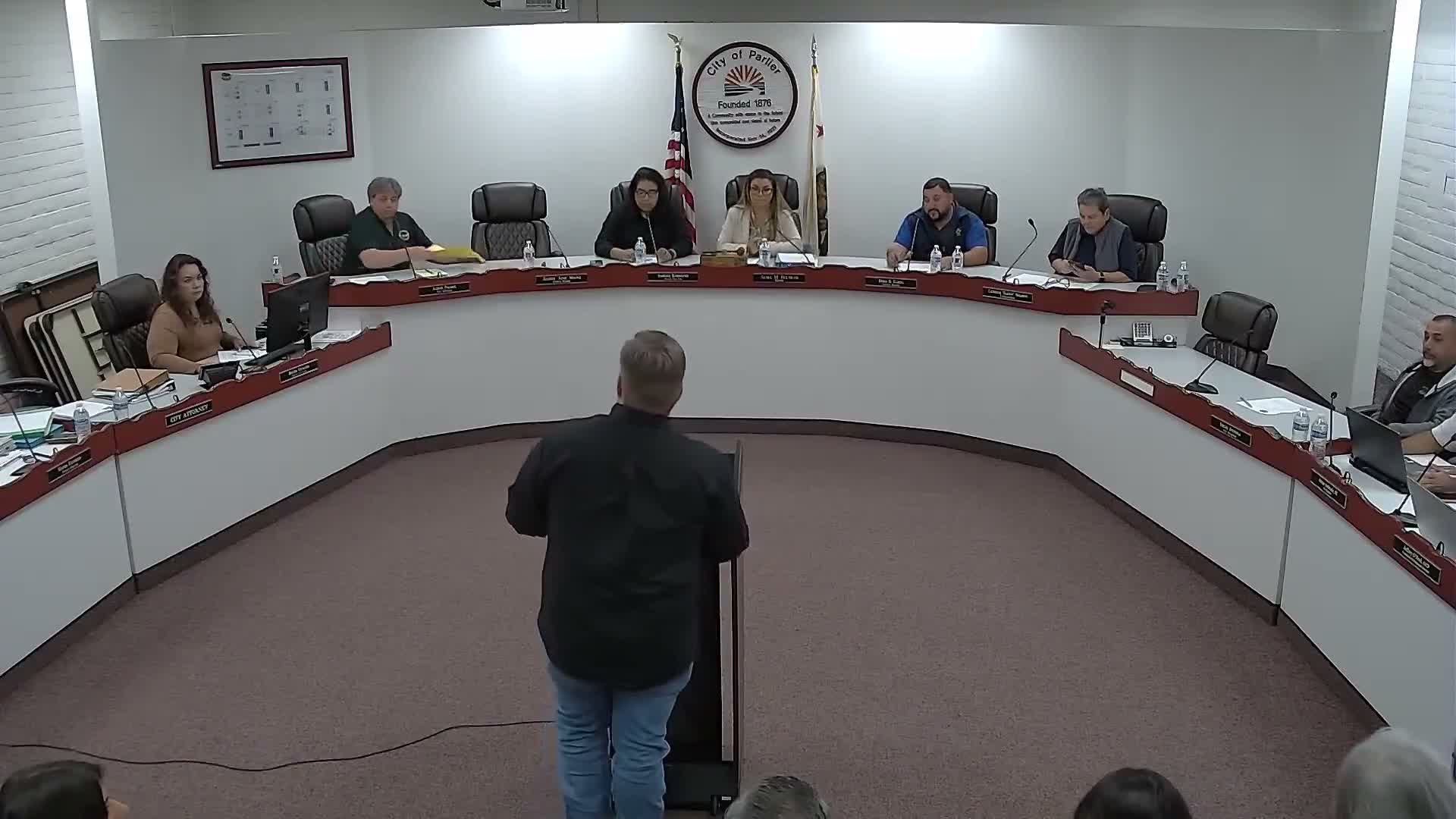
On March 5, 2026, Mid Valley Disposal representatives briefed the Parlier City Council on 2025 recycling compliance, contamination-tagging and community outreach, and warned the city to prepare for a CalRecycle SB 1383 audit expected in the second quarter.
Thomas Hammond, Mid Valley Disposal’s recycled programs manager, told the council the company’s recycling‑coordinating staff and operations teams performed site assessments and recycling audits across Parlier in 2025. "We visited 111 commercial [locations], 25 multifamily visits and 142 residential visits," Hammond said, and the company issued 293 residential contamination tags and 40 commercial tags in 2025, for a total of 333 contamination tags. He said tags carry education materials and repeat offenders receive follow‑up outreach.
Hammond explained the city is still in an education‑first enforcement phase: when staff find contamination they provide on‑site guidance and mail further education rather than pursue penalties. He said Mid Valley handles the waiver legwork for businesses that generate low volumes, but the city remains the enforcement agency that approves or denies waivers.
On statewide requirements, Hammond said Fresno County jurisdictions are being audited by CalRecycle for SB 1383 compliance and Parlier should expect an audit letter in Q2. "SB 1383 requires three streams — trash, recycling and green waste — and includes food‑recovery expectations," Hammond said, noting that food‑soiled paper, greasy pizza boxes and other organics belong in the green/organics stream under the law.
Peter Rangel, Mid Valley’s operations manager, presented cleanup and tonnage figures from the fall 2025 cleanup on Bethel Avenue and citywide diversion numbers. He reported the cleanup yielded 10 total loads and 221 customers; items included about 3.21 tons of mattresses, 3.15 tons of e‑waste, 30.31 tons of refuse and nearly 12 tons of metal, with roughly 34% of materials diverted from landfill at that event. Citywide figures Rangel presented included about 27.57 tons of commercial refuse and 187 tons of organics in the commercial stream, and residential totals that produced an overall residential diversion estimated at 38%.
During public Q&A, residents pressed Mid Valley and councilmembers about apartment recycling enforcement. Hammond acknowledged enforcement challenges: apartment complexes are required to maintain a three‑can system but identifying the units responsible for contamination is difficult, so Mid Valley focuses on education, on‑site presentations and recommending operational changes (for example, locking bins) where feasible.
Hammond also noted state action on single‑use bags: "Plastic bags as of January 1 are now discontinued," he said, explaining such bags were contaminating the blue recycling stream and that the change should reduce a common source of contamination.
The presentation closed with Mid Valley reminding the council that the electronic annual report (the city’s yearly report to CalRecycle) will be prepared again this summer and turned in by Aug. 1, with Mid Valley assisting city staff on generators, program descriptions and record‑keeping.
Councilmembers did not take a formal action on the presentation; staff and Mid Valley indicated they will continue outreach and compliance work ahead of the expected CalRecycle audit.
Thomas Hammond, Mid Valley Disposal’s recycled programs manager, told the council the company’s recycling‑coordinating staff and operations teams performed site assessments and recycling audits across Parlier in 2025. "We visited 111 commercial [locations], 25 multifamily visits and 142 residential visits," Hammond said, and the company issued 293 residential contamination tags and 40 commercial tags in 2025, for a total of 333 contamination tags. He said tags carry education materials and repeat offenders receive follow‑up outreach.
Hammond explained the city is still in an education‑first enforcement phase: when staff find contamination they provide on‑site guidance and mail further education rather than pursue penalties. He said Mid Valley handles the waiver legwork for businesses that generate low volumes, but the city remains the enforcement agency that approves or denies waivers.
On statewide requirements, Hammond said Fresno County jurisdictions are being audited by CalRecycle for SB 1383 compliance and Parlier should expect an audit letter in Q2. "SB 1383 requires three streams — trash, recycling and green waste — and includes food‑recovery expectations," Hammond said, noting that food‑soiled paper, greasy pizza boxes and other organics belong in the green/organics stream under the law.
Peter Rangel, Mid Valley’s operations manager, presented cleanup and tonnage figures from the fall 2025 cleanup on Bethel Avenue and citywide diversion numbers. He reported the cleanup yielded 10 total loads and 221 customers; items included about 3.21 tons of mattresses, 3.15 tons of e‑waste, 30.31 tons of refuse and nearly 12 tons of metal, with roughly 34% of materials diverted from landfill at that event. Citywide figures Rangel presented included about 27.57 tons of commercial refuse and 187 tons of organics in the commercial stream, and residential totals that produced an overall residential diversion estimated at 38%.
During public Q&A, residents pressed Mid Valley and councilmembers about apartment recycling enforcement. Hammond acknowledged enforcement challenges: apartment complexes are required to maintain a three‑can system but identifying the units responsible for contamination is difficult, so Mid Valley focuses on education, on‑site presentations and recommending operational changes (for example, locking bins) where feasible.
Hammond also noted state action on single‑use bags: "Plastic bags as of January 1 are now discontinued," he said, explaining such bags were contaminating the blue recycling stream and that the change should reduce a common source of contamination.
The presentation closed with Mid Valley reminding the council that the electronic annual report (the city’s yearly report to CalRecycle) will be prepared again this summer and turned in by Aug. 1, with Mid Valley assisting city staff on generators, program descriptions and record‑keeping.
Councilmembers did not take a formal action on the presentation; staff and Mid Valley indicated they will continue outreach and compliance work ahead of the expected CalRecycle audit.
View the Full Meeting & All Its Details
This article offers just a summary. Unlock complete video, transcripts, and insights as a Founder Member.
✓
Watch full, unedited meeting videos
✓
Search every word spoken in unlimited transcripts
✓
AI summaries & real-time alerts (all government levels)
✓
Permanent access to expanding government content
30-day money-back guarantee
