Senate passes package including 'Ryan’s Law' to allow limited medical cannabis in care facilities and codifies jail search rules
March 03, 2026 | Legislative Sessions, Washington
This article was created by AI summarizing key points discussed. AI makes mistakes, so for full details and context, please refer to the video of the full meeting. Please report any errors so we can fix them. Report an error »
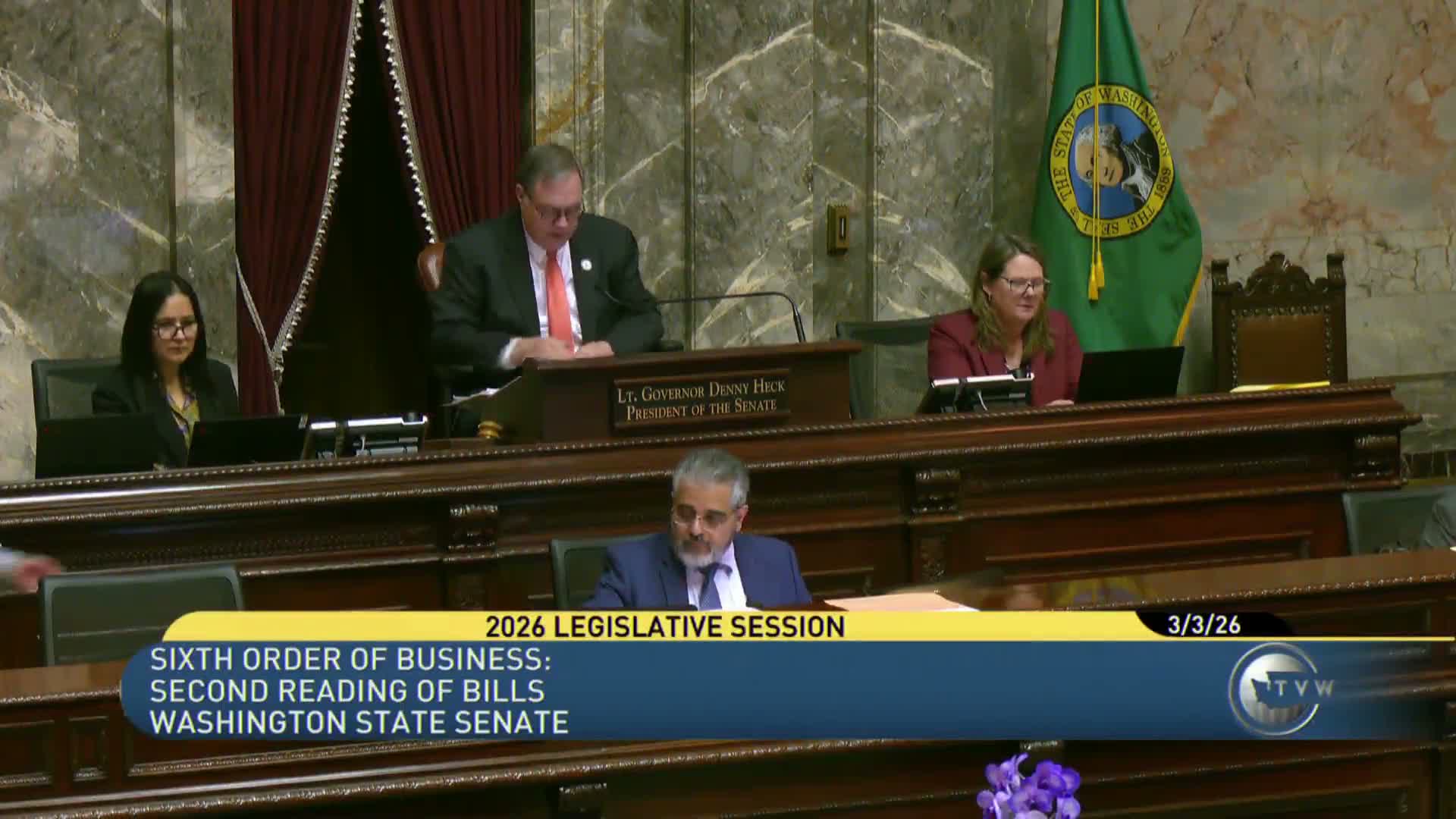
The Washington State Senate on March 3, 2025, passed a series of bills addressing medical cannabis access in care facilities, procedures for searches in jails, voter-registration challenges, water‑system rate transparency and other health and consumer protections.
Senators advanced Substitute House Bill 2152, cited on the floor as "Ryan’s Law," which "directs hospitals, nursing homes, and hospice care centers to allow for the limited use of medical cannabis for those patients who are facing the end of life," sponsor Senator Cleveland said. "This bill truly can improve quality of life for patients as they face their final days," she added, urging support. The sponsor’s motion to advance the bill was followed by remarks from another senator who described a case in which medical cannabis helped a patient with pancreatic cancer remain lucid and communicate with family; that senator asked colleagues for a yes vote. The secretary announced final passage: "46 ayes, 2 nays, 1 absent."
On overcrowding and corrections policy, the Senate advanced and passed an engrossed substitute (ESHB 1604) to set parameters for searches of transgender and intersex individuals in local jails and align procedures with federal standards. Senator Fortunato offered amendment 0854 to require a medical professional be available to resolve search impasses and to specify qualifying medical professionals; he said the amendment "simply says a medical professional has to be able to do that" and listed physicians, physician assistants and registered nurses as examples. Senator Dhingra opposed the amendment, noting that the federal Prison Rape Elimination Act (PREA) has governed these procedures since 2003 and arguing the amendment was unnecessary; after debate the amendment failed. A separate amendment (0857) intended to provide guard-protection measures for religious objections was also offered and rejected. The Senate then advanced the engrossed bill and the secretary announced final passage: "30 ayes, 19 nays."
Senators also adopted a ways-and-means striking amendment and passed Second Substitute House Bill 1906 to increase transparency and consumer protection in water-system rate proceedings. Senator Shoemake urged support for the amendment and the amended bill was advanced and declared passed by voice vote and roll call (49–0).
The chamber debated amendments to an engrossed bill on voter-registration challenges (ESHB 1916), including Amendment 0856, which would have allowed out-of-county challenges. Senator Wagner said limiting challenges to county residence "doesn’t make sense to somebody who just wants to exercise their right of free speech in Washington state," while Senator Valdez argued limiting challenges to the county helps prevent a flood of statewide challenges. Amendment 0856 failed and the committee striking amendment was adopted; the bill was advanced and declared passed after roll call (reported as 30–19).
Other items passed or adopted on the floor included an amendment and final passage for ESHB 2110 (clarifying personnel rules for ambulance interfacility specialty care transports and directing the Office of the Insurance Commissioner to report on implementation), Second Substitute HB 2429 (extending and adjusting the children and youth behavioral‑health work group and aligning agencies with the Washington Thriving strategic plan) and SSB 2384 (requiring actuarial analysis and Insurance Commissioner review for certain continuing‑care retirement communities). Vote totals reported on the floor included 49–0 and 37–12 tallies where noted.
Votes at a glance:
- Substitute House Bill 2152 ("Ryan’s Law") — permits limited medical cannabis use in hospitals, nursing homes and hospice settings; sponsor: Senator Cleveland; final passage reported as 46 ayes, 2 nays, 1 absent.
- Engrossed Substitute House Bill 1604 — establishes parameters for searches of transgender/intersex individuals in local jails and aligns procedures with federal standards; final passage reported as 30 ayes, 19 nays. Multiple amendments (0854, 0857) were debated and not adopted.
- Second Substitute House Bill 1906 (as amended) — transparency and consumer protections for water-system rates; committee striking amendment adopted; final passage reported as 49 ayes, 0 nays.
- Engrossed Substitute House Bill 1916 — modifies voter‑registration challenge processes and related procedures; amendment 0856 (allowing out‑of‑county challenges) was debated and failed; final passage reported as 30 ayes, 19 nays.
- Engrossed Substitute House Bill 2110 — personnel rules for ambulance interfacility transports; committee striking amendment adopted; final passage reported as 49 ayes, 0 nays.
- Second Substitute House Bill 2429 — children and youth behavioral health work group changes and alignment with the Washington Thriving plan; committee striking amendment adopted; final passage reported as 49 ayes, 0 nays.
- Second Substitute House Bill 2384 — oversight and actuarial-reporting requirements for continuing care retirement communities (CCRCs); final passage reported as 37 ayes, 12 nays.
What changed and what’s next: several debated amendments failed on voice votes before final passage of the bills; sponsors said implementation steps (agency reports, rulemaking and committee follow-up) will be required. The Senate adjourned and will reconvene at 9:00 a.m. on Wednesday, March 4 for the next legislative day.
Attributions: Quotes and attributions in this report come from floor remarks and roll‑call announcements recorded by the Senate presiding officer and secretary during the March 3 floor session.
Senators advanced Substitute House Bill 2152, cited on the floor as "Ryan’s Law," which "directs hospitals, nursing homes, and hospice care centers to allow for the limited use of medical cannabis for those patients who are facing the end of life," sponsor Senator Cleveland said. "This bill truly can improve quality of life for patients as they face their final days," she added, urging support. The sponsor’s motion to advance the bill was followed by remarks from another senator who described a case in which medical cannabis helped a patient with pancreatic cancer remain lucid and communicate with family; that senator asked colleagues for a yes vote. The secretary announced final passage: "46 ayes, 2 nays, 1 absent."
On overcrowding and corrections policy, the Senate advanced and passed an engrossed substitute (ESHB 1604) to set parameters for searches of transgender and intersex individuals in local jails and align procedures with federal standards. Senator Fortunato offered amendment 0854 to require a medical professional be available to resolve search impasses and to specify qualifying medical professionals; he said the amendment "simply says a medical professional has to be able to do that" and listed physicians, physician assistants and registered nurses as examples. Senator Dhingra opposed the amendment, noting that the federal Prison Rape Elimination Act (PREA) has governed these procedures since 2003 and arguing the amendment was unnecessary; after debate the amendment failed. A separate amendment (0857) intended to provide guard-protection measures for religious objections was also offered and rejected. The Senate then advanced the engrossed bill and the secretary announced final passage: "30 ayes, 19 nays."
Senators also adopted a ways-and-means striking amendment and passed Second Substitute House Bill 1906 to increase transparency and consumer protection in water-system rate proceedings. Senator Shoemake urged support for the amendment and the amended bill was advanced and declared passed by voice vote and roll call (49–0).
The chamber debated amendments to an engrossed bill on voter-registration challenges (ESHB 1916), including Amendment 0856, which would have allowed out-of-county challenges. Senator Wagner said limiting challenges to county residence "doesn’t make sense to somebody who just wants to exercise their right of free speech in Washington state," while Senator Valdez argued limiting challenges to the county helps prevent a flood of statewide challenges. Amendment 0856 failed and the committee striking amendment was adopted; the bill was advanced and declared passed after roll call (reported as 30–19).
Other items passed or adopted on the floor included an amendment and final passage for ESHB 2110 (clarifying personnel rules for ambulance interfacility specialty care transports and directing the Office of the Insurance Commissioner to report on implementation), Second Substitute HB 2429 (extending and adjusting the children and youth behavioral‑health work group and aligning agencies with the Washington Thriving strategic plan) and SSB 2384 (requiring actuarial analysis and Insurance Commissioner review for certain continuing‑care retirement communities). Vote totals reported on the floor included 49–0 and 37–12 tallies where noted.
Votes at a glance:
- Substitute House Bill 2152 ("Ryan’s Law") — permits limited medical cannabis use in hospitals, nursing homes and hospice settings; sponsor: Senator Cleveland; final passage reported as 46 ayes, 2 nays, 1 absent.
- Engrossed Substitute House Bill 1604 — establishes parameters for searches of transgender/intersex individuals in local jails and aligns procedures with federal standards; final passage reported as 30 ayes, 19 nays. Multiple amendments (0854, 0857) were debated and not adopted.
- Second Substitute House Bill 1906 (as amended) — transparency and consumer protections for water-system rates; committee striking amendment adopted; final passage reported as 49 ayes, 0 nays.
- Engrossed Substitute House Bill 1916 — modifies voter‑registration challenge processes and related procedures; amendment 0856 (allowing out‑of‑county challenges) was debated and failed; final passage reported as 30 ayes, 19 nays.
- Engrossed Substitute House Bill 2110 — personnel rules for ambulance interfacility transports; committee striking amendment adopted; final passage reported as 49 ayes, 0 nays.
- Second Substitute House Bill 2429 — children and youth behavioral health work group changes and alignment with the Washington Thriving plan; committee striking amendment adopted; final passage reported as 49 ayes, 0 nays.
- Second Substitute House Bill 2384 — oversight and actuarial-reporting requirements for continuing care retirement communities (CCRCs); final passage reported as 37 ayes, 12 nays.
What changed and what’s next: several debated amendments failed on voice votes before final passage of the bills; sponsors said implementation steps (agency reports, rulemaking and committee follow-up) will be required. The Senate adjourned and will reconvene at 9:00 a.m. on Wednesday, March 4 for the next legislative day.
Attributions: Quotes and attributions in this report come from floor remarks and roll‑call announcements recorded by the Senate presiding officer and secretary during the March 3 floor session.
View the Full Meeting & All Its Details
This article offers just a summary. Unlock complete video, transcripts, and insights as a Founder Member.
✓
Watch full, unedited meeting videos
✓
Search every word spoken in unlimited transcripts
✓
AI summaries & real-time alerts (all government levels)
✓
Permanent access to expanding government content
30-day money-back guarantee
