Committee holds bill to expand free school meals to families up to 200% of poverty
March 03, 2026 | 2026 Utah Legislature, Utah Legislature, Utah Legislative Branch, Utah
This article was created by AI summarizing key points discussed. AI makes mistakes, so for full details and context, please refer to the video of the full meeting. Please report any errors so we can fix them. Report an error »
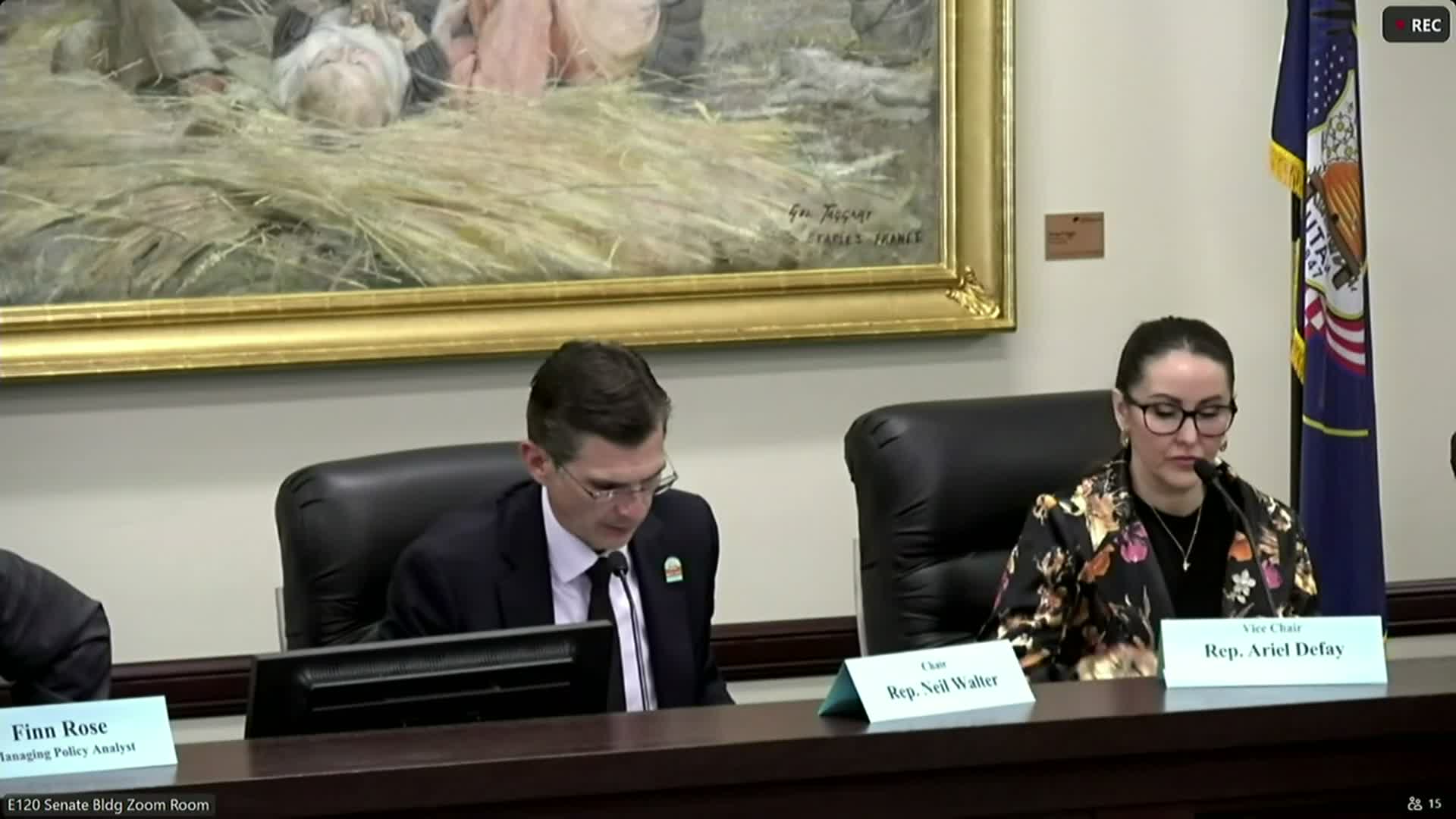
Senator Escamilla presented Substitute SB 180, which would expand free school-meal eligibility from 185% to 200% of the federal poverty level for children in districts that are not already offering universal meals and add a reporting requirement to increase transparency of local meal programs. "Kids that are hungry are not gonna learn," Sen. Escamilla said, framing the proposal as a high-return investment in children’s ability to learn.
Supporters told the committee that rising housing and medical costs are increasing demand on food banks and pressing middle-income families. Neil Rickard, child nutrition advocate for Utahns Against Hunger, said the band of families targeted by the bill are facing growing strain and that school meals are often the only nutritious meal some children receive. "We're very much in support of these efforts to expand access to meals this way," Rickard testified.
Opponents on the committee focused on funding and distribution. Representative Auxier argued that expanding eligibility would shift costs to taxpayers and could reduce funds available to other students already subsidized under the current formula. Representative McPherson and Representative Miller raised fiscal concerns about redirecting portions of the Uniform School Fund (a liquor‑markup distribution) and whether the reallocation could raise meal prices for students outside the benefit band. McPherson warned that moving one-time or reallocated dollars into ongoing commitments could create sustainability issues; Miller asked whether redirected funds might increase paid meal prices in some districts.
Sen. Escamilla said the bill would use a modest reallocation (5% of the liquor-markup distribution) plus a $5 million restricted appropriation and stressed a reporting mechanism to understand how LEAs operate meal programs. "We will not be impacting districts that already offer universal free meals," Escamilla said, and he urged the committee to view the change as a policy decision about feeding children.
After discussion and a roll-call on a substitute motion to favorably recommend, the substitute failed. The committee then voted to hold SB 180; the motion to hold passed 8–1, with Representative Hayes recorded as the lone no vote. The vote leaves the bill on the committee's hold calendar; no policy change or appropriation took effect from the committee action.
What’s next: The bill was held by the committee; sponsors may continue negotiations on funding and distribution and could return with amendments or funding clarifications in future committee action.
Supporters told the committee that rising housing and medical costs are increasing demand on food banks and pressing middle-income families. Neil Rickard, child nutrition advocate for Utahns Against Hunger, said the band of families targeted by the bill are facing growing strain and that school meals are often the only nutritious meal some children receive. "We're very much in support of these efforts to expand access to meals this way," Rickard testified.
Opponents on the committee focused on funding and distribution. Representative Auxier argued that expanding eligibility would shift costs to taxpayers and could reduce funds available to other students already subsidized under the current formula. Representative McPherson and Representative Miller raised fiscal concerns about redirecting portions of the Uniform School Fund (a liquor‑markup distribution) and whether the reallocation could raise meal prices for students outside the benefit band. McPherson warned that moving one-time or reallocated dollars into ongoing commitments could create sustainability issues; Miller asked whether redirected funds might increase paid meal prices in some districts.
Sen. Escamilla said the bill would use a modest reallocation (5% of the liquor-markup distribution) plus a $5 million restricted appropriation and stressed a reporting mechanism to understand how LEAs operate meal programs. "We will not be impacting districts that already offer universal free meals," Escamilla said, and he urged the committee to view the change as a policy decision about feeding children.
After discussion and a roll-call on a substitute motion to favorably recommend, the substitute failed. The committee then voted to hold SB 180; the motion to hold passed 8–1, with Representative Hayes recorded as the lone no vote. The vote leaves the bill on the committee's hold calendar; no policy change or appropriation took effect from the committee action.
What’s next: The bill was held by the committee; sponsors may continue negotiations on funding and distribution and could return with amendments or funding clarifications in future committee action.
Don't Miss a Word: See the Full Meeting!
Go beyond summaries. Unlock every video, transcript, and key insight with a Founder Membership.
✓
Get instant access to full meeting videos
✓
Search and clip any phrase from complete transcripts
✓
Receive AI-powered summaries & custom alerts
✓
Enjoy lifetime, unrestricted access to government data
30-day money-back guarantee
