Committee approves amendment and recommends targeted‑advertising tax to the House after debate over legal risk and small‑business impact
March 03, 2026 | 2026 Utah Legislature, Utah Legislature, Utah Legislative Branch, Utah
This article was created by AI summarizing key points discussed. AI makes mistakes, so for full details and context, please refer to the video of the full meeting. Please report any errors so we can fix them. Report an error »
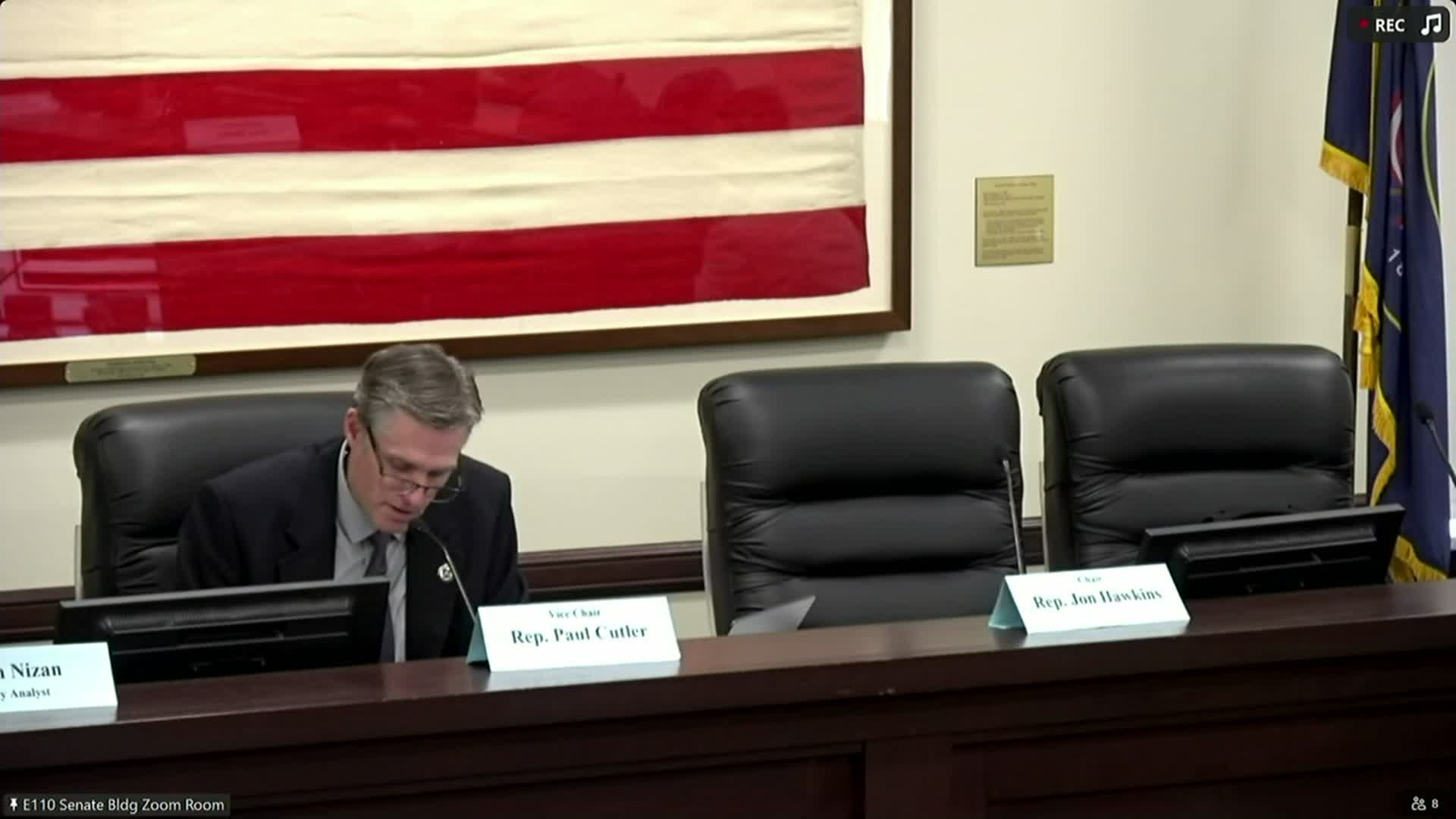
Senator Mikell presented SB 287 to the House Economic Development and Workforce Services Committee as a 4.7% gross‑receipts tax aimed at companies that derive a large share of revenue from targeted advertising. The sponsor framed the proposal as a tool to change industry behavior and to fund a restricted account for child literacy, youth sports and recreation, volunteerism, mental‑health programs, and foster/adoption services.
“Targeted advertising is intentionally designed to addict our minors, exploit their vulnerabilities for profit at the expense of our kids,” Senator Mikell said, describing the bill as both deterrent and funding mechanism. He said attorneys in the Attorney General’s office and Tax Commission staff reviewed the bill and that an amendment expands coverage to ads that include a link or QR code to strengthen legal defensibility.
Opponents argued the tax would ultimately burden Utah small businesses, may be preempted by federal law, and presents First Amendment risk. Kaden Rosenbaum of the Libertas Institute said he believes the measure likely raises First Amendment and Internet Tax Freedom Act problems. Billy Hesterman of the Utah Taxpayers Association warned the costs would be passed to Utahns, and Deb Peters (Americans for Digital Opportunity) said the tax would raise barriers for startups and create compliance complexity.
Committee members raised two recurring concerns: whether the tax would be passed through to local businesses and customers, and whether the statute would withstand legal challenges. Senator Mikell acknowledged that pass‑through is possible but said the bill targets companies that rely on targeted advertising and that behavior change is the primary policy objective. Representative Hawkins and others argued economic principles make pass‑through likely.
The committee adopted Amendment 2 (expanding the definition and creating offsets and a restricted account for specified child‑and‑youth programs) and then voted to favorably recommend the bill to the full House. Roll call recorded eight ayes and two nays (Representative Hansen and Chair Hawkins voted no). The sponsor urged support, saying the restricted account would “put some of those dollars to take care of the harm.”
What happens next: SB 287, as amended, will go to the House floor for further consideration and potential additional amendments or debate.
“Targeted advertising is intentionally designed to addict our minors, exploit their vulnerabilities for profit at the expense of our kids,” Senator Mikell said, describing the bill as both deterrent and funding mechanism. He said attorneys in the Attorney General’s office and Tax Commission staff reviewed the bill and that an amendment expands coverage to ads that include a link or QR code to strengthen legal defensibility.
Opponents argued the tax would ultimately burden Utah small businesses, may be preempted by federal law, and presents First Amendment risk. Kaden Rosenbaum of the Libertas Institute said he believes the measure likely raises First Amendment and Internet Tax Freedom Act problems. Billy Hesterman of the Utah Taxpayers Association warned the costs would be passed to Utahns, and Deb Peters (Americans for Digital Opportunity) said the tax would raise barriers for startups and create compliance complexity.
Committee members raised two recurring concerns: whether the tax would be passed through to local businesses and customers, and whether the statute would withstand legal challenges. Senator Mikell acknowledged that pass‑through is possible but said the bill targets companies that rely on targeted advertising and that behavior change is the primary policy objective. Representative Hawkins and others argued economic principles make pass‑through likely.
The committee adopted Amendment 2 (expanding the definition and creating offsets and a restricted account for specified child‑and‑youth programs) and then voted to favorably recommend the bill to the full House. Roll call recorded eight ayes and two nays (Representative Hansen and Chair Hawkins voted no). The sponsor urged support, saying the restricted account would “put some of those dollars to take care of the harm.”
What happens next: SB 287, as amended, will go to the House floor for further consideration and potential additional amendments or debate.
Don't Miss a Word: See the Full Meeting!
Go beyond summaries. Unlock every video, transcript, and key insight with a Founder Membership.
✓
Get instant access to full meeting videos
✓
Search and clip any phrase from complete transcripts
✓
Receive AI-powered summaries & custom alerts
✓
Enjoy lifetime, unrestricted access to government data
30-day money-back guarantee
