House Judiciary Committee backs rule change to restore in-person felony jury selection, delays implementation
March 03, 2026 | 2026 Utah Legislature, Utah Legislature, Utah Legislative Branch, Utah
This article was created by AI summarizing key points discussed. AI makes mistakes, so for full details and context, please refer to the video of the full meeting. Please report any errors so we can fix them. Report an error »
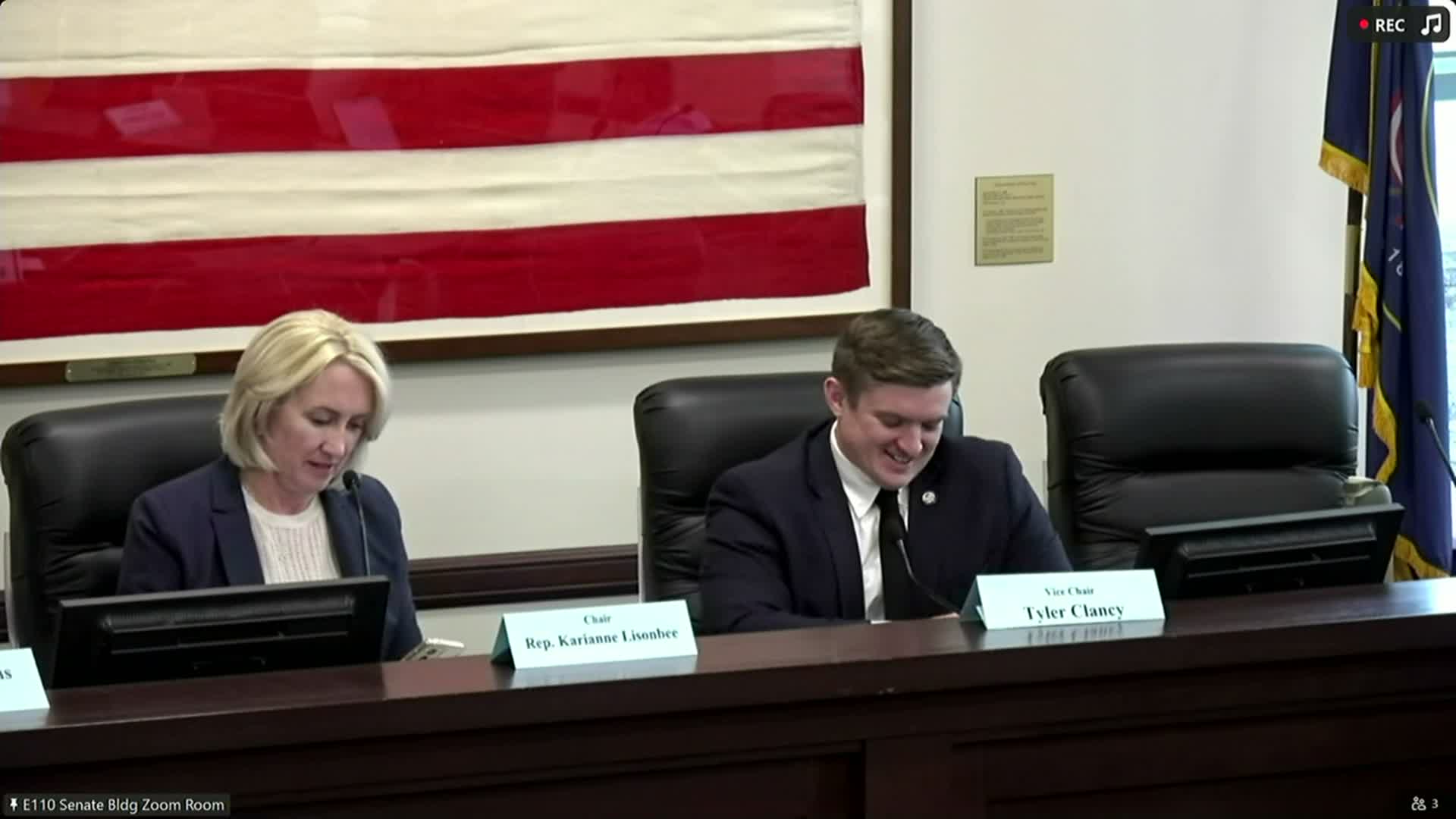
Chair Lisonbee announced the committee’s favorable recommendation of the second substitute to SJR 10, a joint resolution that would require in-person jury selection in felony cases while preserving an option for parties to agree to virtual selection.
Senator McKell, sponsor of the joint resolution, said in-person voir dire is “one of your most powerful civic responsibilities,” arguing that seeing jurors in the courtroom helps educate the public and improves confidence in the system. He urged the committee to preserve an in‑person default in felony cases.
The state court administration offered a contrasting view. Michael Drexel, assistant state court administrator, said the virtual process has measurably improved access and court operations: “Because of the virtual process, they didn’t have to take off work. They didn’t have to find childcare,” and in Salt Lake County the virtual system reduced failure-to-appear rates and allowed the courts to seat more juries per day. He warned a statewide mandate to return to in-person selection would strain court resources and could force the courts to run parallel systems.
Defense and trial counsel urged an in-person option for serious cases. Mark Moffitt of the Utah Defense Lawyers Association said that in-person selection “is an important option … where a person’s liberty is clearly at stake.” Prosecutor representatives, including Carl Holland and Brett Robinson, praised the proposal as a tool to enhance the perceived fairness of proceedings while acknowledging the need to work out operational details with the courts.
Public commenters expressed opposing concerns: Seth Stewart, an online speaker, said “legal strategy should not determine jury selection,” warning that process changes could affect impartiality; others emphasized the civic value of in-person participation.
The committee adopted a second substitute that clarified contradictory language and pushed the effective date to January 2027 to allow time for planning and coordination with the courts. The motion to favorably recommend the second substitute passed on a roll-call vote recorded in committee as unanimous.
The measure now moves to the full House for consideration; supporters said the delayed effective date should allow courts and stakeholders to resolve operational issues raised during testimony.
Senator McKell, sponsor of the joint resolution, said in-person voir dire is “one of your most powerful civic responsibilities,” arguing that seeing jurors in the courtroom helps educate the public and improves confidence in the system. He urged the committee to preserve an in‑person default in felony cases.
The state court administration offered a contrasting view. Michael Drexel, assistant state court administrator, said the virtual process has measurably improved access and court operations: “Because of the virtual process, they didn’t have to take off work. They didn’t have to find childcare,” and in Salt Lake County the virtual system reduced failure-to-appear rates and allowed the courts to seat more juries per day. He warned a statewide mandate to return to in-person selection would strain court resources and could force the courts to run parallel systems.
Defense and trial counsel urged an in-person option for serious cases. Mark Moffitt of the Utah Defense Lawyers Association said that in-person selection “is an important option … where a person’s liberty is clearly at stake.” Prosecutor representatives, including Carl Holland and Brett Robinson, praised the proposal as a tool to enhance the perceived fairness of proceedings while acknowledging the need to work out operational details with the courts.
Public commenters expressed opposing concerns: Seth Stewart, an online speaker, said “legal strategy should not determine jury selection,” warning that process changes could affect impartiality; others emphasized the civic value of in-person participation.
The committee adopted a second substitute that clarified contradictory language and pushed the effective date to January 2027 to allow time for planning and coordination with the courts. The motion to favorably recommend the second substitute passed on a roll-call vote recorded in committee as unanimous.
The measure now moves to the full House for consideration; supporters said the delayed effective date should allow courts and stakeholders to resolve operational issues raised during testimony.
View the Full Meeting & All Its Details
This article offers just a summary. Unlock complete video, transcripts, and insights as a Founder Member.
✓
Watch full, unedited meeting videos
✓
Search every word spoken in unlimited transcripts
✓
AI summaries & real-time alerts (all government levels)
✓
Permanent access to expanding government content
30-day money-back guarantee
