Committee advances SB 93 to ban drones over state prison property and alter supervision rules
March 03, 2026 | 2026 Utah Legislature, Utah Legislature, Utah Legislative Branch, Utah
This article was created by AI summarizing key points discussed. AI makes mistakes, so for full details and context, please refer to the video of the full meeting. Please report any errors so we can fix them. Report an error »
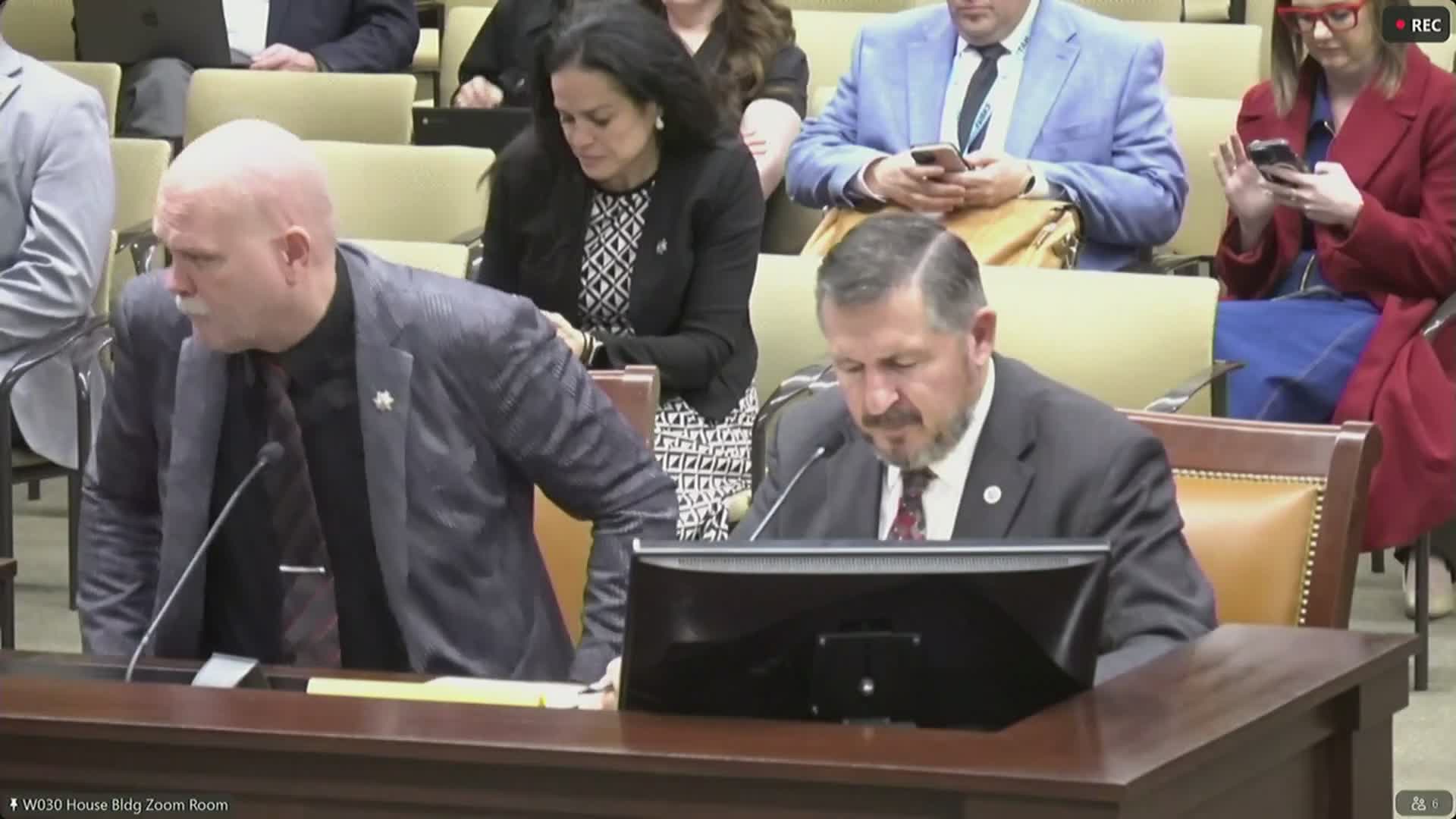
Sen. Owens introduced Senate Bill 93 on behalf of the Department of Corrections as a brief cleanup bill intended to update corrections statutes for technology and operations.
The bill would make civilian drone operation inside the fenced airspace of state prison sites a criminal offense, provide flexibility to use dynamic as well as direct supervision in housing units, and streamline how the Department of Corrections collects certain fees. "We have intercepted some drone drop offs and pickups," Sen. Owens said in presenting the bill, and added the changes are intended to keep facilities secure.
Mike Schoenfeld, deputy executive director of the Utah Department of Corrections, told the committee the department supports the drone prohibition and the supervision changes. "They are a big problem for us, and we do support making those illegal for people to fly those around the prison airspace," Schoenfeld said, and urged the committee to give corrections flexibility as the agency moves toward tiered housing models.
Committee members asked whether the prohibition would cover county jails as well as the two state prison sites named in the bill; Sen. Owens said the language as drafted applies only to the state prison sites and that county jails may require separate consideration. Representative Ballard asked how the proposal would intersect with Federal Aviation Administration jurisdiction. Sen. Owens and other members said the committee’s focus is on activity inside prison fences; questions about FAA-regulated airspace above those heights were raised but the bill targets conduct within the prison perimeter.
When asked about criminal penalties and the precise punishment for flying a drone over a prison, sponsors and corrections staff said the bill text contains the offense but the committee discussion did not include a spelled-out penalty amount during the hearing; the transcript records that the exact punishment was not recalled on the floor.
Dan Strong of the Council on Criminal and Juvenile Justice (CCJJ) told the committee CCJJ voted unanimously to support the measure, saying it would help corrections manage facilities and allow supervision resources to be focused on higher-risk individuals.
Representative Hollins moved to pass SB 93 with a favorable recommendation; the committee approved the motion on a voice vote and the bill was passed out of committee.
The bill would make civilian drone operation inside the fenced airspace of state prison sites a criminal offense, provide flexibility to use dynamic as well as direct supervision in housing units, and streamline how the Department of Corrections collects certain fees. "We have intercepted some drone drop offs and pickups," Sen. Owens said in presenting the bill, and added the changes are intended to keep facilities secure.
Mike Schoenfeld, deputy executive director of the Utah Department of Corrections, told the committee the department supports the drone prohibition and the supervision changes. "They are a big problem for us, and we do support making those illegal for people to fly those around the prison airspace," Schoenfeld said, and urged the committee to give corrections flexibility as the agency moves toward tiered housing models.
Committee members asked whether the prohibition would cover county jails as well as the two state prison sites named in the bill; Sen. Owens said the language as drafted applies only to the state prison sites and that county jails may require separate consideration. Representative Ballard asked how the proposal would intersect with Federal Aviation Administration jurisdiction. Sen. Owens and other members said the committee’s focus is on activity inside prison fences; questions about FAA-regulated airspace above those heights were raised but the bill targets conduct within the prison perimeter.
When asked about criminal penalties and the precise punishment for flying a drone over a prison, sponsors and corrections staff said the bill text contains the offense but the committee discussion did not include a spelled-out penalty amount during the hearing; the transcript records that the exact punishment was not recalled on the floor.
Dan Strong of the Council on Criminal and Juvenile Justice (CCJJ) told the committee CCJJ voted unanimously to support the measure, saying it would help corrections manage facilities and allow supervision resources to be focused on higher-risk individuals.
Representative Hollins moved to pass SB 93 with a favorable recommendation; the committee approved the motion on a voice vote and the bill was passed out of committee.
Don't Miss a Word: See the Full Meeting!
Go beyond summaries. Unlock every video, transcript, and key insight with a Founder Membership.
✓
Get instant access to full meeting videos
✓
Search and clip any phrase from complete transcripts
✓
Receive AI-powered summaries & custom alerts
✓
Enjoy lifetime, unrestricted access to government data
30-day money-back guarantee
