Committee approves SB 319 requiring insurer transparency, timelines and AI disclosure for prior authorizations
March 04, 2026 | 2026 Utah Legislature, Utah Legislature, Utah Legislative Branch, Utah
This article was created by AI summarizing key points discussed. AI makes mistakes, so for full details and context, please refer to the video of the full meeting. Please report any errors so we can fix them. Report an error »
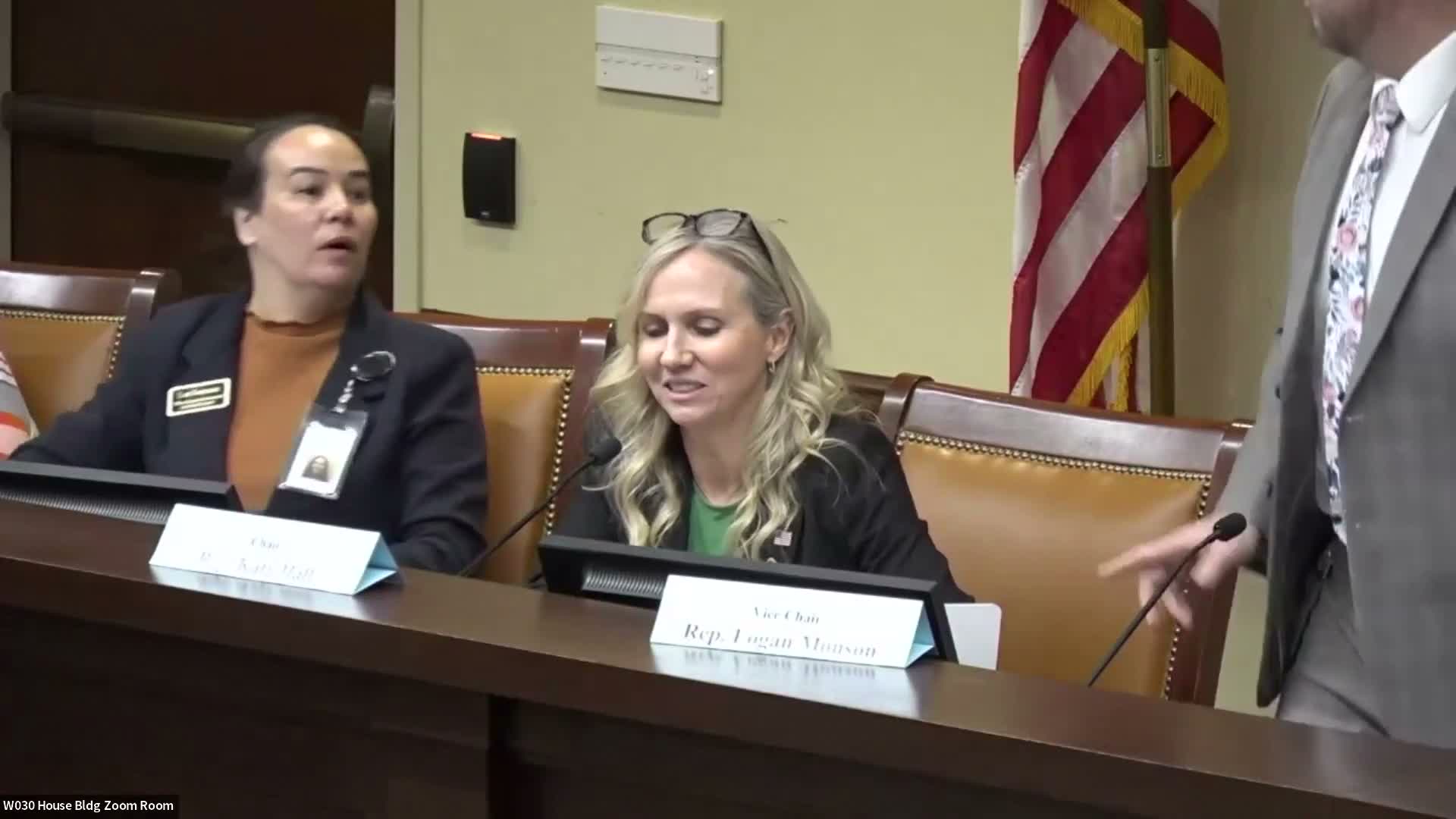
The House Health & Human Services Committee adopted a substitute and then favorably recommended Senate Bill 319, a prior‑authorization reform bill that sponsors say will reduce delays in care by requiring transparency, timelines, human clinical review and public reporting.
Senator Johnson, the sponsor, said the bill establishes six core provisions: public posting of insurers' authorization criteria in plain language; disclosure when artificial intelligence is used in reviews; firm timelines (7 calendar days for standard requests and 72 hours for urgent requests); a requirement that clinical denials be made by a clinician exercising independent judgment; a 12‑month minimum authorization period for chronic or long‑term conditions; and public reporting of approval/denial rates, appeals and processing times (including prescription drugs).
"When oversight becomes opaque and unpredictable it stops protecting patients and starts shifting risk and stress onto families," Senator Johnson said, describing examples in which prior authorization delays postponed cancer treatment. The substitute adds a statutory definition of artificial intelligence (including generative AI) and expands reporting to include prescription drugs with average and median processing times.
Medical organizations, insurers and patient advocates offered largely supportive testimony with caveats. Michelle McComber of the Utah Medical Association and the Utah Academy of Family Physicians praised the bill's transparency and reasonable timelines; Kim Frost of Regence Blue Cross Blue Shield said insurers are working collaboratively and welcomed continued discussions. Patient advocates from the Utah Rare Disease Advisory Council described prior authorization as a significant barrier for people with complex conditions and urged support for the 12‑month continuity protection.
Committee members asked about weekend implications for a 72‑hour standard and how AI disclosure would work in practice; the sponsor emphasized a human‑in‑the‑loop requirement before denials and said further technical work on AI oversight could be pursued in the interim.
The committee adopted substitute 1 and then passed SB 319 as substituted with a favorable recommendation by voice vote.
Next steps: SB 319 will advance with its substitute language; proponents and insurers signaled a willingness to continue technical work on AI disclosure, implementation timelines and reporting details.
Senator Johnson, the sponsor, said the bill establishes six core provisions: public posting of insurers' authorization criteria in plain language; disclosure when artificial intelligence is used in reviews; firm timelines (7 calendar days for standard requests and 72 hours for urgent requests); a requirement that clinical denials be made by a clinician exercising independent judgment; a 12‑month minimum authorization period for chronic or long‑term conditions; and public reporting of approval/denial rates, appeals and processing times (including prescription drugs).
"When oversight becomes opaque and unpredictable it stops protecting patients and starts shifting risk and stress onto families," Senator Johnson said, describing examples in which prior authorization delays postponed cancer treatment. The substitute adds a statutory definition of artificial intelligence (including generative AI) and expands reporting to include prescription drugs with average and median processing times.
Medical organizations, insurers and patient advocates offered largely supportive testimony with caveats. Michelle McComber of the Utah Medical Association and the Utah Academy of Family Physicians praised the bill's transparency and reasonable timelines; Kim Frost of Regence Blue Cross Blue Shield said insurers are working collaboratively and welcomed continued discussions. Patient advocates from the Utah Rare Disease Advisory Council described prior authorization as a significant barrier for people with complex conditions and urged support for the 12‑month continuity protection.
Committee members asked about weekend implications for a 72‑hour standard and how AI disclosure would work in practice; the sponsor emphasized a human‑in‑the‑loop requirement before denials and said further technical work on AI oversight could be pursued in the interim.
The committee adopted substitute 1 and then passed SB 319 as substituted with a favorable recommendation by voice vote.
Next steps: SB 319 will advance with its substitute language; proponents and insurers signaled a willingness to continue technical work on AI disclosure, implementation timelines and reporting details.
Don't Miss a Word: See the Full Meeting!
Go beyond summaries. Unlock every video, transcript, and key insight with a Founder Membership.
✓
Get instant access to full meeting videos
✓
Search and clip any phrase from complete transcripts
✓
Receive AI-powered summaries & custom alerts
✓
Enjoy lifetime, unrestricted access to government data
30-day money-back guarantee
