Rules Committee advances TSET overhaul and a package of tax and constitutional measures to the floor
March 05, 2026 | 2026 Legislature OK, Oklahoma
This article was created by AI summarizing key points discussed. AI makes mistakes, so for full details and context, please refer to the video of the full meeting. Please report any errors so we can fix them. Report an error »
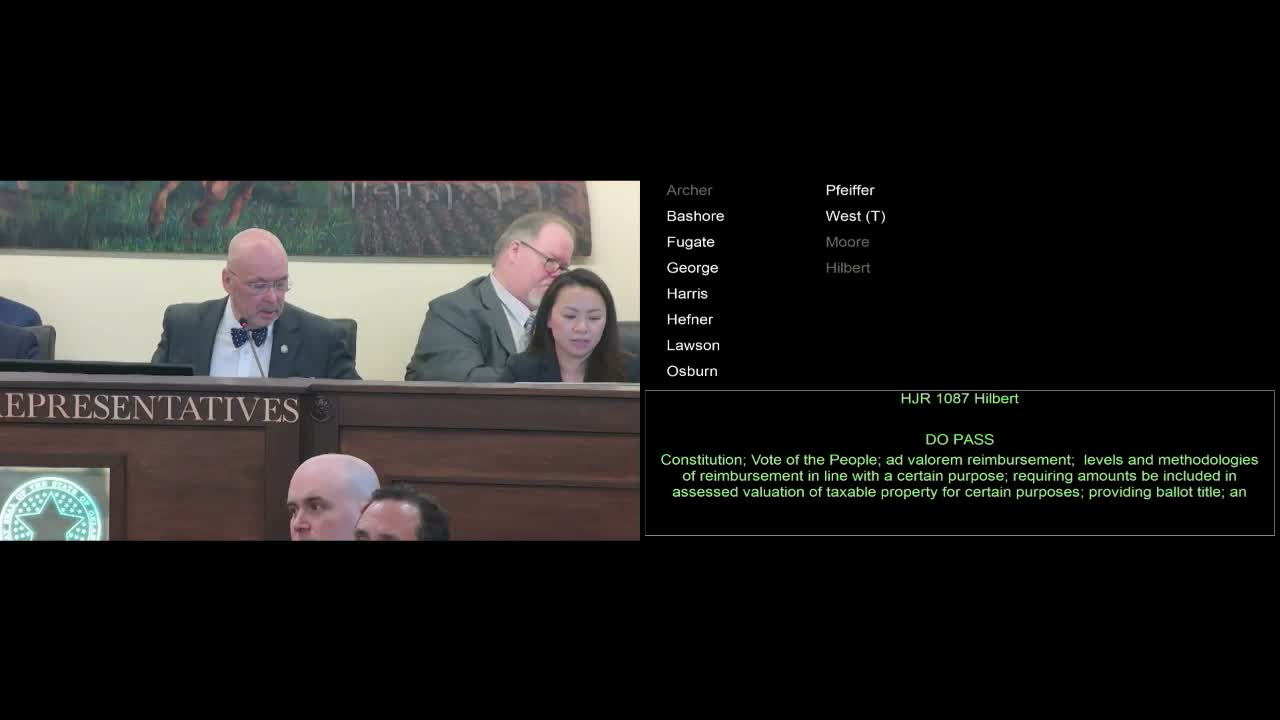
The Oklahoma House Rules Committee on March 7 advanced a broad set of measures to the full House, including a high‑profile plan to send structural changes to the Oklahoma Tobacco Settlement Endowment Trust (TSET) to voters and several ad valorem and property‑tax proposals.
Chairman of the committee presented HB 4003 and companion HJR 10‑77, describing the package as a bid to “modernize” TSET and to protect and grow the trust corpus for future programs such as the Oklahoma Higher Learning Access Program (OLAP). The legislation would shift some governance functions, authorize the Board of Investors to manage assets and change distribution mechanics so the Higher Learning Access Act receives a fixed annual transfer before other allocations, then move remaining funds to a designated account. The committee sponsor framed the measure as a voter decision, not an immediate statutory reconfiguration.
Members pressed sponsors about two central points: a new 10% cap on venture‑capital investments proposed in HB 4003 and how the constitutional change would affect grant distribution to rural areas. Critics, including Representative Heffner, argued that a 10% maximum for venture capital is risky for a trust intended to preserve capital in perpetuity because such allocations are illiquid and subject to high fees; sponsors said the cap is a maximum (not a required allocation) and that institutional governance and fiduciary duty would limit reckless use. The sponsor said the change responds to a recent court ruling that requires a public vote for certain governance alterations.
The committee voted to report HB 4003 and HJR 10‑77 as due passed. The sponsor described the measures as sending the question to voters so Oklahomans can decide whether to change TSET’s structure and priorities.
On taxes and property‑assessment issues, the committee considered multiple resolutions and bills aimed at slowing ad valorem growth and exempting business inventory from property tax. Proponents said revenue‑neutral mechanisms and inventory exemptions protect taxpayers and help businesses reinvest locally; opponents warned the changes could reduce funding for schools and county services and disproportionately affect rural counties where property‑tax revenue powers local budgets. Lawmakers asked for and received clarifications about which local taxing entities would have to approve increases and how new valuation events (for example, large energy projects) would be treated under the proposed rules.
Representative Eaves presented HJR 10‑53 and related measures on revenue‑neutral rates and ad valorem caps; Representative LePak and others walked the committee through technical effects for counties. Several of the ad valorem items were reported out as due passed after extended questioning and debate.
The committee also advanced HJR 10‑67, a resolution that would send a constitutional amendment to voters permitting the state to opt out of Medicaid expansion benefits if the federal matching rate falls below a 90% threshold. Sponsor Representative Eaves described the measure as a fiscal safeguard; questioners pressed on practical consequences for hospitals and emergency care, stressing that the proposal would place the final choice with voters. The committee reported the resolution as due passed.
Votes at a glance
- HB 1823 (Oklahoma Housing Finance oversight — home building portion): reported do pass (vote recorded 10–0).
- HB 2425 (align election dates with presidential primary): reported due passed (vote recorded 9–2).
- HB 4003 (statutory changes to TSET / investment rules including a 10% VC cap): reported due passed (vote recorded 9–3).
- HJR 10‑77 (constitutional amendment to send TSET governance/funding changes to voters): reported due passed (vote recorded 10–2).
- HJR 10‑67 (allow voters to opt out of Medicaid expansion if federal match drops below 90%): reported due passed (vote recorded 8–2).
- Multiple ad valorem/property‑tax resolutions and bills (including revenue‑neutral rate language and business inventory exemption proposals): several reported due passed (typical recorded margins 9–2 or 9–1 as shown in committee record).
What’s next
Most measures the committee reported will go to the House floor for further consideration. HJR items that change the constitution would be placed on the ballot only if they clear the legislative process and meet timing and procedural requirements. Sponsors repeatedly stressed that several of the larger changes — notably the TSET questions and the Medicaid‑trigger resolution — are intended to ask voters, not to implement immediate policy changes.
Speakers quoted in this report are drawn from the committee record and include the presenting lawmakers and questioners who sought clarifications during debate.
Chairman of the committee presented HB 4003 and companion HJR 10‑77, describing the package as a bid to “modernize” TSET and to protect and grow the trust corpus for future programs such as the Oklahoma Higher Learning Access Program (OLAP). The legislation would shift some governance functions, authorize the Board of Investors to manage assets and change distribution mechanics so the Higher Learning Access Act receives a fixed annual transfer before other allocations, then move remaining funds to a designated account. The committee sponsor framed the measure as a voter decision, not an immediate statutory reconfiguration.
Members pressed sponsors about two central points: a new 10% cap on venture‑capital investments proposed in HB 4003 and how the constitutional change would affect grant distribution to rural areas. Critics, including Representative Heffner, argued that a 10% maximum for venture capital is risky for a trust intended to preserve capital in perpetuity because such allocations are illiquid and subject to high fees; sponsors said the cap is a maximum (not a required allocation) and that institutional governance and fiduciary duty would limit reckless use. The sponsor said the change responds to a recent court ruling that requires a public vote for certain governance alterations.
The committee voted to report HB 4003 and HJR 10‑77 as due passed. The sponsor described the measures as sending the question to voters so Oklahomans can decide whether to change TSET’s structure and priorities.
On taxes and property‑assessment issues, the committee considered multiple resolutions and bills aimed at slowing ad valorem growth and exempting business inventory from property tax. Proponents said revenue‑neutral mechanisms and inventory exemptions protect taxpayers and help businesses reinvest locally; opponents warned the changes could reduce funding for schools and county services and disproportionately affect rural counties where property‑tax revenue powers local budgets. Lawmakers asked for and received clarifications about which local taxing entities would have to approve increases and how new valuation events (for example, large energy projects) would be treated under the proposed rules.
Representative Eaves presented HJR 10‑53 and related measures on revenue‑neutral rates and ad valorem caps; Representative LePak and others walked the committee through technical effects for counties. Several of the ad valorem items were reported out as due passed after extended questioning and debate.
The committee also advanced HJR 10‑67, a resolution that would send a constitutional amendment to voters permitting the state to opt out of Medicaid expansion benefits if the federal matching rate falls below a 90% threshold. Sponsor Representative Eaves described the measure as a fiscal safeguard; questioners pressed on practical consequences for hospitals and emergency care, stressing that the proposal would place the final choice with voters. The committee reported the resolution as due passed.
Votes at a glance
- HB 1823 (Oklahoma Housing Finance oversight — home building portion): reported do pass (vote recorded 10–0).
- HB 2425 (align election dates with presidential primary): reported due passed (vote recorded 9–2).
- HB 4003 (statutory changes to TSET / investment rules including a 10% VC cap): reported due passed (vote recorded 9–3).
- HJR 10‑77 (constitutional amendment to send TSET governance/funding changes to voters): reported due passed (vote recorded 10–2).
- HJR 10‑67 (allow voters to opt out of Medicaid expansion if federal match drops below 90%): reported due passed (vote recorded 8–2).
- Multiple ad valorem/property‑tax resolutions and bills (including revenue‑neutral rate language and business inventory exemption proposals): several reported due passed (typical recorded margins 9–2 or 9–1 as shown in committee record).
What’s next
Most measures the committee reported will go to the House floor for further consideration. HJR items that change the constitution would be placed on the ballot only if they clear the legislative process and meet timing and procedural requirements. Sponsors repeatedly stressed that several of the larger changes — notably the TSET questions and the Medicaid‑trigger resolution — are intended to ask voters, not to implement immediate policy changes.
Speakers quoted in this report are drawn from the committee record and include the presenting lawmakers and questioners who sought clarifications during debate.
View the Full Meeting & All Its Details
This article offers just a summary. Unlock complete video, transcripts, and insights as a Founder Member.
✓
Watch full, unedited meeting videos
✓
Search every word spoken in unlimited transcripts
✓
AI summaries & real-time alerts (all government levels)
✓
Permanent access to expanding government content
30-day money-back guarantee
