Committee advances a package of aging-related bills; several items decided by roll call
March 06, 2026 | Aging, House of Representatives, Committees, Legislative, Connecticut
This article was created by AI summarizing key points discussed. AI makes mistakes, so for full details and context, please refer to the video of the full meeting. Please report any errors so we can fix them. Report an error »
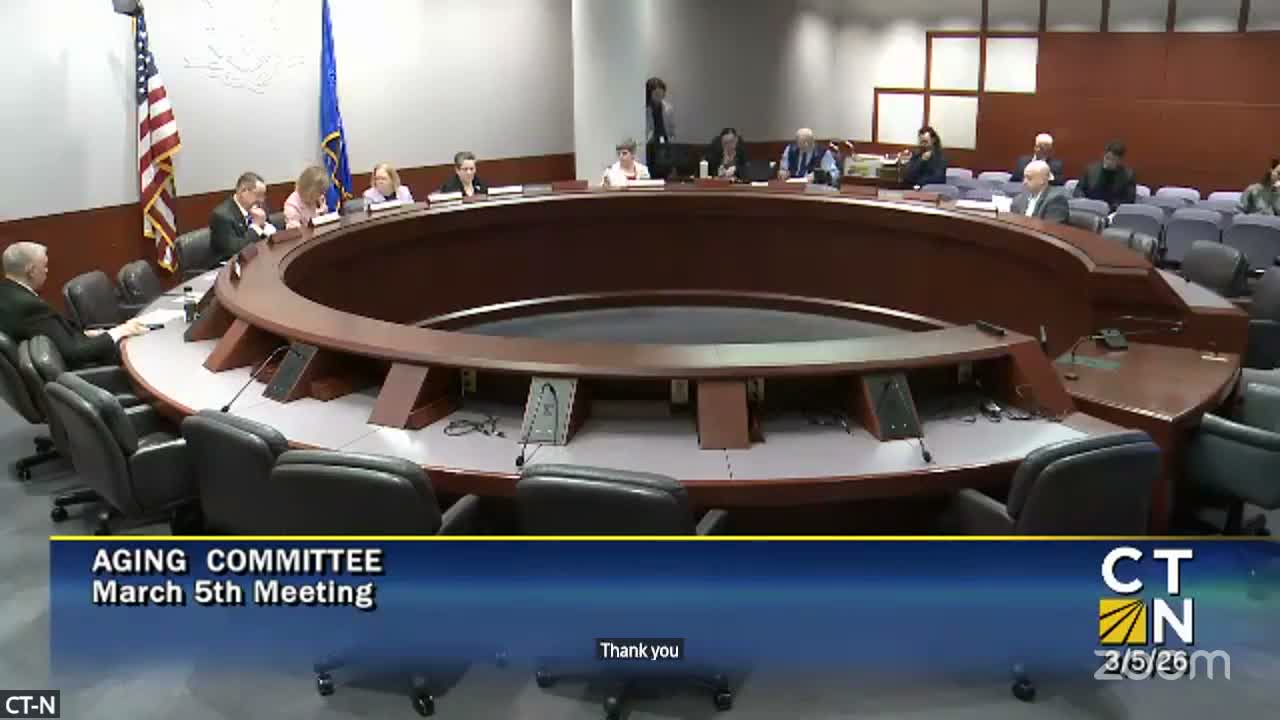
The committee read a consent calendar containing many aging- and long-term-care-related bills and moved most items forward by voice/consent. The clerk conducted roll-call votes on selected items that members had singled out for individual records.
Roll calls taken during the meeting included:
- SB 122 (study of long-term care needs): clerk recorded a majority in the affirmative, with Representative Case voting no during the recorded roll call.
- HB 5,140 (study of the needs of senior citizens): recorded by roll call; the clerk concluded the roll-call and recorded votes in the record.
- SB 125 (restricting private-equity ownership of nursing homes): multiple members voted yes; Representative Case recorded a no vote on the roll call.
- SB 287 (home health aide PPE requirement): roll-call vote passed; some members expressed interest in seeing a fiscal note before final commitment.
- SB 284 (emergency power generator requirements for certain multifamily housing projects): roll-call vote passed after discussion about municipalities affected and cost allocation.
The clerk then read the full consent calendar and recorded votes; the consent calendar passed with the majority voting yes. The clerk said recorded votes would remain open until 1:00 p.m., per committee practice.
What happens next: Each advanced bill will proceed to the floor or to the next committee as appropriate; items involving funding (for example, the $10 million quality metrics request) will now enter budget deliberations.
Roll calls taken during the meeting included:
- SB 122 (study of long-term care needs): clerk recorded a majority in the affirmative, with Representative Case voting no during the recorded roll call.
- HB 5,140 (study of the needs of senior citizens): recorded by roll call; the clerk concluded the roll-call and recorded votes in the record.
- SB 125 (restricting private-equity ownership of nursing homes): multiple members voted yes; Representative Case recorded a no vote on the roll call.
- SB 287 (home health aide PPE requirement): roll-call vote passed; some members expressed interest in seeing a fiscal note before final commitment.
- SB 284 (emergency power generator requirements for certain multifamily housing projects): roll-call vote passed after discussion about municipalities affected and cost allocation.
The clerk then read the full consent calendar and recorded votes; the consent calendar passed with the majority voting yes. The clerk said recorded votes would remain open until 1:00 p.m., per committee practice.
What happens next: Each advanced bill will proceed to the floor or to the next committee as appropriate; items involving funding (for example, the $10 million quality metrics request) will now enter budget deliberations.
View the Full Meeting & All Its Details
This article offers just a summary. Unlock complete video, transcripts, and insights as a Founder Member.
✓
Watch full, unedited meeting videos
✓
Search every word spoken in unlimited transcripts
✓
AI summaries & real-time alerts (all government levels)
✓
Permanent access to expanding government content
30-day money-back guarantee
