Escondido council approves conversion of Juniper Street office building into 32 apartments, including eight deed‑restricted low‑income units
March 06, 2026 | Escondido, San Diego County, California
This article was created by AI summarizing key points discussed. AI makes mistakes, so for full details and context, please refer to the video of the full meeting. Please report any errors so we can fix them. Report an error »
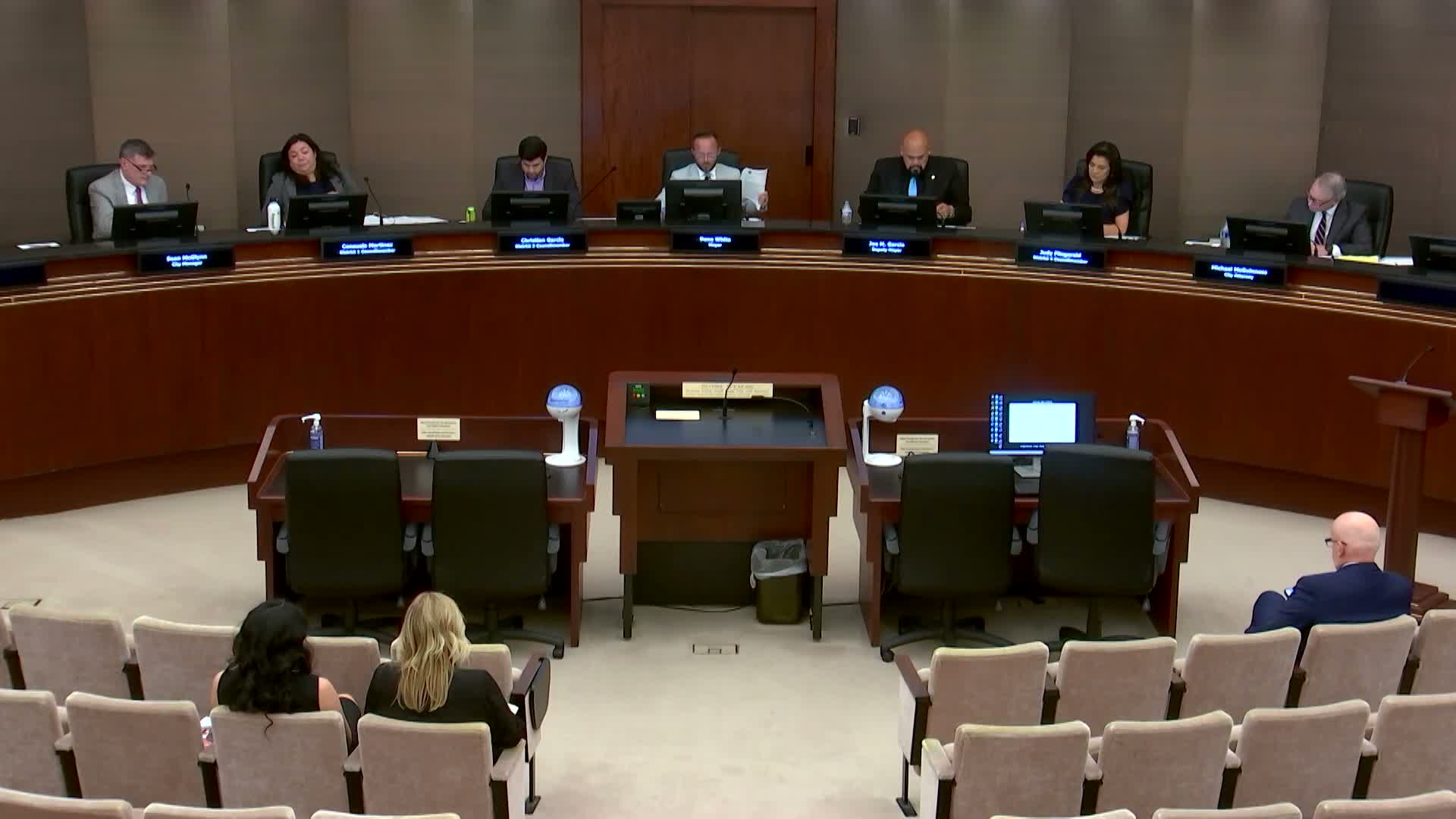
Escondido’s City Council voted unanimously to approve a plan to convert an existing 30,000‑square‑foot office building at 332 South Juniper Street into a 32‑unit housing development, including eight deed‑restricted low‑income units under state density‑bonus law.
Principal planner Ivan Flores presented the project on behalf of staff and outlined the requested permits: a plan‑development permit, design review and a density bonus that allowed two bonus units above the site’s 30‑unit by‑right capacity. Staff recommended adoption of ordinance No. 2026‑05 and Resolution No. 2026‑40 approving the conversion, concluding that the project meets the downtown specific plan and state density‑bonus requirements.
The applicant, Darshan Patel, told the council the conversion would reuse an empty office building—currently vacant except for occasional police training use—bringing additional housing stock to a downtown edge site and providing 45 parking spaces where 40 are required. Patel said the firm is using similar conversions already under construction nearby and expects the units to come online within roughly a year.
Council members praised the project as consistent with the city's RHNA strategy and the downtown specific plan’s vision to support residential densities that serve existing businesses. One councilmember noted the project would result in a net gain of 10 dwelling units relative to the site's housing-element inventory allocation but acknowledged the city would forfeit six low‑income units originally identified for that parcel; staff said remaining capacity elsewhere would meet RHNA obligations.
Mayor White moved approval of the ordinance and resolution; the motion was seconded and passed 5–0. Staff said minor site improvements (reoriented parking stalls and a screened trash enclosure) were included in the approval and that the project was determined exempt from further CEQA review under CEQA Class 32 (infill development).
Next steps: City staff will finalize permit documents and coordinate implementation with building and engineering departments and the applicant. The council’s approvals clear the way for the applicant to proceed to final design and building permits.
Quote from the record: "We’re taking vacant office buildings that are open to theft, fraud, vagrants and other disastrous types of actions and turning them into apartments," the applicant said in support of the conversion.
Principal planner Ivan Flores presented the project on behalf of staff and outlined the requested permits: a plan‑development permit, design review and a density bonus that allowed two bonus units above the site’s 30‑unit by‑right capacity. Staff recommended adoption of ordinance No. 2026‑05 and Resolution No. 2026‑40 approving the conversion, concluding that the project meets the downtown specific plan and state density‑bonus requirements.
The applicant, Darshan Patel, told the council the conversion would reuse an empty office building—currently vacant except for occasional police training use—bringing additional housing stock to a downtown edge site and providing 45 parking spaces where 40 are required. Patel said the firm is using similar conversions already under construction nearby and expects the units to come online within roughly a year.
Council members praised the project as consistent with the city's RHNA strategy and the downtown specific plan’s vision to support residential densities that serve existing businesses. One councilmember noted the project would result in a net gain of 10 dwelling units relative to the site's housing-element inventory allocation but acknowledged the city would forfeit six low‑income units originally identified for that parcel; staff said remaining capacity elsewhere would meet RHNA obligations.
Mayor White moved approval of the ordinance and resolution; the motion was seconded and passed 5–0. Staff said minor site improvements (reoriented parking stalls and a screened trash enclosure) were included in the approval and that the project was determined exempt from further CEQA review under CEQA Class 32 (infill development).
Next steps: City staff will finalize permit documents and coordinate implementation with building and engineering departments and the applicant. The council’s approvals clear the way for the applicant to proceed to final design and building permits.
Quote from the record: "We’re taking vacant office buildings that are open to theft, fraud, vagrants and other disastrous types of actions and turning them into apartments," the applicant said in support of the conversion.
View the Full Meeting & All Its Details
This article offers just a summary. Unlock complete video, transcripts, and insights as a Founder Member.
✓
Watch full, unedited meeting videos
✓
Search every word spoken in unlimited transcripts
✓
AI summaries & real-time alerts (all government levels)
✓
Permanent access to expanding government content
30-day money-back guarantee
