Council debate over road repairs: motion to rescind prior street-funding authorization fails to secure a second
March 06, 2026 | London City Council, London, Madison County, Ohio
This article was created by AI summarizing key points discussed. AI makes mistakes, so for full details and context, please refer to the video of the full meeting. Please report any errors so we can fix them. Report an error »
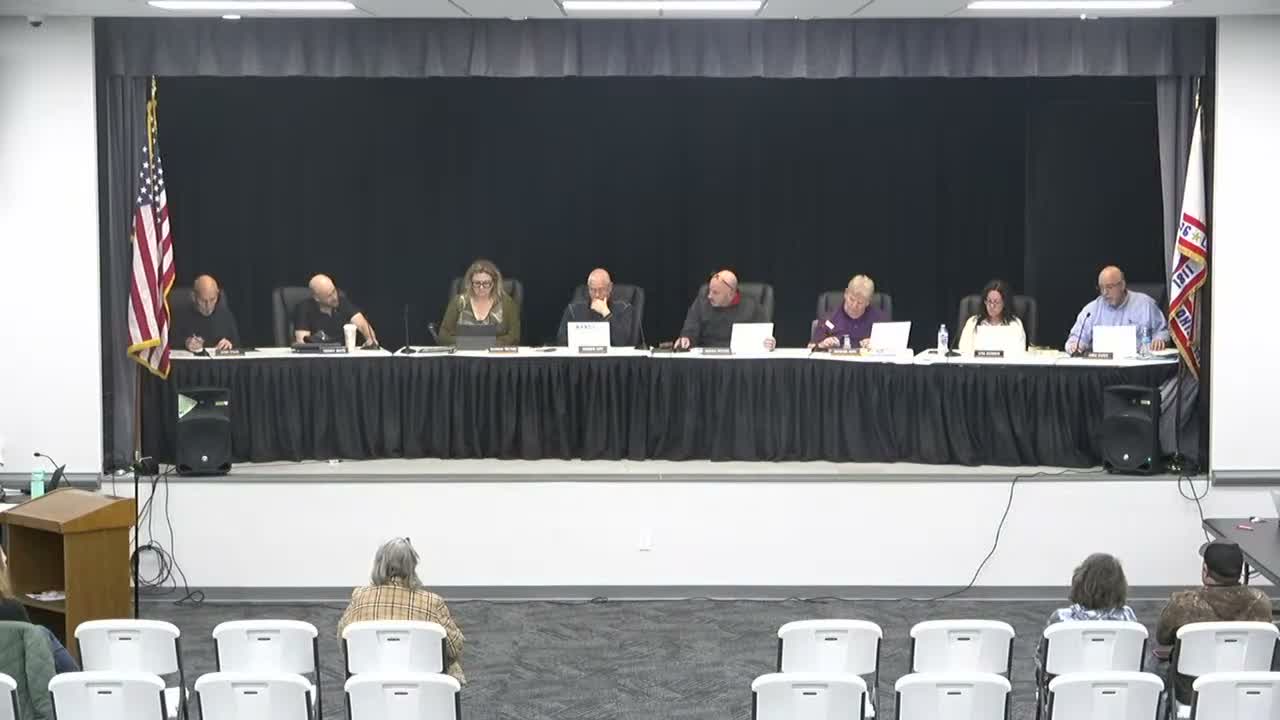
Councilor Tom Boyd asked the London City Council to rescind an earlier ordinance adopted Feb. 19 that authorized street-repair funding, saying recent projects have shown substandard results and that the council should re-examine how the money is spent. "Tollan Street was one that went through. We spent $90,000 on that job," Boyd said, pointing to recurring cracks and worn markings as reasons to reassess the work and consider whether different repair methods or contractors are needed.
Other councilors and staff pushed back on the procedural effect and practicality of rescinding the ordinance. One council member asked whether rescinding would simply nullify the prior action and what that would mean for current procurement. City staff explained that the city uses assessments from a pavement-management consultant (identified in the transcript as PMG) that ranked streets from excellent to failed and that funding decisions aim to get the most value from limited dollars rather than necessarily repairing every failed street immediately. "They'll evaluate that sheet that came from PMG and see how many of those streets we can do on that $500,000," a staff speaker said, adding that some streets may require full replacement, not just surface sealing.
Boyd reiterated his concern that some streets paid for last year still show large cracks and urged more specific lists of targeted streets and better post-work inspection. Council discussion noted the difficulty of scheduling and pricing work far in advance and said that rescinding the ordinance could restart the procurement process and delay repairs.
Outcome: Boyd made the motion to rescind but no second was recorded; the council did not rescind the ordinance and moved on to roundtable discussion without reversing the prior authorization.
Why it matters: The exchange highlights local oversight questions about capital project selection, contractor performance and how limited street‑repair dollars are prioritized. Council members asked staff to provide clearer lists and assessments so policy decisions can be better targeted.
Other councilors and staff pushed back on the procedural effect and practicality of rescinding the ordinance. One council member asked whether rescinding would simply nullify the prior action and what that would mean for current procurement. City staff explained that the city uses assessments from a pavement-management consultant (identified in the transcript as PMG) that ranked streets from excellent to failed and that funding decisions aim to get the most value from limited dollars rather than necessarily repairing every failed street immediately. "They'll evaluate that sheet that came from PMG and see how many of those streets we can do on that $500,000," a staff speaker said, adding that some streets may require full replacement, not just surface sealing.
Boyd reiterated his concern that some streets paid for last year still show large cracks and urged more specific lists of targeted streets and better post-work inspection. Council discussion noted the difficulty of scheduling and pricing work far in advance and said that rescinding the ordinance could restart the procurement process and delay repairs.
Outcome: Boyd made the motion to rescind but no second was recorded; the council did not rescind the ordinance and moved on to roundtable discussion without reversing the prior authorization.
Why it matters: The exchange highlights local oversight questions about capital project selection, contractor performance and how limited street‑repair dollars are prioritized. Council members asked staff to provide clearer lists and assessments so policy decisions can be better targeted.
View the Full Meeting & All Its Details
This article offers just a summary. Unlock complete video, transcripts, and insights as a Founder Member.
✓
Watch full, unedited meeting videos
✓
Search every word spoken in unlimited transcripts
✓
AI summaries & real-time alerts (all government levels)
✓
Permanent access to expanding government content
30-day money-back guarantee
