Defense says state "weaponized GR 37" in challenge to juror in Windham appeal
March 06, 2026 | Other Court, Judicial , Washington
This article was created by AI summarizing key points discussed. AI makes mistakes, so for full details and context, please refer to the video of the full meeting. Please report any errors so we can fix them. Report an error »
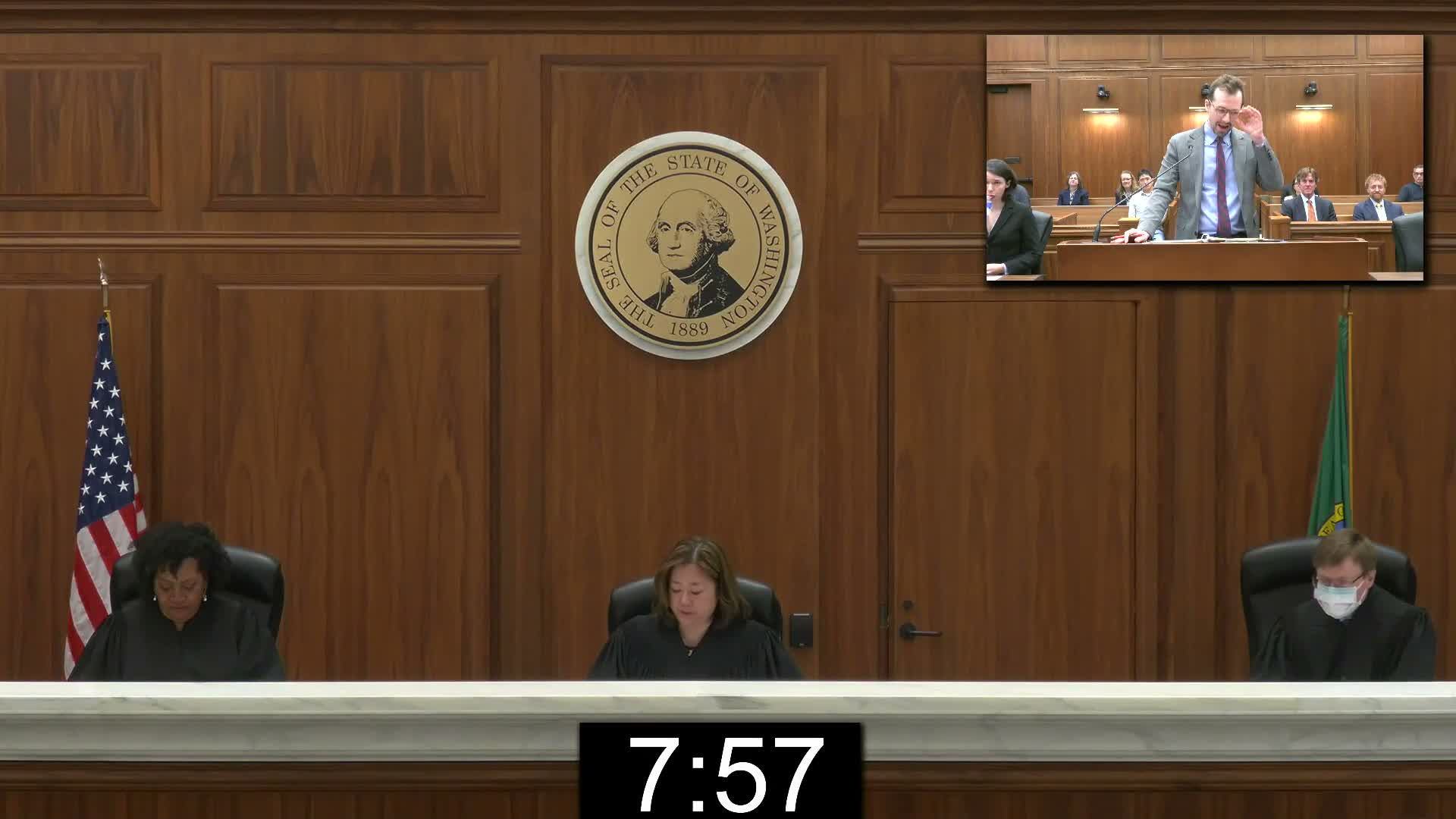
At an appellate hearing, defense counsel Edward Wicksler argued the state "weaponized GR 37," saying the prosecutor misread the court rule and thereby blocked the defense from exercising a peremptory challenge to a former police officer whom the defense sought to remove from the panel.
Wicksler, representing Mr. Windham, told the panel that "on its plain terms, GR 37 does not protect police officers" and that the court should assess the "totality of the circumstances" to determine whether a reasonable observer could conclude race factored into the strike. He said the state's invocation of GR 37 in this case was based on a "stunning misreading of that rule" and urged the court not to allow the rule "to insulate police officers from challenge in a case like this." (Edward Wicksler)
The dispute centers on whether the juror's former status as a police officer falls within GR 37's listed categories of contacts with law enforcement, and whether the trial court erred by sustaining the prosecutor's objection. A judge on the panel asked whether being a former police officer amounts to "involvement with law enforcement" under GR 37 and whether that factual question would be dispositive or whether the court must continue to consider whether race was a motivating factor.
Amanda Campbell, Deputy Prosecuting Attorney for Snomish County, countered that the transcript shows the defense gave other reasons for the strike — specifically, "inattentiveness and failure to respond to group questioning" — and that those stated behavioral reasons are invalid under precedent. Campbell argued that "the defense counsel did not give 1 valid reason for this strike," and invoked State v. Bell to say certain conduct-based reasons are "flatly invalid" and not merely presumptively invalid.
Judges probed both sides on how to reconcile GR 37's text, the Supreme Court's guidance in cases such as Bell and Walton, and the practical record on appeal. The panel explored whether an objective observer could view race as a factor given that defense counsel raised race repeatedly during voir dire and whether a broader pattern of strikes against people with law-enforcement ties appeared in the record; the prosecution noted there were no GR 37 challenges to the other strikes and that the record does not include the races of other venire members.
Wicksler also argued any error was not harmless, emphasizing that juror No. 12 had been isolated and questioned and later was considered by the trial court to be not biased; he said the juror's isolation and later demeanor raised concerns about the effect of the court's rulings on the fairness of the trial.
The panel thanked counsel after both sides answered questions; the oral argument concluded and the court reserved further action. The court did not announce a ruling during the session.
Wicksler, representing Mr. Windham, told the panel that "on its plain terms, GR 37 does not protect police officers" and that the court should assess the "totality of the circumstances" to determine whether a reasonable observer could conclude race factored into the strike. He said the state's invocation of GR 37 in this case was based on a "stunning misreading of that rule" and urged the court not to allow the rule "to insulate police officers from challenge in a case like this." (Edward Wicksler)
The dispute centers on whether the juror's former status as a police officer falls within GR 37's listed categories of contacts with law enforcement, and whether the trial court erred by sustaining the prosecutor's objection. A judge on the panel asked whether being a former police officer amounts to "involvement with law enforcement" under GR 37 and whether that factual question would be dispositive or whether the court must continue to consider whether race was a motivating factor.
Amanda Campbell, Deputy Prosecuting Attorney for Snomish County, countered that the transcript shows the defense gave other reasons for the strike — specifically, "inattentiveness and failure to respond to group questioning" — and that those stated behavioral reasons are invalid under precedent. Campbell argued that "the defense counsel did not give 1 valid reason for this strike," and invoked State v. Bell to say certain conduct-based reasons are "flatly invalid" and not merely presumptively invalid.
Judges probed both sides on how to reconcile GR 37's text, the Supreme Court's guidance in cases such as Bell and Walton, and the practical record on appeal. The panel explored whether an objective observer could view race as a factor given that defense counsel raised race repeatedly during voir dire and whether a broader pattern of strikes against people with law-enforcement ties appeared in the record; the prosecution noted there were no GR 37 challenges to the other strikes and that the record does not include the races of other venire members.
Wicksler also argued any error was not harmless, emphasizing that juror No. 12 had been isolated and questioned and later was considered by the trial court to be not biased; he said the juror's isolation and later demeanor raised concerns about the effect of the court's rulings on the fairness of the trial.
The panel thanked counsel after both sides answered questions; the oral argument concluded and the court reserved further action. The court did not announce a ruling during the session.
View the Full Meeting & All Its Details
This article offers just a summary. Unlock complete video, transcripts, and insights as a Founder Member.
✓
Watch full, unedited meeting videos
✓
Search every word spoken in unlimited transcripts
✓
AI summaries & real-time alerts (all government levels)
✓
Permanent access to expanding government content
30-day money-back guarantee
