Freehold Township School District presents 2026-27 tentative budget with staffing cuts, class-size increases and a projected health-insurance spike
March 04, 2026 | Freehold Township School District, School Districts, New Jersey
This article was created by AI summarizing key points discussed. AI makes mistakes, so for full details and context, please refer to the video of the full meeting. Please report any errors so we can fix them. Report an error »
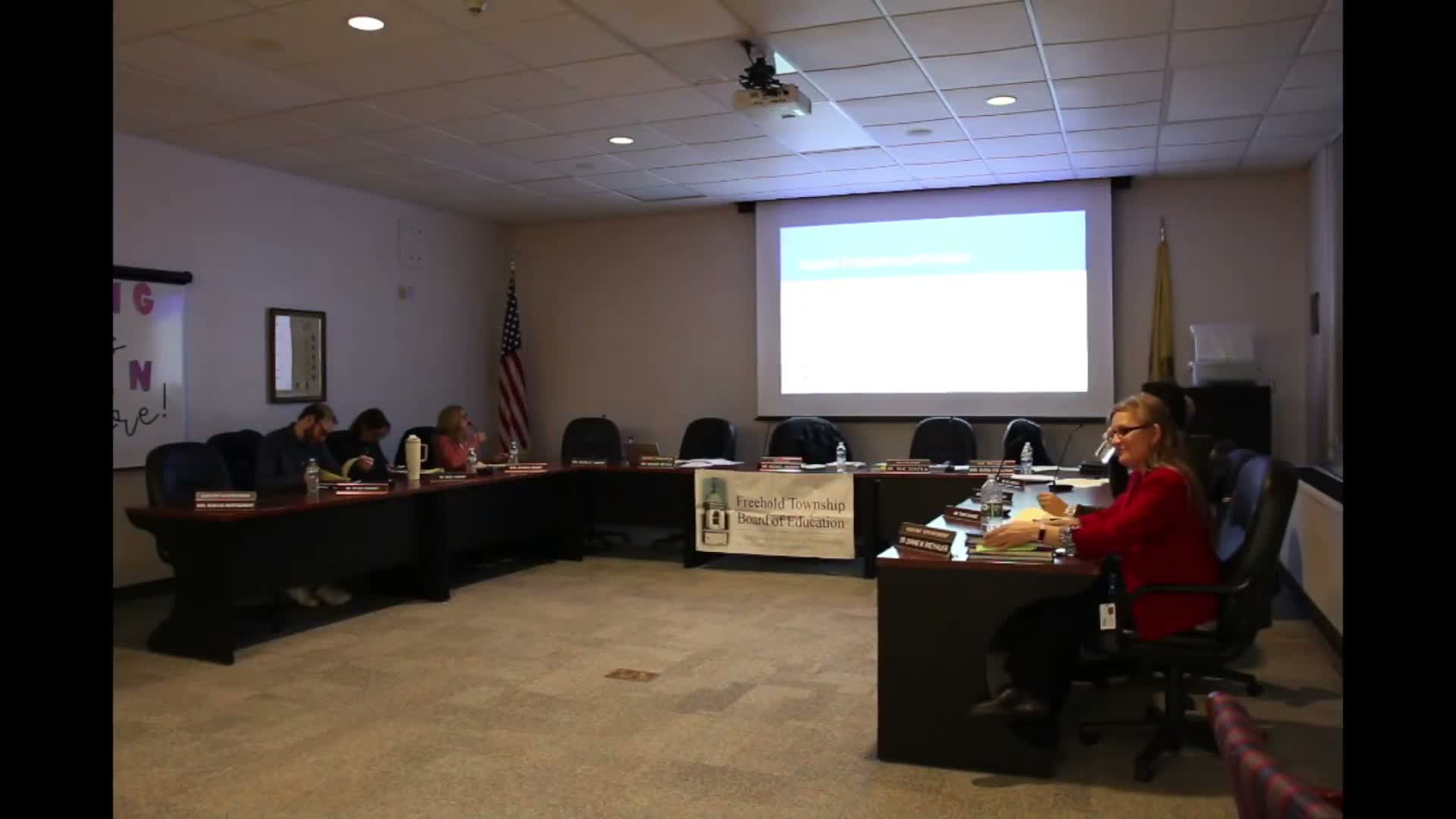
Administrators presented the first look at the district's 2026-27 budget, telling the board the plan is balanced only because it includes $3.3 million in additional tax-levy capacity and several expenditure reductions to offset sharp health-insurance increases.
School business administrator Robert David told the board the draft relies on an added levy "of $3,300,000 on top of about a $1,500,000 increase from the 2%" and said the district is "projecting an increase of 20% in health care." He added that the district had been running a deficit earlier in the process and had removed roughly $450,000 in nonmandated spending to reduce the gap.
Why it matters: officials said the health-insurance and special-education funding pressures translate to direct choices about personnel and programs. The administration proposed head-count reductions that include eliminating one instructional coach and six teacher positions (the administration emphasized those are "positions, not humans" and said impacts will be determined later and may be handled through attrition). To offset reductions in classroom staff the budget adds nine part-time teacher assistants specifically tied to IEP needs.
The administration also proposed modest elementary class-size increases to achieve savings: current recommended maximums would rise by one student in each band (K-2 to 24; grades 3-5 to 26). Preschool was proposed to lose one class (the district said preschool is tuition-based and post-COVID enrollment changes altered that projection). Curriculum and professional-development contracts were reduced; some work will be done in-house to save costs.
Board members pressed for precise dollar estimates of the projected 20% insurance increase. In response, Robert David said he did not have the exact figure at the podium and estimated "between 4 and $5,000,000" as the gross dollar impact for the adjustment that drives the need for most of the cuts. A board member noted a remaining $1.5 million structural gap before some of these adjustments were locked into the draft.
Administrators said the district's special-education reimbursement from the state has also fallen short of entitlements: based on last year's application the district said it was "entitled to $2,500,000 of state aid for our special needs students" but received roughly $1.3 million, and that changing state percentages have reduced predictable reimbursement.
Revenue side and next steps: presenters estimated nearly $95 million in total revenues for the budget and explained that rising debt-service costs and changes in debt-service aid affect the levy picture. Robert David said the district hopes for at least flat state aid when the governor releases budget figures next week; the tentative budget deadline is mid-March and the board will add appropriation details at the next meeting before a final vote.
What the board decided and what's next: the presentation closed to questions; no final appropriations vote was held. The administration said further central-office work will refine which positions, if any, result in layoffs and emphasized the use of attrition where possible. The board scheduled further review of appropriations at the next meeting and noted contingency planning if state aid drops.
Quotes:
"Our budget is only in balance right now because we have in there $3,300,000 of extra tax levy increases," said Robert David, the board's school business administrator. "We are projecting an increase of 20% in health care."
"These are positions, not humans," a district administrator said when explaining the proposed reductions, noting the administration has not yet determined personnel impacts.
The board also certified that "as of 01/31/2026, no line item has been overexpended" under NJAC 6:23-16.10(c)(3), a statutory statement read into the record by Robert David.
Ending: The board will add appropriation figures and take further action after state-aid numbers are released; no final budget adoption occurred at this meeting.
School business administrator Robert David told the board the draft relies on an added levy "of $3,300,000 on top of about a $1,500,000 increase from the 2%" and said the district is "projecting an increase of 20% in health care." He added that the district had been running a deficit earlier in the process and had removed roughly $450,000 in nonmandated spending to reduce the gap.
Why it matters: officials said the health-insurance and special-education funding pressures translate to direct choices about personnel and programs. The administration proposed head-count reductions that include eliminating one instructional coach and six teacher positions (the administration emphasized those are "positions, not humans" and said impacts will be determined later and may be handled through attrition). To offset reductions in classroom staff the budget adds nine part-time teacher assistants specifically tied to IEP needs.
The administration also proposed modest elementary class-size increases to achieve savings: current recommended maximums would rise by one student in each band (K-2 to 24; grades 3-5 to 26). Preschool was proposed to lose one class (the district said preschool is tuition-based and post-COVID enrollment changes altered that projection). Curriculum and professional-development contracts were reduced; some work will be done in-house to save costs.
Board members pressed for precise dollar estimates of the projected 20% insurance increase. In response, Robert David said he did not have the exact figure at the podium and estimated "between 4 and $5,000,000" as the gross dollar impact for the adjustment that drives the need for most of the cuts. A board member noted a remaining $1.5 million structural gap before some of these adjustments were locked into the draft.
Administrators said the district's special-education reimbursement from the state has also fallen short of entitlements: based on last year's application the district said it was "entitled to $2,500,000 of state aid for our special needs students" but received roughly $1.3 million, and that changing state percentages have reduced predictable reimbursement.
Revenue side and next steps: presenters estimated nearly $95 million in total revenues for the budget and explained that rising debt-service costs and changes in debt-service aid affect the levy picture. Robert David said the district hopes for at least flat state aid when the governor releases budget figures next week; the tentative budget deadline is mid-March and the board will add appropriation details at the next meeting before a final vote.
What the board decided and what's next: the presentation closed to questions; no final appropriations vote was held. The administration said further central-office work will refine which positions, if any, result in layoffs and emphasized the use of attrition where possible. The board scheduled further review of appropriations at the next meeting and noted contingency planning if state aid drops.
Quotes:
"Our budget is only in balance right now because we have in there $3,300,000 of extra tax levy increases," said Robert David, the board's school business administrator. "We are projecting an increase of 20% in health care."
"These are positions, not humans," a district administrator said when explaining the proposed reductions, noting the administration has not yet determined personnel impacts.
The board also certified that "as of 01/31/2026, no line item has been overexpended" under NJAC 6:23-16.10(c)(3), a statutory statement read into the record by Robert David.
Ending: The board will add appropriation figures and take further action after state-aid numbers are released; no final budget adoption occurred at this meeting.
View the Full Meeting & All Its Details
This article offers just a summary. Unlock complete video, transcripts, and insights as a Founder Member.
✓
Watch full, unedited meeting videos
✓
Search every word spoken in unlimited transcripts
✓
AI summaries & real-time alerts (all government levels)
✓
Permanent access to expanding government content
30-day money-back guarantee
