Exeter Township SD highlights 95.7% graduation rate and strong ELA scores in academic update
March 04, 2026 | Exeter Township SD, School Districts, Pennsylvania
This article was created by AI summarizing key points discussed. AI makes mistakes, so for full details and context, please refer to the video of the full meeting. Please report any errors so we can fix them. Report an error »
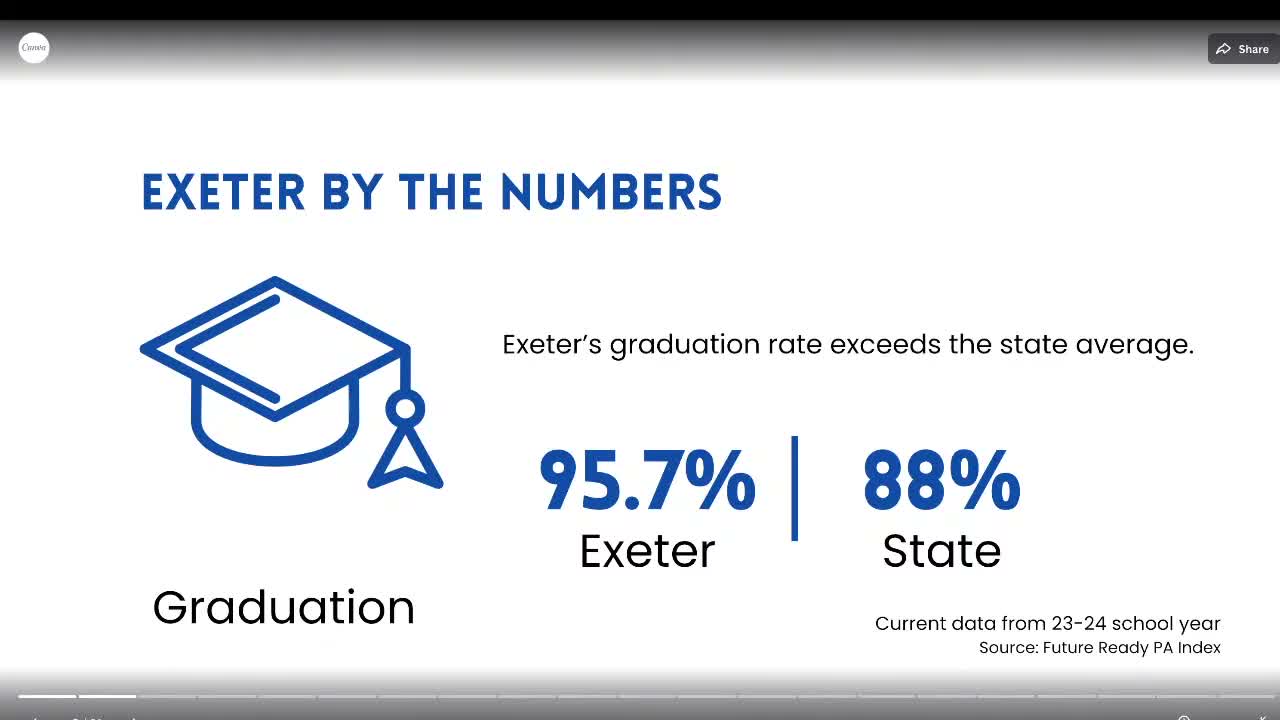
Exeter Township School District leaders presented an "Exeter by the Numbers" academic briefing at the March 3 Committee of the Whole meeting, saying the district’s graduation rate and some subject proficiencies compare favorably with statewide averages.
"At 95.7% we're much higher than the state average," said Dr. Jo Alcaro, the district’s supervisor of secondary education, summarizing the district’s reported graduation metric. Presenters cautioned that graduation and assessment reports are cohort-based and can lag by one to two years, so some figures reflect earlier classes.
Why it matters: the presentation framed the district’s strengths and remaining gaps as part of a system‑wide improvement process. Dr. Alcaro and K–6 supervisor Becky Busch noted that career‑readiness artifacts and the district’s Chapter 339 career-and-work standard completion were high, and that attendance rates and ELA Keystones compared favorably to state averages.
Key figures and context: presenters said ELA Keystone proficiency in the district was about 73% compared with the statewide average of 49.9%. They reported biology Keystone proficiency near the mid‑50s in the most recent publicly released year and described curricular work that staff say has produced improvements. Administrators emphasized that Keystone and PSSA measures are reported by grade triggers (for example, Algebra I as a Keystone trigger course) and that some student scores are not counted until a cohort reaches grade 11.
Administrators outlined supports and next steps: the district cited implementation of the University of Florida Literacy Institute (UFLI) strategies, use of IXL for formative data, MTSS frameworks, and a pilot "Firefly" predictor assessment to guide interventions. Dr. Josh Hoyt, director of teaching and learning, said the district will present proposed K–6 instructional resources — Great Minds Eureka Squared for math and Arts & Letters for ELA — at the April curriculum meeting and that associated professional development would follow if the materials are approved.
Board members probed the numbers: during Q&A, trustees asked how proficiency percentages are calculated, whether pandemic-era waivers affect comparability and what supports exist for students who do not graduate with their cohort. Assistant superintendent Dawn Harris said the district’s at‑risk protocols, targeted outreach and counseling work reduced last year’s official dropouts to a low single‑digit number, and staff said some students finish beyond the cohort year due to special‑education timelines or moving out of district enrollment.
What’s next: staff will bring proposed curriculum materials and PD plans to the April curriculum meeting and continue analyses of disaggregated assessment and attendance data. The presentation closed with a request for parent participation in drafting the district’s comprehensive plan, due in 2027.
"At 95.7% we're much higher than the state average," said Dr. Jo Alcaro, the district’s supervisor of secondary education, summarizing the district’s reported graduation metric. Presenters cautioned that graduation and assessment reports are cohort-based and can lag by one to two years, so some figures reflect earlier classes.
Why it matters: the presentation framed the district’s strengths and remaining gaps as part of a system‑wide improvement process. Dr. Alcaro and K–6 supervisor Becky Busch noted that career‑readiness artifacts and the district’s Chapter 339 career-and-work standard completion were high, and that attendance rates and ELA Keystones compared favorably to state averages.
Key figures and context: presenters said ELA Keystone proficiency in the district was about 73% compared with the statewide average of 49.9%. They reported biology Keystone proficiency near the mid‑50s in the most recent publicly released year and described curricular work that staff say has produced improvements. Administrators emphasized that Keystone and PSSA measures are reported by grade triggers (for example, Algebra I as a Keystone trigger course) and that some student scores are not counted until a cohort reaches grade 11.
Administrators outlined supports and next steps: the district cited implementation of the University of Florida Literacy Institute (UFLI) strategies, use of IXL for formative data, MTSS frameworks, and a pilot "Firefly" predictor assessment to guide interventions. Dr. Josh Hoyt, director of teaching and learning, said the district will present proposed K–6 instructional resources — Great Minds Eureka Squared for math and Arts & Letters for ELA — at the April curriculum meeting and that associated professional development would follow if the materials are approved.
Board members probed the numbers: during Q&A, trustees asked how proficiency percentages are calculated, whether pandemic-era waivers affect comparability and what supports exist for students who do not graduate with their cohort. Assistant superintendent Dawn Harris said the district’s at‑risk protocols, targeted outreach and counseling work reduced last year’s official dropouts to a low single‑digit number, and staff said some students finish beyond the cohort year due to special‑education timelines or moving out of district enrollment.
What’s next: staff will bring proposed curriculum materials and PD plans to the April curriculum meeting and continue analyses of disaggregated assessment and attendance data. The presentation closed with a request for parent participation in drafting the district’s comprehensive plan, due in 2027.
View the Full Meeting & All Its Details
This article offers just a summary. Unlock complete video, transcripts, and insights as a Founder Member.
✓
Watch full, unedited meeting videos
✓
Search every word spoken in unlimited transcripts
✓
AI summaries & real-time alerts (all government levels)
✓
Permanent access to expanding government content
30-day money-back guarantee
