Tampa council workshop narrows FY27 priorities as property-tax reform and debt risks loom
March 04, 2026 | Tampa, Hillsborough County, Florida
This article was created by AI summarizing key points discussed. AI makes mistakes, so for full details and context, please refer to the video of the full meeting. Please report any errors so we can fix them. Report an error »
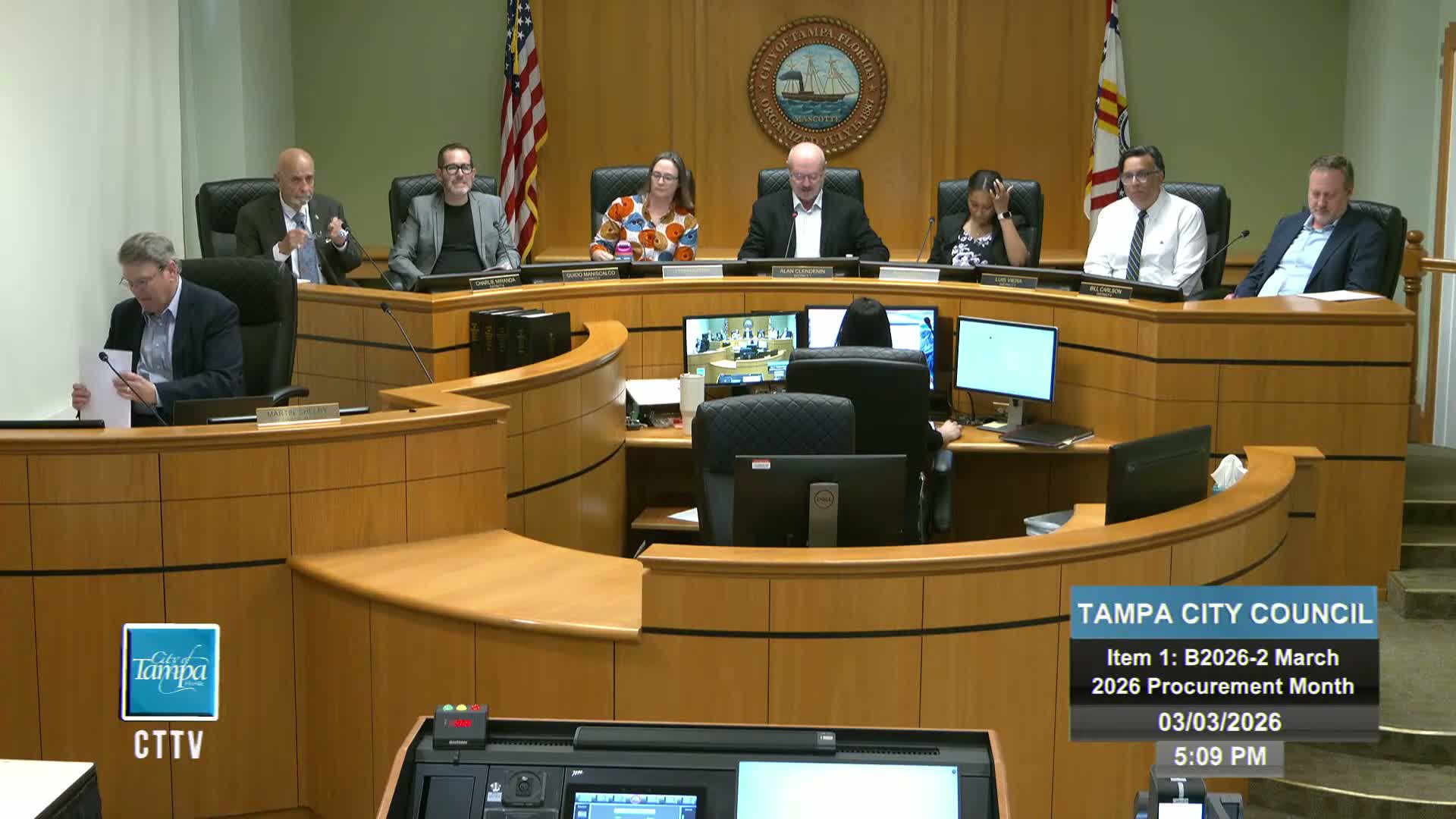
TAMPA — Tampa City Council used a special-call budget workshop to take its first public pass at FY27 priorities while a potential state property-tax overhaul and rising debt shaped the tone of the discussion.
Andy Joe Scaglione, representing the council’s budget committee, told the council the committee had voted unanimously on its recommendations and warned that the legislative proposal to “gradually eliminate non-school property taxes for primary homeowners over a 10 year period starting 2027” could significantly reduce local revenue. "A reduction in property tax revenue would make maintaining public safety levels extremely challenging," Scaglione said, urging caution before committing city funds to large new projects.
Scaglione and other committee members also noted that extending community-redevelopment-area (CRA) districts beyond their planned life spans could divert general revenue. The committee specifically raised Drew Park as an example and said the county’s decisions about a proposed 15‑year county bed-tax renewal (CIT) would determine how much city revenue is available for public facilities versus sports-related projects.
City budget analyst Hager Kopetzky framed the workshop process and recommended refined follow-up presentations with revenue and finance staff. "This is the evening that you are having the opportunity to discuss publicly what you all feel are your fiscal 27 priorities," Kopetzky said, urging council members to identify a manageable set of items for additional study.
Council members emphasized a consistent set of priorities during a round-robin of short statements. Common themes were road resurfacing and sidewalks, park maintenance (not necessarily new flagship parks), stormwater investment, fire station funding and public safety equipment, transit and signalization improvements to improve mobility, and targeted investments in neighborhoods such as Sulphur Springs. Several members also urged conservatism on new debt: "Debt is not your friend," one committee member said.
Public commenters told council to prioritize transparency, housing affordability and long-term community investments. Hoyt Prindle, a member of the budget and finance committee, urged the council to reserve judgment on a stadium proposal and to complete due diligence; he cited an outside estimate that the project could generate large economic output and jobs. Other commenters asked for sustained funding for Sulphur Springs pool and boardwalk repairs, food-access programs and neighborhood stabilization funding.
Council took a few short administrative actions at the end of the meeting, including motions to request planning‑commission research on limiting comprehensive-plan amendment entitlements and to issue an off-site commendation for National Victims Rights Week. Council members directed staff to coordinate follow-up workshops that will dig into transportation (including signalization), the general-fund operating picture and stormwater needs.
Next steps: city staff will bring refined presentations on the city’s major operating and capital spending areas, and council members will be asked to return with prioritized top-three lists for FY27 during follow-up workshops.
Andy Joe Scaglione, representing the council’s budget committee, told the council the committee had voted unanimously on its recommendations and warned that the legislative proposal to “gradually eliminate non-school property taxes for primary homeowners over a 10 year period starting 2027” could significantly reduce local revenue. "A reduction in property tax revenue would make maintaining public safety levels extremely challenging," Scaglione said, urging caution before committing city funds to large new projects.
Scaglione and other committee members also noted that extending community-redevelopment-area (CRA) districts beyond their planned life spans could divert general revenue. The committee specifically raised Drew Park as an example and said the county’s decisions about a proposed 15‑year county bed-tax renewal (CIT) would determine how much city revenue is available for public facilities versus sports-related projects.
City budget analyst Hager Kopetzky framed the workshop process and recommended refined follow-up presentations with revenue and finance staff. "This is the evening that you are having the opportunity to discuss publicly what you all feel are your fiscal 27 priorities," Kopetzky said, urging council members to identify a manageable set of items for additional study.
Council members emphasized a consistent set of priorities during a round-robin of short statements. Common themes were road resurfacing and sidewalks, park maintenance (not necessarily new flagship parks), stormwater investment, fire station funding and public safety equipment, transit and signalization improvements to improve mobility, and targeted investments in neighborhoods such as Sulphur Springs. Several members also urged conservatism on new debt: "Debt is not your friend," one committee member said.
Public commenters told council to prioritize transparency, housing affordability and long-term community investments. Hoyt Prindle, a member of the budget and finance committee, urged the council to reserve judgment on a stadium proposal and to complete due diligence; he cited an outside estimate that the project could generate large economic output and jobs. Other commenters asked for sustained funding for Sulphur Springs pool and boardwalk repairs, food-access programs and neighborhood stabilization funding.
Council took a few short administrative actions at the end of the meeting, including motions to request planning‑commission research on limiting comprehensive-plan amendment entitlements and to issue an off-site commendation for National Victims Rights Week. Council members directed staff to coordinate follow-up workshops that will dig into transportation (including signalization), the general-fund operating picture and stormwater needs.
Next steps: city staff will bring refined presentations on the city’s major operating and capital spending areas, and council members will be asked to return with prioritized top-three lists for FY27 during follow-up workshops.
View the Full Meeting & All Its Details
This article offers just a summary. Unlock complete video, transcripts, and insights as a Founder Member.
✓
Watch full, unedited meeting videos
✓
Search every word spoken in unlimited transcripts
✓
AI summaries & real-time alerts (all government levels)
✓
Permanent access to expanding government content
30-day money-back guarantee
