Buellton planners review revised San Ynez Valley Children’s Museum proposal focused on outdoor STEAM campus
March 06, 2026 | Buellton City, Santa Barbara County, California
This article was created by AI summarizing key points discussed. AI makes mistakes, so for full details and context, please refer to the video of the full meeting. Please report any errors so we can fix them. Report an error »
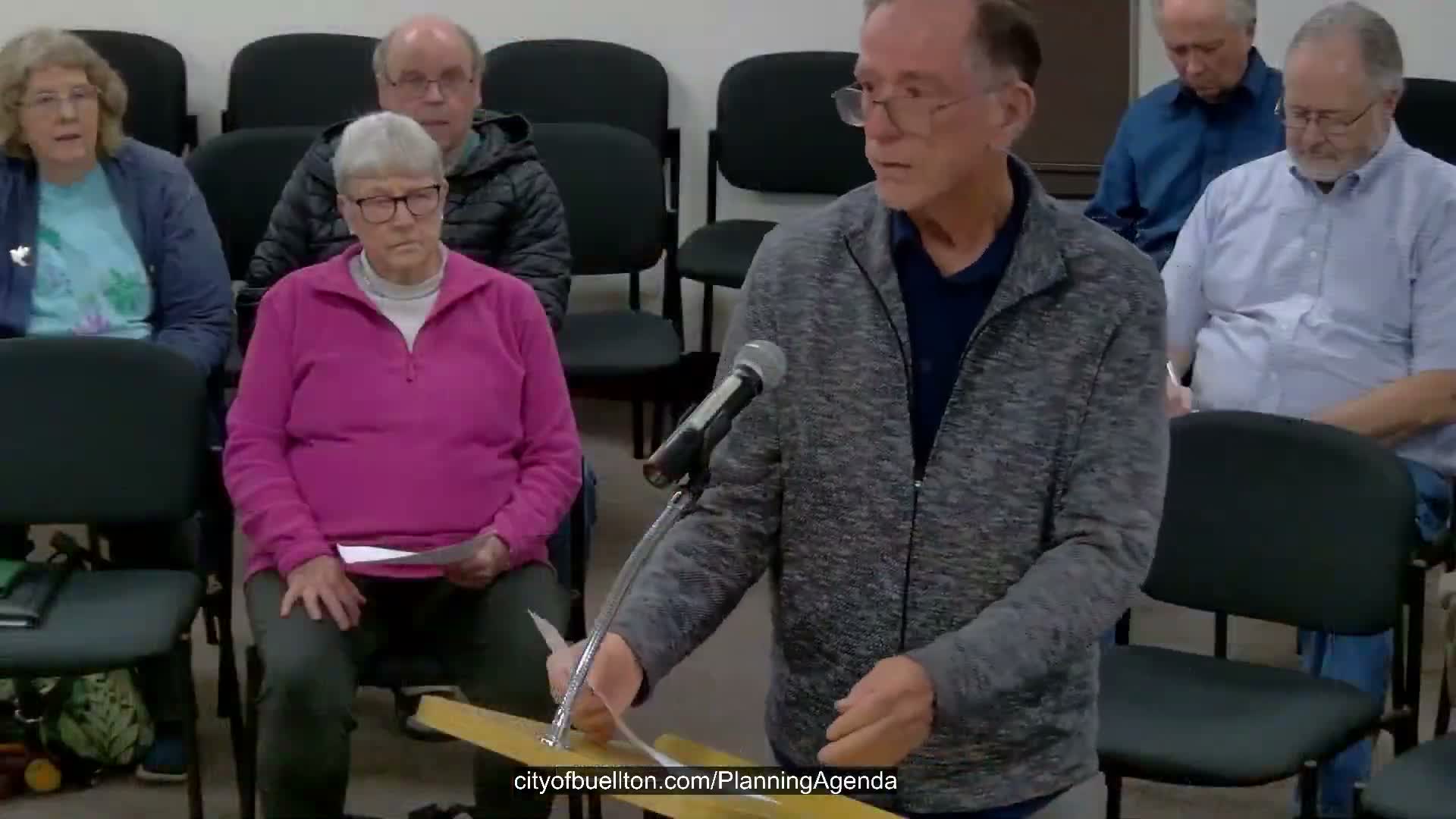
The Buellton Planning Commission received a preliminary review Tuesday of the San Ynez Valley Children’s Museum, a revised proposal that frames the project as an outdoor discovery campus focused on STEAM (science, technology, engineering, arts and mathematics) and regional environmental education.
Jillian Knight, operations consultant and museum board member, told commissioners the team reworked the concept to serve schools during weekday appointment hours and the public Thursday through Sunday, and to pursue targeted grants and sponsorships so the museum “reduces the financial burden on the city.”
Architect Michael Holliday walked the commission through site and exhibit plans for the Willingham property at 202 Dairyland Road, describing zones for water and earth science, simple machines, sustainability and ecology, air‑quality monitoring, a paleo/paleontology dig, nature art, human‑powered tech, a garden/irrigation demonstration, a modified knoll for active play, and outdoor classrooms. He said existing buildings — including a substantial shipping‑container structure and an historic barn — will be documented and evaluated for code compliance and adaptive reuse.
Commissioners asked technical questions about the container structure, with one noting the team should determine whether the containers can be used for interior spaces or must be limited to storage. Holliday said the next steps include structural analysis, permit review and early consultations with building and fire officials to avoid rework.
The staff presentation identified site constraints that will shape design and phasing: portions of the lower parcel fall within the 100‑year floodplain and a riparian outfall, the location of a proposed trash enclosure could conflict with plans for the historic barn, and two ADA parking spaces built for the neighboring Hundred Hills School will serve both uses. Staff also told commissioners that engineering, building, and fire comments have been submitted and will need to be addressed prior to a complete application.
On programming and revenue, Knight said the museum plans a two‑tier approach: pursuing grants or consortium funding to cover school visits and using scheduling data to decide when to offer paid public events or private rentals such as birthday parties. She acknowledged transportation and scheduling are common constraints for valley schools and said the team will work with districts and regional partners to reduce or subsidize costs for students.
Commissioners also pressed staff and the applicants about environmental review. Staff said a prior initial study and mitigated negative declaration for the Williamsen/Willingham property will be evaluated when the application is complete and that the environmental determination will be made as part of the complete submittal process.
The project team and staff sought commissioners’ feedback on site layout, the proposed color and elevation details, trash‑enclosure siting near the historic barn, signage and fencing, and the need for additional tree protection notes on the plans. Commissioners encouraged early coordination with building, fire, and historic‑preservation reviewers to clarify what work is feasible on older structures.
The commission provided comments to be included in an incomplete‑application letter to the applicant; no formal action was taken. The matter will return for a formal hearing once the application is complete and environmental review is determined.
Planning Director Andrea closed the item by noting the license/lease terms for portions of the property are still under discussion with council and that the draft license agreement will be coordinated with the project team as the review continues.
Jillian Knight, operations consultant and museum board member, told commissioners the team reworked the concept to serve schools during weekday appointment hours and the public Thursday through Sunday, and to pursue targeted grants and sponsorships so the museum “reduces the financial burden on the city.”
Architect Michael Holliday walked the commission through site and exhibit plans for the Willingham property at 202 Dairyland Road, describing zones for water and earth science, simple machines, sustainability and ecology, air‑quality monitoring, a paleo/paleontology dig, nature art, human‑powered tech, a garden/irrigation demonstration, a modified knoll for active play, and outdoor classrooms. He said existing buildings — including a substantial shipping‑container structure and an historic barn — will be documented and evaluated for code compliance and adaptive reuse.
Commissioners asked technical questions about the container structure, with one noting the team should determine whether the containers can be used for interior spaces or must be limited to storage. Holliday said the next steps include structural analysis, permit review and early consultations with building and fire officials to avoid rework.
The staff presentation identified site constraints that will shape design and phasing: portions of the lower parcel fall within the 100‑year floodplain and a riparian outfall, the location of a proposed trash enclosure could conflict with plans for the historic barn, and two ADA parking spaces built for the neighboring Hundred Hills School will serve both uses. Staff also told commissioners that engineering, building, and fire comments have been submitted and will need to be addressed prior to a complete application.
On programming and revenue, Knight said the museum plans a two‑tier approach: pursuing grants or consortium funding to cover school visits and using scheduling data to decide when to offer paid public events or private rentals such as birthday parties. She acknowledged transportation and scheduling are common constraints for valley schools and said the team will work with districts and regional partners to reduce or subsidize costs for students.
Commissioners also pressed staff and the applicants about environmental review. Staff said a prior initial study and mitigated negative declaration for the Williamsen/Willingham property will be evaluated when the application is complete and that the environmental determination will be made as part of the complete submittal process.
The project team and staff sought commissioners’ feedback on site layout, the proposed color and elevation details, trash‑enclosure siting near the historic barn, signage and fencing, and the need for additional tree protection notes on the plans. Commissioners encouraged early coordination with building, fire, and historic‑preservation reviewers to clarify what work is feasible on older structures.
The commission provided comments to be included in an incomplete‑application letter to the applicant; no formal action was taken. The matter will return for a formal hearing once the application is complete and environmental review is determined.
Planning Director Andrea closed the item by noting the license/lease terms for portions of the property are still under discussion with council and that the draft license agreement will be coordinated with the project team as the review continues.
View the Full Meeting & All Its Details
This article offers just a summary. Unlock complete video, transcripts, and insights as a Founder Member.
✓
Watch full, unedited meeting videos
✓
Search every word spoken in unlimited transcripts
✓
AI summaries & real-time alerts (all government levels)
✓
Permanent access to expanding government content
30-day money-back guarantee
