Consumer protection chief backs higher restitution cap, urges gaming-law update to cover online rigging
March 05, 2026 | Judiciary, House of Representatives, Committees, Legislative, Connecticut
This article was created by AI summarizing key points discussed. AI makes mistakes, so for full details and context, please refer to the video of the full meeting. Please report any errors so we can fix them. Report an error »
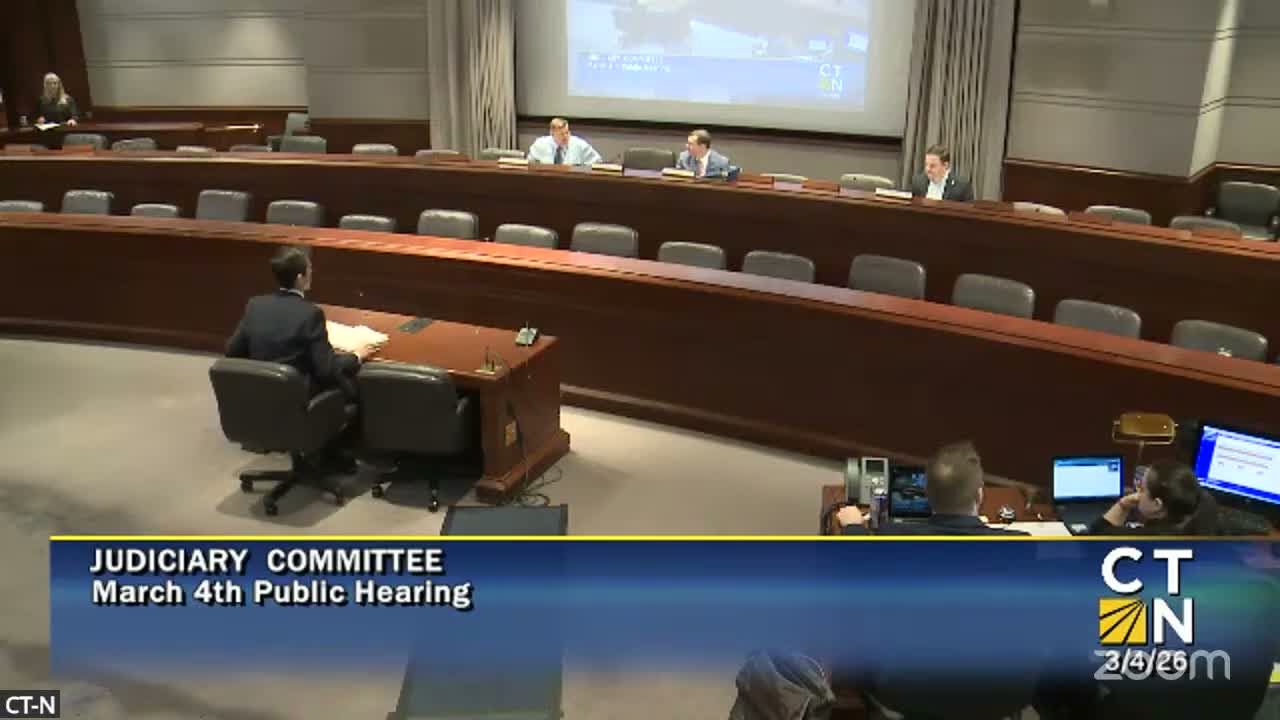
Connecticut's commissioner of consumer protection told the Judiciary Committee on March 4 that Senate Bill 296 would modernize enforcement tools by raising restitution caps under the Connecticut Unfair Trade Practices Act and by closing a gap in gaming law to cover online manipulation of sports wagers.
Brian Caffarelli said the current CUPA limit on administrative restitution is $10,000 and proposed raising the cap to $25,000 to let the department fully compensate consumers in cases that exceed the current limit. "Last year, we had a CUPPA case where [a] consumer paid approximately $23,000 for church renovations to their windows that were never completed," Caffarelli said; under the current cap the department could only order up to $9,999 in restitution, forcing the complainant to pursue the remainder in court.
Caffarelli also described an amendment to the gaming statute to include "offering or accepting undue advantage with the intention of improperly altering the outcome of a sports wager," noting that as sports betting expands the online component creates new vectors for cheating. He told the committee that while Connecticut has not seen a large number of such cases to date, incidents in other states and at college and professional levels suggest the risk increases as participation grows.
Committee members sought clarification on whether the proposed gaming offense would apply to activity taking place outside Connecticut or to bets placed from within the state; Caffarelli said the intent is to apply the statute to activity within Connecticut and agreed to follow up on jurisdictional language.
No vote was recorded at the hearing.
Brian Caffarelli said the current CUPA limit on administrative restitution is $10,000 and proposed raising the cap to $25,000 to let the department fully compensate consumers in cases that exceed the current limit. "Last year, we had a CUPPA case where [a] consumer paid approximately $23,000 for church renovations to their windows that were never completed," Caffarelli said; under the current cap the department could only order up to $9,999 in restitution, forcing the complainant to pursue the remainder in court.
Caffarelli also described an amendment to the gaming statute to include "offering or accepting undue advantage with the intention of improperly altering the outcome of a sports wager," noting that as sports betting expands the online component creates new vectors for cheating. He told the committee that while Connecticut has not seen a large number of such cases to date, incidents in other states and at college and professional levels suggest the risk increases as participation grows.
Committee members sought clarification on whether the proposed gaming offense would apply to activity taking place outside Connecticut or to bets placed from within the state; Caffarelli said the intent is to apply the statute to activity within Connecticut and agreed to follow up on jurisdictional language.
No vote was recorded at the hearing.
Don't Miss a Word: See the Full Meeting!
Go beyond summaries. Unlock every video, transcript, and key insight with a Founder Membership.
✓
Get instant access to full meeting videos
✓
Search and clip any phrase from complete transcripts
✓
Receive AI-powered summaries & custom alerts
✓
Enjoy lifetime, unrestricted access to government data
30-day money-back guarantee
