BDD reviews Rio Grande water-quality work plan; consultant flags LANL, chromium plume and PFAS rulemaking
March 06, 2026 | Santa Fe, Santa Fe County, New Mexico
This article was created by AI summarizing key points discussed. AI makes mistakes, so for full details and context, please refer to the video of the full meeting. Please report any errors so we can fix them. Report an error »
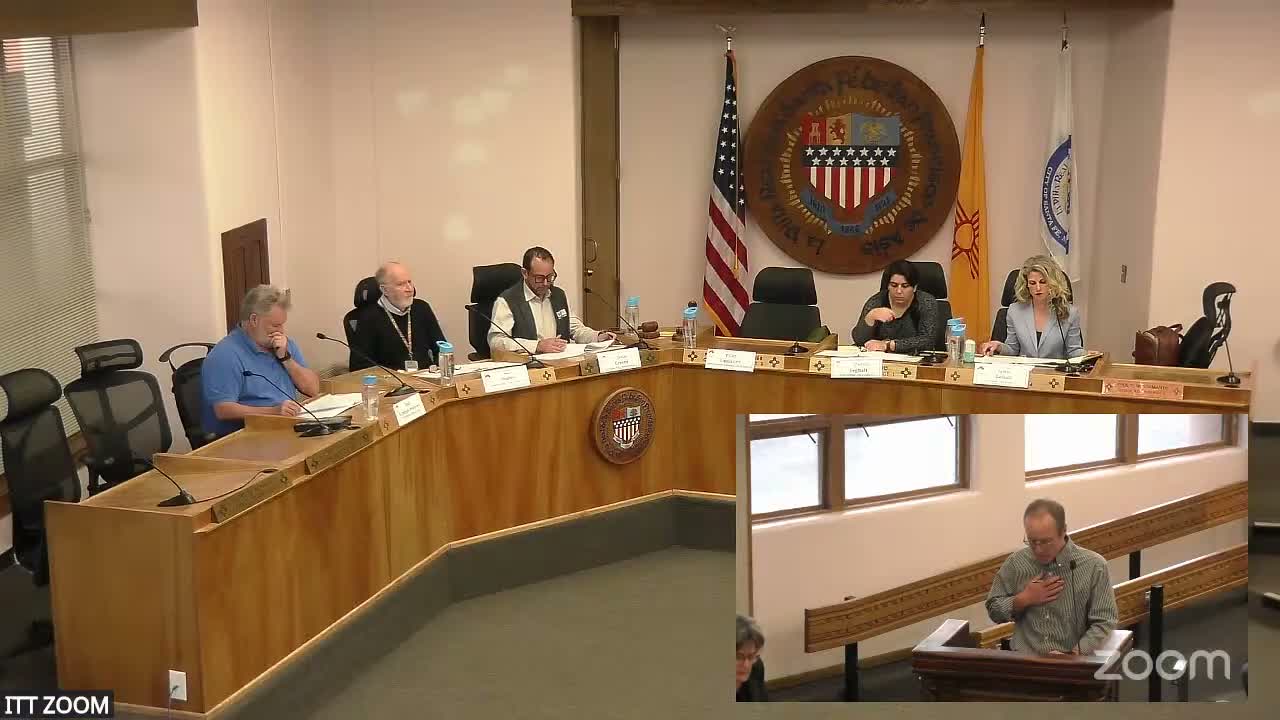
Consultant Jim Reisterer presented the Buckman Direct Diversion board with a three-tier Rio Grande water-quality work plan on March 5 that prioritizes near-term monitoring and coordination with the Department of Energy and Los Alamos National Laboratory (LANL), while tracking longer-term state and federal permitting and regulatory developments.
"The work plan is set up with three tiers," Reisterer said. He described tier 1 items as immediate tasks, including continuing implementation of a memorandum of understanding with LANL signed in December, joint work with DOE on stormwater discharge monitoring and camera configuration at key gauges, and participation in an annual review of BDD's early-notification and sampling programs in May.
Reisterer flagged several areas of board concern. He described plans to determine stormwater lag time from Pueblo Canyon to the BDD intake so operations staff can better time diversion closures after storm events. On hexavalent chromium, Reisterer said the board previously protested a water-rights application related to a proposed treatment system; he said some interim measures under consideration could require converting up to "1,690 acre-feet" of water if the applicant pursues that path. Reisterer added that a well drilled in 2025 (the SIMR3 well) showed chromium in screening samples, and that New Mexico Environment Department (NMED) administrative orders recently led to a pause in some mitigation operations while agencies reevaluate characterization and response.
Reisterer also summarized PFAS developments: the draft permitting and regulatory work for PFAS is moving through the state Water Quality Control Commission process and the public comment period for the proposed regulations opens March 13, 2026. He said BDD staff will prepare comments and continue to monitor developments in MPDES/NPDES permitting and a LANL site-wide environmental impact statement.
In board discussion, Member Schmidt Peterson asked whether ongoing LANL construction and expanded operations (including production-related facilities) should change BDD priorities. A board member responded that the site-wide EIS is intended to cover new facilities and that BDD staff will seek clearer timelines and information to decide whether additional oversight or monitoring is warranted.
Commissioner Hughes asked whether there are plans to capture or stop the chromium plume from reaching the Rio Grande. Reisterer said the recent NMED administrative orders from the Groundwater Quality Bureau and Hazardous Waste Bureau lay out characterization and response tasks — drilling, monitoring and better defining plume extent — but that the degree of LANL cooperation on additional data has been limited to date.
Board members asked for continued updates; BDD staff said they will support monitoring and follow related permitting and consent-order developments through 2026.
"The work plan is set up with three tiers," Reisterer said. He described tier 1 items as immediate tasks, including continuing implementation of a memorandum of understanding with LANL signed in December, joint work with DOE on stormwater discharge monitoring and camera configuration at key gauges, and participation in an annual review of BDD's early-notification and sampling programs in May.
Reisterer flagged several areas of board concern. He described plans to determine stormwater lag time from Pueblo Canyon to the BDD intake so operations staff can better time diversion closures after storm events. On hexavalent chromium, Reisterer said the board previously protested a water-rights application related to a proposed treatment system; he said some interim measures under consideration could require converting up to "1,690 acre-feet" of water if the applicant pursues that path. Reisterer added that a well drilled in 2025 (the SIMR3 well) showed chromium in screening samples, and that New Mexico Environment Department (NMED) administrative orders recently led to a pause in some mitigation operations while agencies reevaluate characterization and response.
Reisterer also summarized PFAS developments: the draft permitting and regulatory work for PFAS is moving through the state Water Quality Control Commission process and the public comment period for the proposed regulations opens March 13, 2026. He said BDD staff will prepare comments and continue to monitor developments in MPDES/NPDES permitting and a LANL site-wide environmental impact statement.
In board discussion, Member Schmidt Peterson asked whether ongoing LANL construction and expanded operations (including production-related facilities) should change BDD priorities. A board member responded that the site-wide EIS is intended to cover new facilities and that BDD staff will seek clearer timelines and information to decide whether additional oversight or monitoring is warranted.
Commissioner Hughes asked whether there are plans to capture or stop the chromium plume from reaching the Rio Grande. Reisterer said the recent NMED administrative orders from the Groundwater Quality Bureau and Hazardous Waste Bureau lay out characterization and response tasks — drilling, monitoring and better defining plume extent — but that the degree of LANL cooperation on additional data has been limited to date.
Board members asked for continued updates; BDD staff said they will support monitoring and follow related permitting and consent-order developments through 2026.
Don't Miss a Word: See the Full Meeting!
Go beyond summaries. Unlock every video, transcript, and key insight with a Founder Membership.
✓
Get instant access to full meeting videos
✓
Search and clip any phrase from complete transcripts
✓
Receive AI-powered summaries & custom alerts
✓
Enjoy lifetime, unrestricted access to government data
30-day money-back guarantee
