Riverside trustees debate outdoor dining standards; send draft to EDC and P&ZC for review
March 06, 2026 | Riverside, Cook County, Illinois
This article was created by AI summarizing key points discussed. AI makes mistakes, so for full details and context, please refer to the video of the full meeting. Please report any errors so we can fix them. Report an error »
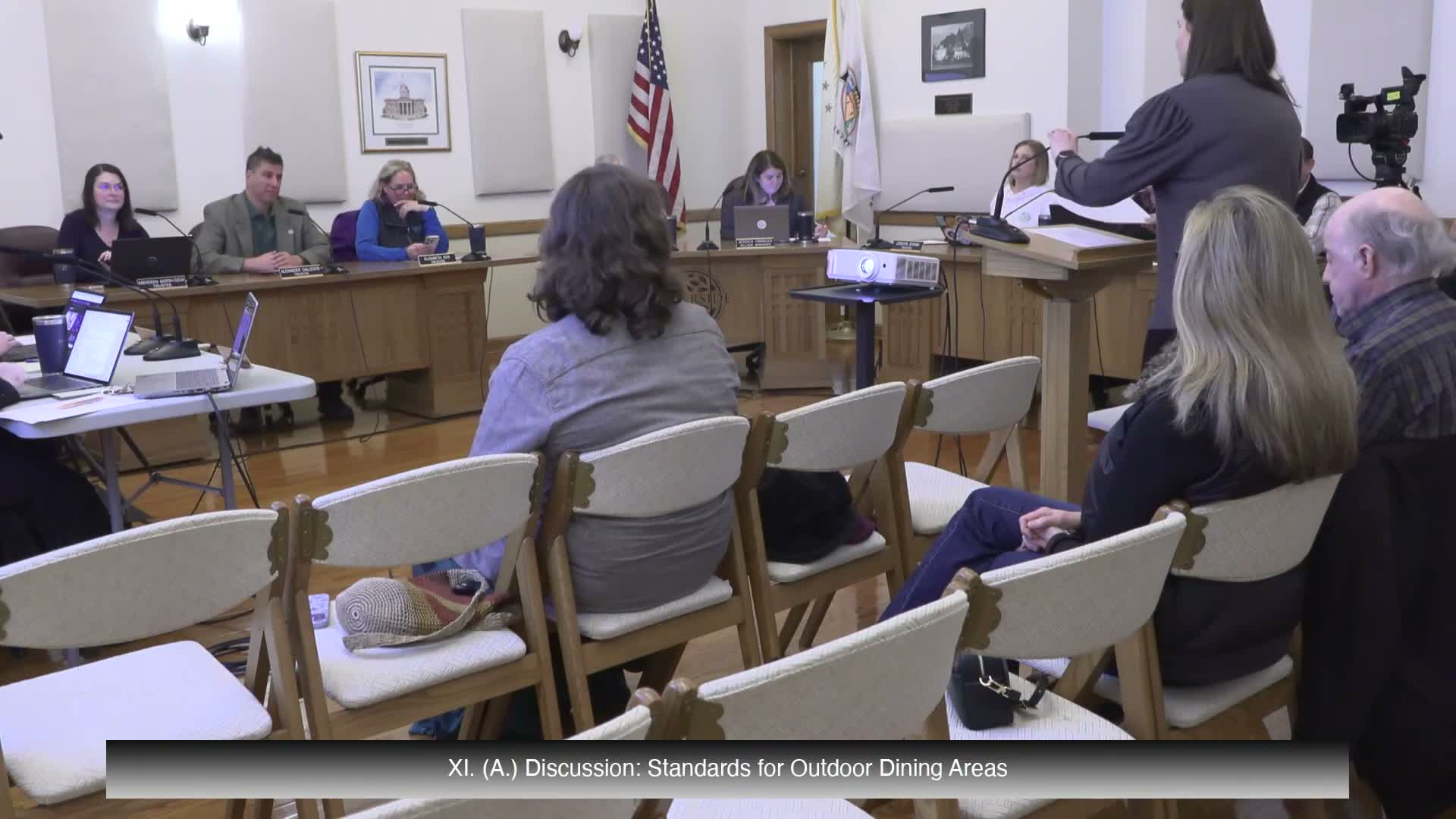
Director Siren presented a discussion item on March 5 proposing updates to the Village Code for outdoor dining standards covering barriers, umbrellas, lighting, decorations, weather enclosures and service equipment screening. Staff sought direction rather than a vote.
Key staff recommendations included specifying durable materials for barriers (finished wood, aluminum, commercial-grade resin, powder-coated steel/iron), establishing a maximum barrier height of 42 inches with a transparency standard (staff described options ranging from 30% to 50% transparency), and treating planters differently from solid barriers to allow flexibility. For lighting, staff recommended downward-directed, enclosed fixtures for outdoor-dining fixtures and technical guidance for string lights aligned with dark-sky recommendations (about 100 lumens and a maximum color temperature of 2,700K). Staff also recommended that weather enclosures be considered on a case-by-case basis and suggested screening service equipment from public view and removing it from sidewalks at night.
Trustees discussed practical implementation, including whether existing enclosures should be grandfathered or phased into compliance, the difficulty of measuring transparency for off-the-shelf products and concerns about imposing costs on local restaurants. Several trustees favored a phased approach (for example, a five-year phase-in for higher-cost enclosures) or grandfathering existing installations while bringing lower-cost items into compliance sooner. Trustees suggested soliciting restaurant input through the Economic Development Commission and asking the Planning & Zoning Commission to review private-property implications.
Director Siren said staff will work with the village attorney to draft formal code amendments if directed; the board generally agreed to send the proposals to the Economic Development Commission and to Planning & Zoning Commission (private-property considerations) for additional feedback before any ordinance drafting.
Beverly McClellan, who had been sworn in earlier, commented from the public that traffic and lighting impacts in high-traffic areas should be considered when evaluating requests for variances.
Next steps: staff will present the draft standards to the Economic Development Commission and the Planning & Zoning Commission for review and return to the board with recommendations and a proposed ordinance if directed.
Key staff recommendations included specifying durable materials for barriers (finished wood, aluminum, commercial-grade resin, powder-coated steel/iron), establishing a maximum barrier height of 42 inches with a transparency standard (staff described options ranging from 30% to 50% transparency), and treating planters differently from solid barriers to allow flexibility. For lighting, staff recommended downward-directed, enclosed fixtures for outdoor-dining fixtures and technical guidance for string lights aligned with dark-sky recommendations (about 100 lumens and a maximum color temperature of 2,700K). Staff also recommended that weather enclosures be considered on a case-by-case basis and suggested screening service equipment from public view and removing it from sidewalks at night.
Trustees discussed practical implementation, including whether existing enclosures should be grandfathered or phased into compliance, the difficulty of measuring transparency for off-the-shelf products and concerns about imposing costs on local restaurants. Several trustees favored a phased approach (for example, a five-year phase-in for higher-cost enclosures) or grandfathering existing installations while bringing lower-cost items into compliance sooner. Trustees suggested soliciting restaurant input through the Economic Development Commission and asking the Planning & Zoning Commission to review private-property implications.
Director Siren said staff will work with the village attorney to draft formal code amendments if directed; the board generally agreed to send the proposals to the Economic Development Commission and to Planning & Zoning Commission (private-property considerations) for additional feedback before any ordinance drafting.
Beverly McClellan, who had been sworn in earlier, commented from the public that traffic and lighting impacts in high-traffic areas should be considered when evaluating requests for variances.
Next steps: staff will present the draft standards to the Economic Development Commission and the Planning & Zoning Commission for review and return to the board with recommendations and a proposed ordinance if directed.
Don't Miss a Word: See the Full Meeting!
Go beyond summaries. Unlock every video, transcript, and key insight with a Founder Membership.
✓
Get instant access to full meeting videos
✓
Search and clip any phrase from complete transcripts
✓
Receive AI-powered summaries & custom alerts
✓
Enjoy lifetime, unrestricted access to government data
30-day money-back guarantee
