City attorney runs annual Open Meetings and ethics training for Fruit Heights council
March 04, 2026 | Fruit Heights City Council, Fruit Heights, Davis County, Utah
This article was created by AI summarizing key points discussed. AI makes mistakes, so for full details and context, please refer to the video of the full meeting. Please report any errors so we can fix them. Report an error »
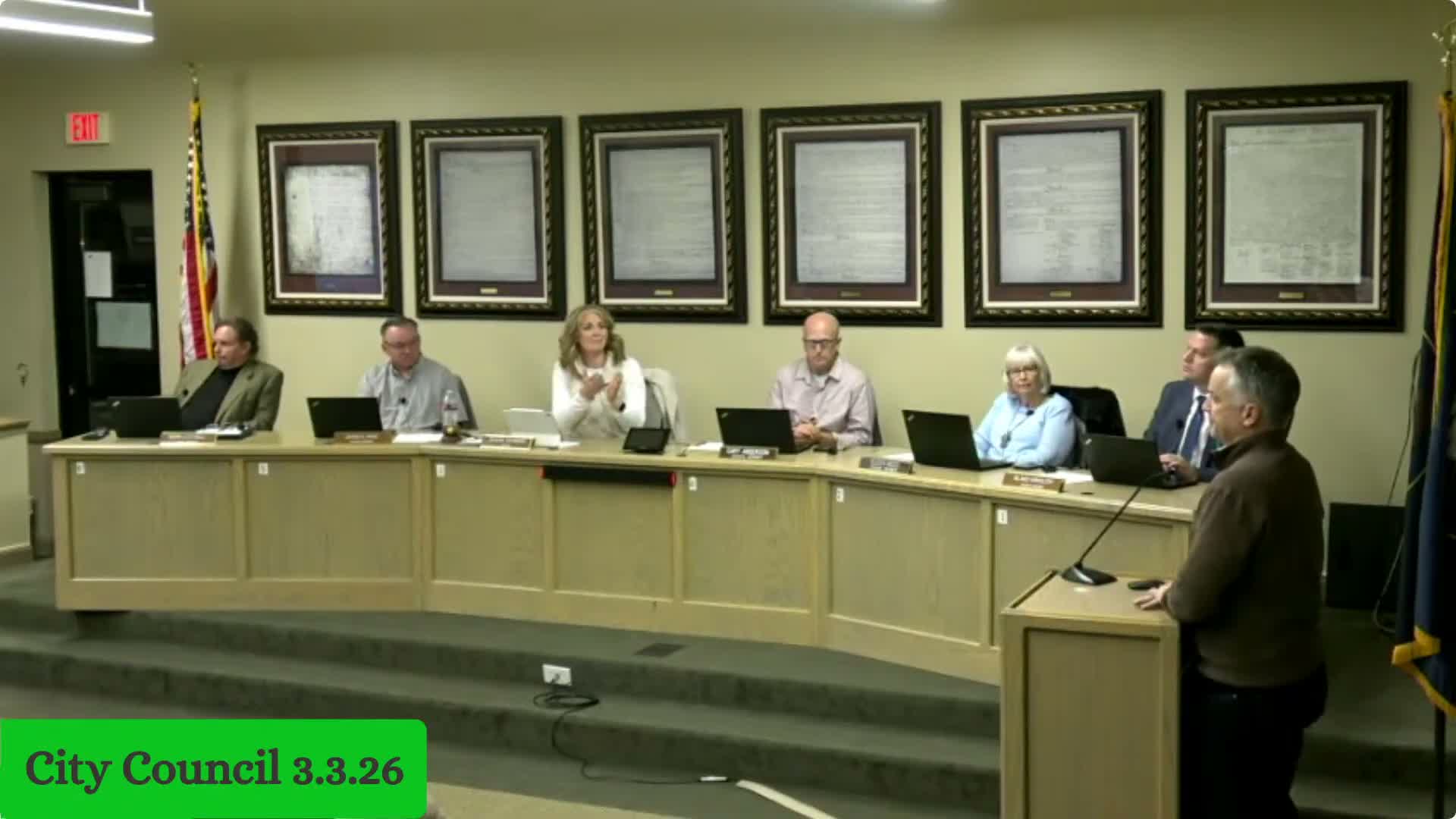
The Fruit Heights City Council received its annual training on the Open and Public Meetings Act and the Municipal Officers and Employees Ethics Act on March 3.
City attorney Brad led the session, telling the council that public deliberations must be conducted openly and that the written minutes are the official record while the audio recording must be retained. He explained that cities must post audio recordings of public meetings and flagged that minutes, attendee lists and unedited audio recordings should be retained permanently.
Brad walked the council through closed-session rules: a closed session requires specific statutory reasons and a two‑thirds vote of a quorum (four votes when five members are present), and certain closed-session topics (individual character/health or deployment of security measures) are exempt from audio recordings but require a signed affidavit. He also noted that votes are not to be taken in closed session and described appropriate uses of direction to staff.
The attorney addressed electronic communications and GRAMA (the state public‑records law): emails, texts and other electronic messages dealing with city business are public records, and elected officials should avoid deliberating by email or text. He recommended policies to reduce GRAMA exposure and advised that privileged attorney‑client communications are protected but waiving privilege requires a public meeting vote.
Brad discussed public‑hearing practices for land‑use items, the need for reasonably specific agendas, and disclosure/recusal best practices for council members with personal or financial interests. He cited a $50 gift threshold for reportable gifts under the ethics code and advised caution about council members using public office for personal economic benefit.
Council members asked about practical examples (minutes form, electronic participation and hybrid meetings, recording requirements and public comment responses) and the attorney provided clarifications and best-practice recommendations for policies staff could draft.
The training satisfied the council’s annual obligations, and staff and council discussed follow-up policy items such as social-media guidance and retention practices.
City attorney Brad led the session, telling the council that public deliberations must be conducted openly and that the written minutes are the official record while the audio recording must be retained. He explained that cities must post audio recordings of public meetings and flagged that minutes, attendee lists and unedited audio recordings should be retained permanently.
Brad walked the council through closed-session rules: a closed session requires specific statutory reasons and a two‑thirds vote of a quorum (four votes when five members are present), and certain closed-session topics (individual character/health or deployment of security measures) are exempt from audio recordings but require a signed affidavit. He also noted that votes are not to be taken in closed session and described appropriate uses of direction to staff.
The attorney addressed electronic communications and GRAMA (the state public‑records law): emails, texts and other electronic messages dealing with city business are public records, and elected officials should avoid deliberating by email or text. He recommended policies to reduce GRAMA exposure and advised that privileged attorney‑client communications are protected but waiving privilege requires a public meeting vote.
Brad discussed public‑hearing practices for land‑use items, the need for reasonably specific agendas, and disclosure/recusal best practices for council members with personal or financial interests. He cited a $50 gift threshold for reportable gifts under the ethics code and advised caution about council members using public office for personal economic benefit.
Council members asked about practical examples (minutes form, electronic participation and hybrid meetings, recording requirements and public comment responses) and the attorney provided clarifications and best-practice recommendations for policies staff could draft.
The training satisfied the council’s annual obligations, and staff and council discussed follow-up policy items such as social-media guidance and retention practices.
View the Full Meeting & All Its Details
This article offers just a summary. Unlock complete video, transcripts, and insights as a Founder Member.
✓
Watch full, unedited meeting videos
✓
Search every word spoken in unlimited transcripts
✓
AI summaries & real-time alerts (all government levels)
✓
Permanent access to expanding government content
30-day money-back guarantee
