Board adopts targeted Conservation & Open Space update to meet SB 1425, with edits on tree/canopy language
March 04, 2026 | El Dorado County, California
This article was created by AI summarizing key points discussed. AI makes mistakes, so for full details and context, please refer to the video of the full meeting. Please report any errors so we can fix them. Report an error »
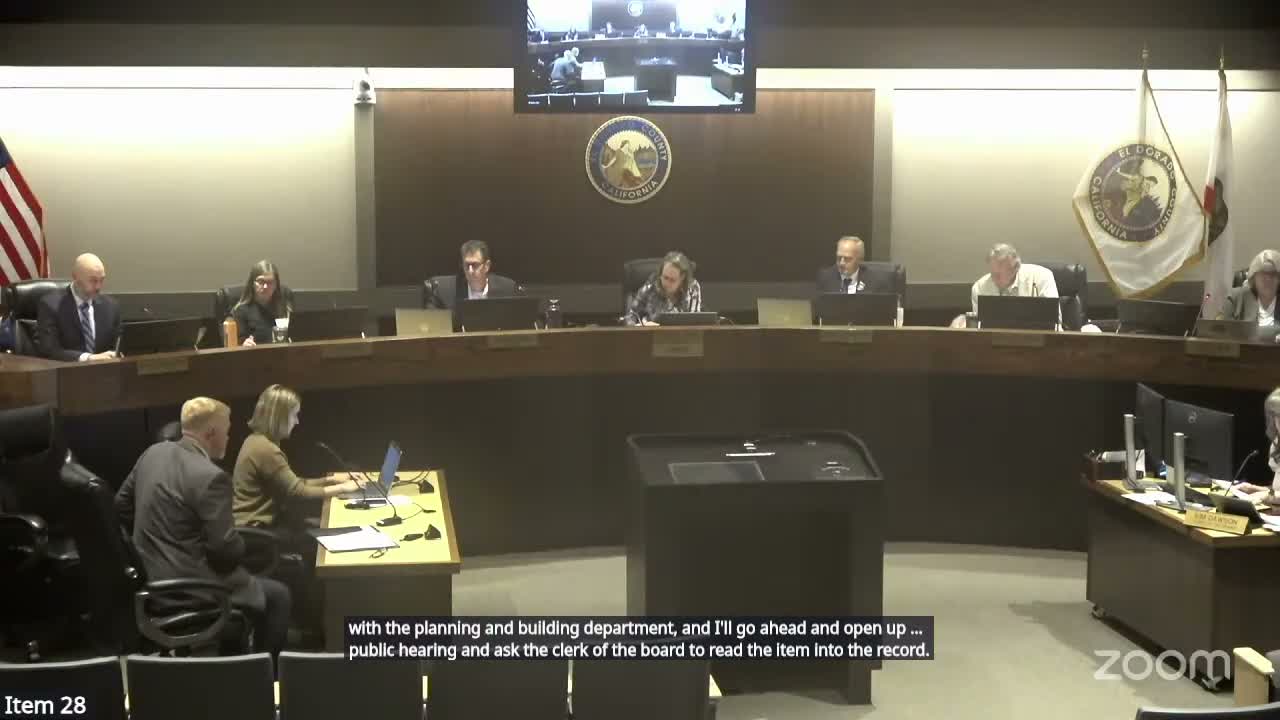
Long Range Planning presented a focused update to the county’s Conservation and Open Space element designed to meet the state’s SB 1425 requirements. Tim Pitt, senior planner, said the targeted amendment integrates priorities such as equitable access to open space, climate resilience and habitat connectivity while preserving the document’s overall structure.
Key additions include a new objective and policies on equitable access to open space (drawn from the county Parks and Trails Master Plan), guidance to incorporate future storm intensity projections into siting public facilities, targeted policies to identify priority open space for conservation and connectivity work, and direction to favor process‑based restoration techniques for meadows, streams and riparian corridors. Staff also proposed replacing a prescriptive cultural‑resource map requirement with a cultural heritage management strategy developed in consultation with tribal partners.
Several supervisors raised concerns about language encouraging expanded canopy or tree planting and the potential conflict with wildfire risk and insurance impacts. The board modified the tree‑planting policy (7.4.0.4.0.12) to add qualifying language — integrating tree planting and canopy expansion "where applicable" — and directed staff to ensure the policy is consistent with safety element provisions and defensible‑space rules.
The planning commission had unanimously recommended adoption; the board approved the targeted update 5–0 and directed staff to coordinate next steps with partner agencies and tribes.
Key additions include a new objective and policies on equitable access to open space (drawn from the county Parks and Trails Master Plan), guidance to incorporate future storm intensity projections into siting public facilities, targeted policies to identify priority open space for conservation and connectivity work, and direction to favor process‑based restoration techniques for meadows, streams and riparian corridors. Staff also proposed replacing a prescriptive cultural‑resource map requirement with a cultural heritage management strategy developed in consultation with tribal partners.
Several supervisors raised concerns about language encouraging expanded canopy or tree planting and the potential conflict with wildfire risk and insurance impacts. The board modified the tree‑planting policy (7.4.0.4.0.12) to add qualifying language — integrating tree planting and canopy expansion "where applicable" — and directed staff to ensure the policy is consistent with safety element provisions and defensible‑space rules.
The planning commission had unanimously recommended adoption; the board approved the targeted update 5–0 and directed staff to coordinate next steps with partner agencies and tribes.
Don't Miss a Word: See the Full Meeting!
Go beyond summaries. Unlock every video, transcript, and key insight with a Founder Membership.
✓
Get instant access to full meeting videos
✓
Search and clip any phrase from complete transcripts
✓
Receive AI-powered summaries & custom alerts
✓
Enjoy lifetime, unrestricted access to government data
30-day money-back guarantee
