District staff outline questions about scaling apartment-and-church composting pilot
March 04, 2026 | Monroe County, Indiana
This article was created by AI summarizing key points discussed. AI makes mistakes, so for full details and context, please refer to the video of the full meeting. Please report any errors so we can fix them. Report an error »
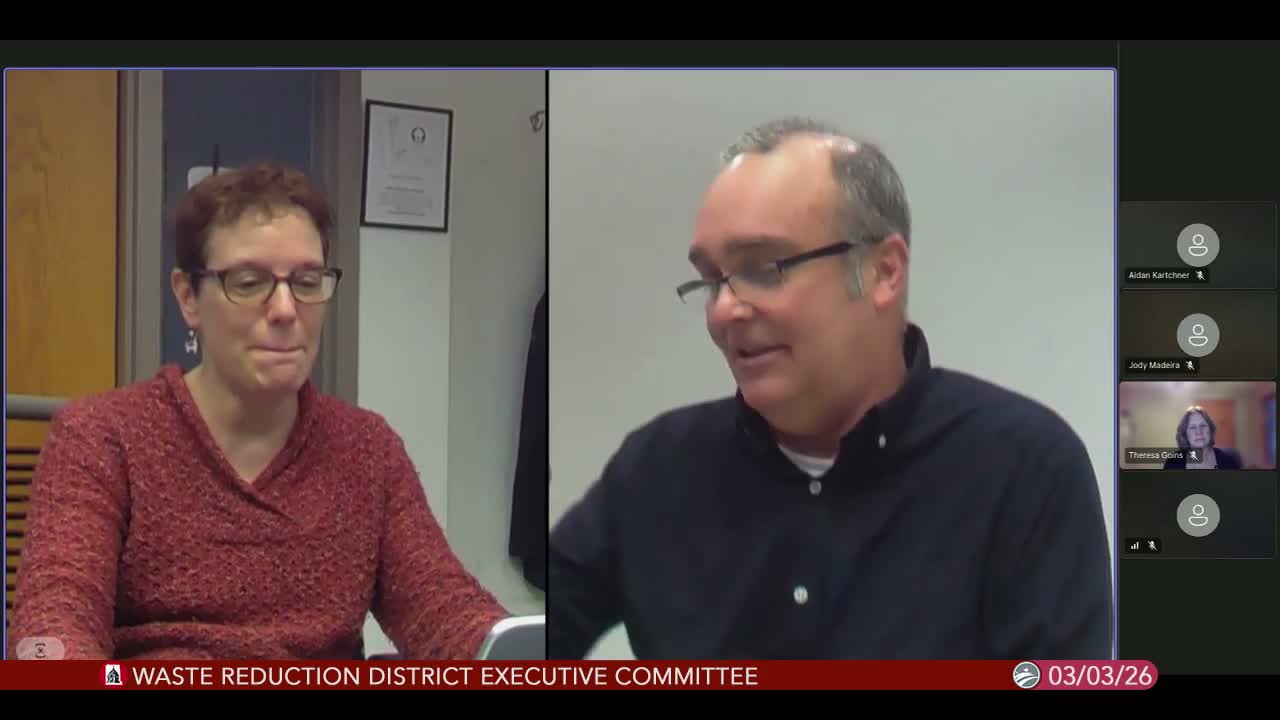
Staff told the Waste Reduction District executive committee on March 3 that the district has assumed responsibility for two partner composting sites after the previous contractor moved out of state and that repairs and onboarding are consuming staff time and materials.
Tom Glassman, a district staff member, said the program now relies on automated online training for new participants but that staff still perform in-person training and frequent repairs. A staff member who does builds and repairs told the committee, “We’re spending 2 guys about 4 and a half to 5 hours repairing them, and that’s a cost about 70 to $80 per unit,” and estimated a three-bin system’s materials and labor at roughly $220 to $350 depending on the design and time involved.
Committee members flagged two choices for the district: continue to provide hands‑on maintenance and repair beyond the partner period or shift to a support-and-training model with clearer time limits. Staff recommended the district clarify the partner period and consider adding billing mechanisms or changes to the fee resolution to charge complexes for repairs beyond the partner period.
The committee discussed capacity: staff said current workloads for the six active sites are manageable, but that a program scale of 15–20 participating complexes would likely exceed current staffing and budget. Committee members suggested options including lengthening the partner period to two years and establishing a firm hard stop after which sites would be expected to maintain bins themselves.
Committee members and staff also discussed practical fixes to reduce repairs (different fasteners, removable boards), ideas to recruit larger partners (management companies and churches), and potential partners for hands-on support such as local high‑school construction programs. Staff noted the program’s structure is backyard‑scale composting (no commercial heat), so it excludes meat, dairy and high citrus to avoid health and animal‑attraction issues.
The committee did not take formal action but asked staff to prepare an update for the full board, including proposed fee-resolution language and an estimate of staff time and materials required to scale or sustain the program. The item will return to a future agenda for direction.
Tom Glassman, a district staff member, said the program now relies on automated online training for new participants but that staff still perform in-person training and frequent repairs. A staff member who does builds and repairs told the committee, “We’re spending 2 guys about 4 and a half to 5 hours repairing them, and that’s a cost about 70 to $80 per unit,” and estimated a three-bin system’s materials and labor at roughly $220 to $350 depending on the design and time involved.
Committee members flagged two choices for the district: continue to provide hands‑on maintenance and repair beyond the partner period or shift to a support-and-training model with clearer time limits. Staff recommended the district clarify the partner period and consider adding billing mechanisms or changes to the fee resolution to charge complexes for repairs beyond the partner period.
The committee discussed capacity: staff said current workloads for the six active sites are manageable, but that a program scale of 15–20 participating complexes would likely exceed current staffing and budget. Committee members suggested options including lengthening the partner period to two years and establishing a firm hard stop after which sites would be expected to maintain bins themselves.
Committee members and staff also discussed practical fixes to reduce repairs (different fasteners, removable boards), ideas to recruit larger partners (management companies and churches), and potential partners for hands-on support such as local high‑school construction programs. Staff noted the program’s structure is backyard‑scale composting (no commercial heat), so it excludes meat, dairy and high citrus to avoid health and animal‑attraction issues.
The committee did not take formal action but asked staff to prepare an update for the full board, including proposed fee-resolution language and an estimate of staff time and materials required to scale or sustain the program. The item will return to a future agenda for direction.
View the Full Meeting & All Its Details
This article offers just a summary. Unlock complete video, transcripts, and insights as a Founder Member.
✓
Watch full, unedited meeting videos
✓
Search every word spoken in unlimited transcripts
✓
AI summaries & real-time alerts (all government levels)
✓
Permanent access to expanding government content
30-day money-back guarantee
